
Prairie practices that can inspire Quebec pastures
In July, Marie-Pier Landry, a Canadian Forage and Grassland Association (CFGA) mentor in Quebec, participated in a four-day trip to the Canadian Prairies where she travelled more than 1,000 kilometeres with a group of approximately 20 advisors to visit ranches and see native grasslands with her own eyes. In this week’s blog, Marie-Pier shares her experience and lessons learned.
I arrived in Saskatchewan with my Quebec agronomy mindset … and it was quickly challenged. From the very first visits, I realized it was impossible to assess their practices the same way I would back home.
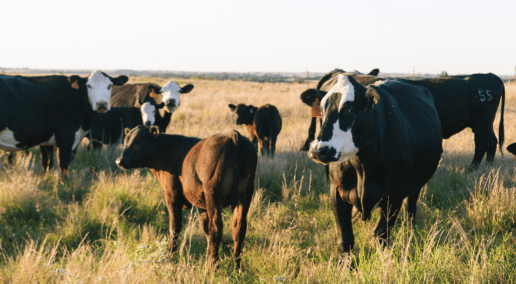
To begin with, southwestern Saskatchewan receives barely 13 inches of precipitation per year. Soils are often saline, with high pH and low organic matter. In other words, the growing conditions are challenging. Producers have about 2,000 hectares (5,000 acres) to support a herd of roughly 200 cow-calf pairs, that is around 10 times more land per pairs than what I am used to.
In that context, many Prairie practices suddenly made a lot more sense.
When water becomes the main limiting factor, even the concept of soil armour takes on a whole new meaning. Back home, when we talk about “protecting the soil armour,” we tend to think first about limiting trampling, maintaining good soil bearing capacity or supporting soil life.
In Saskatchewan, that armour is primarily there to shade the soil, lower its temperature and reduce water loss through evaporation. The same expression, but a completely different reality.
I was also impressed by the value placed on native grasslands. They contain species, particularly warm-season species such as blue grama grass, that have a higher water-use efficiency and are not as impacted by extreme heat and drought.
These native grasslands are managed with great care. They are often grazed later in the season, after seeded pastures, once the native species have enough time to grow and build sufficient root reserve to thrive all summer.
This strategy helps preserve the biodiversity and resilience of these unique ecosystems. Conservation agreements are also available to help protect these areas, along with attractive financial incentives.
Lessons for Quebec grazing practices
So, what did I bring back to Quebec?
Their rule of thirds gave me something to think about: one-third of the vegetation is grazed, one-third remains standing and one-third returns to the soil. Without following this rule to the letter, could we build greater resilience by leaving more biomass behind after grazing?
I also wondered whether we are setting the right priorities for our permanent pastures. In Western Canada, native grasslands are among their greatest assets. Back home, our roughest and most uneven fields tend to become more or less permanent pastures and we often use them as sacrifice areas. Are our instincts sometimes leading us in the wrong direction? Perhaps these pastures would perform better if we gave them a chance.
I went to Saskatchewan expecting to learn new grazing techniques. I came home with something even more valuable: a reminder that before judging a practice, we first need to understand the context in which it was developed.
In agriculture, the best ideas are not always the ones we copy, but the ones that lead us to look at our own practices differently.
Ultimately, the greatest lesson from this trip was not learning to understand Saskatchewan’s grasslands, but learning to see Quebec’s pastures through a different lens.
Back to General

Leave a Comment