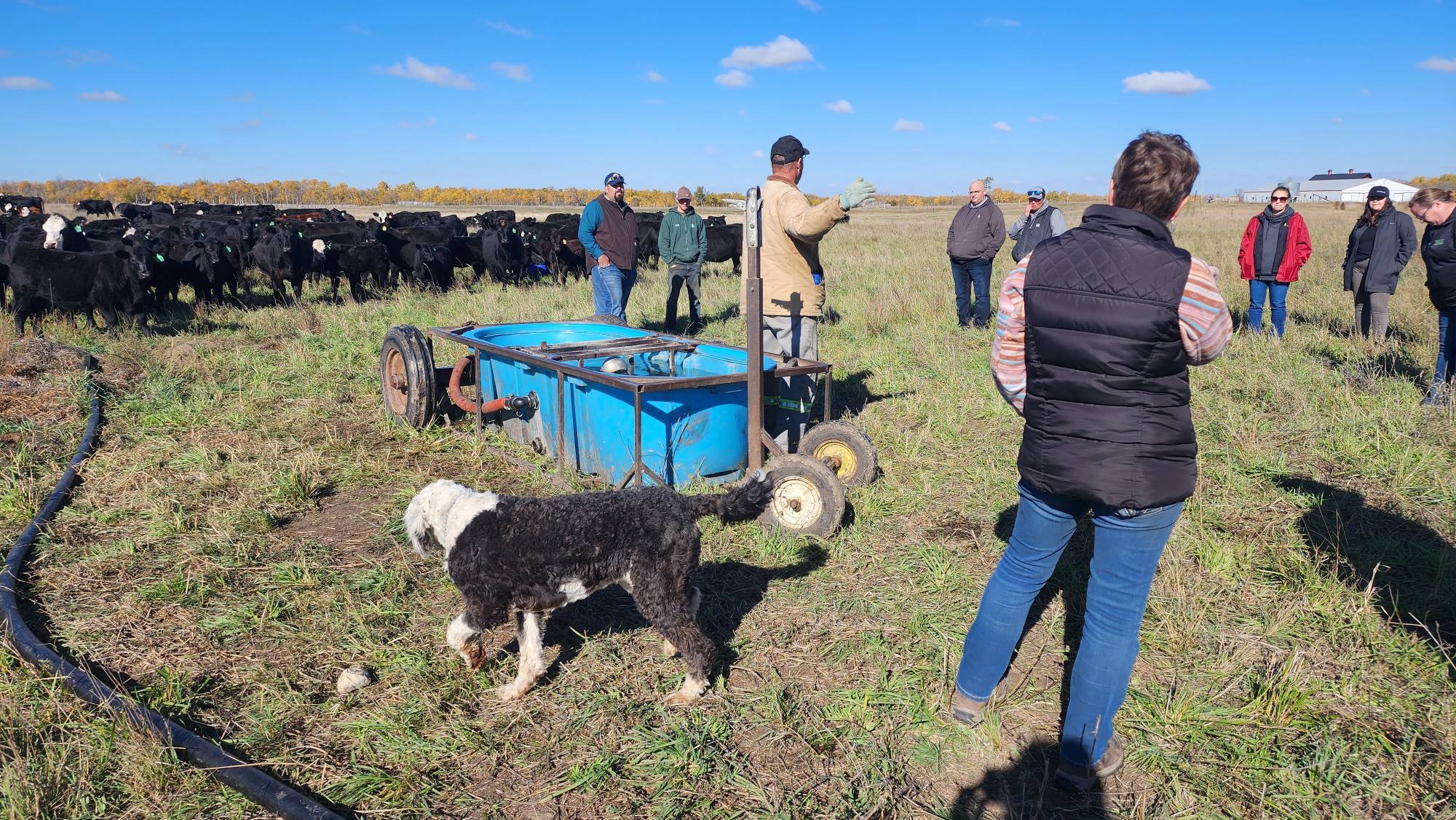
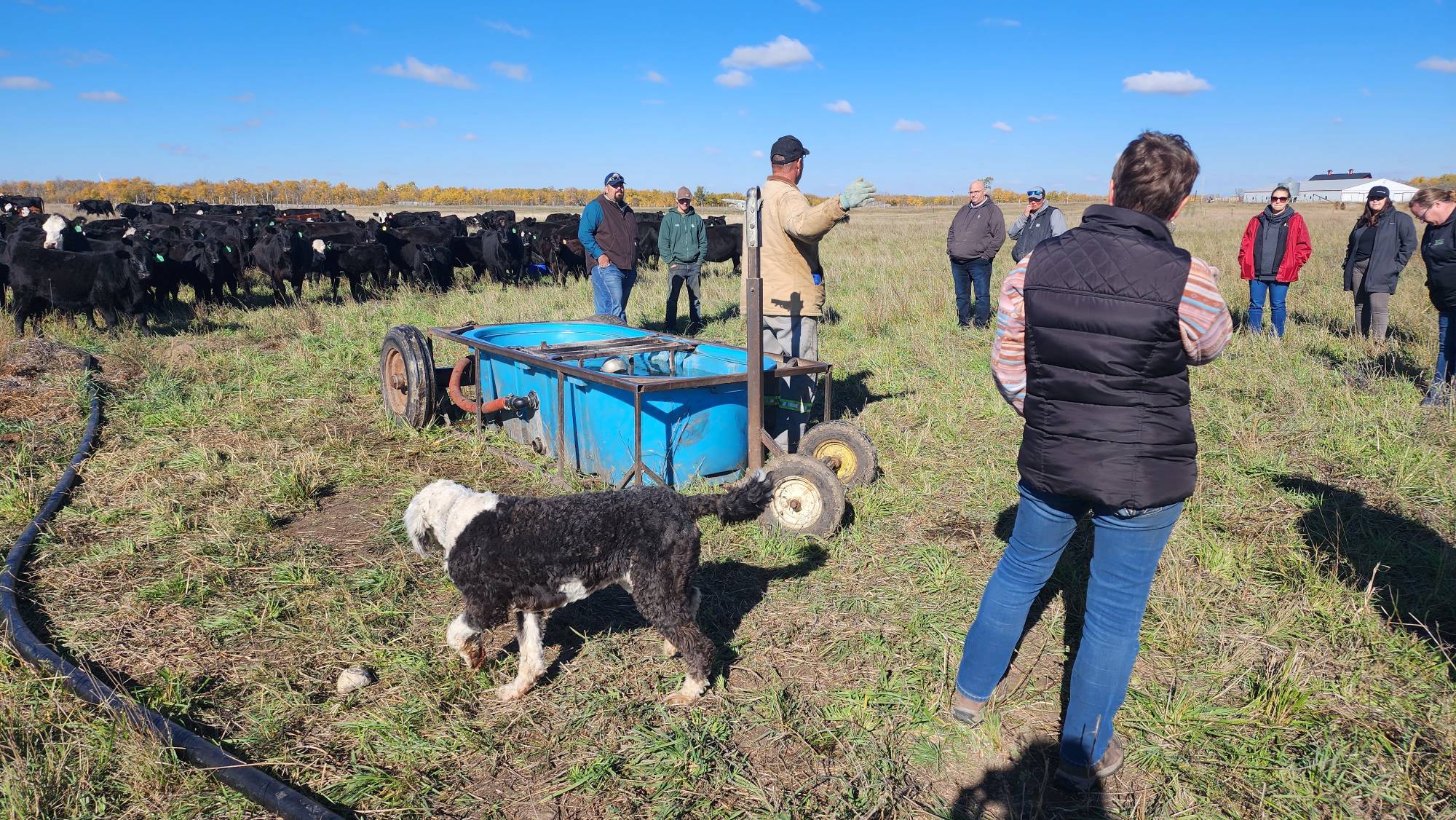
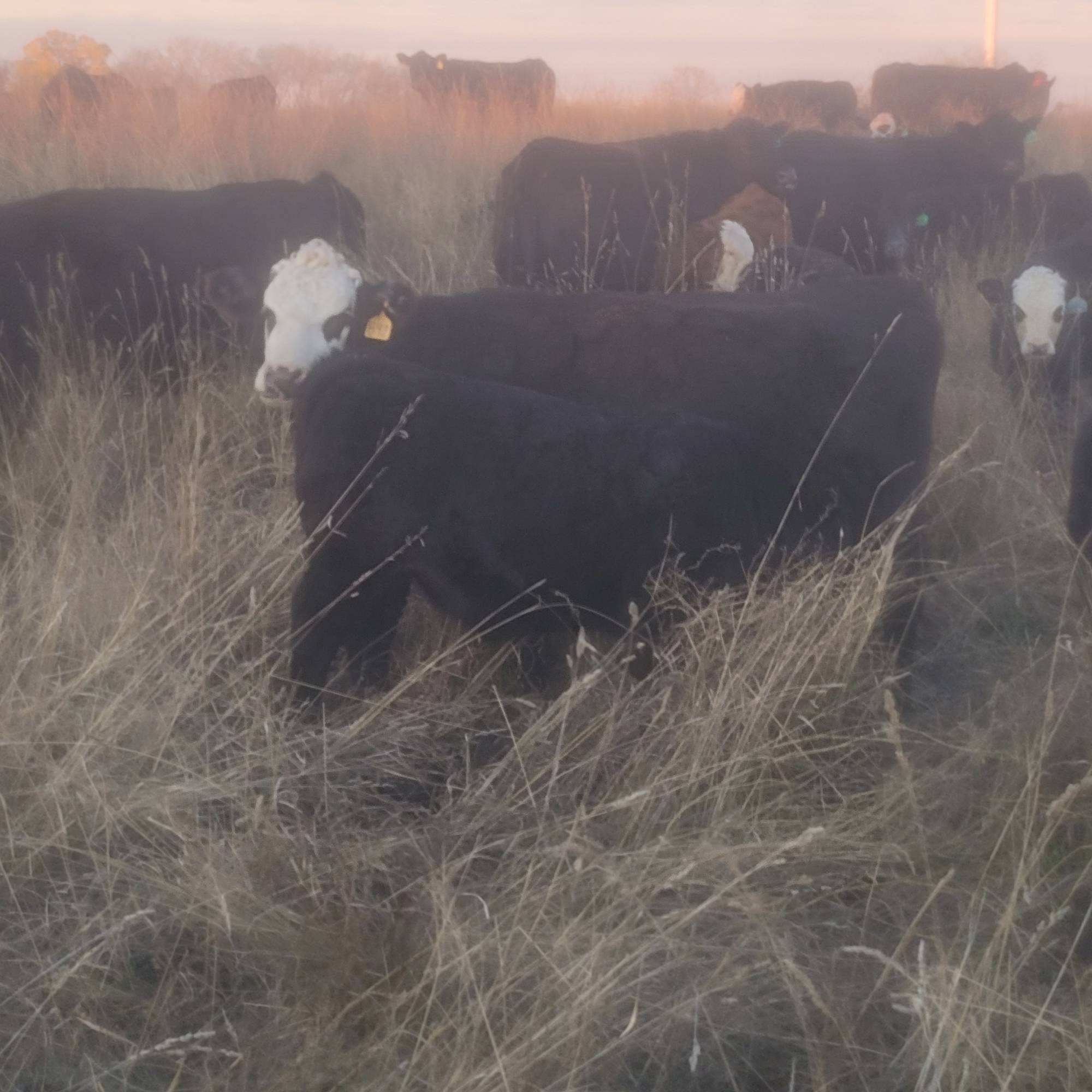
Tom McDonald moving cattle to a new paddock with Advanced Cell Design.
Site Background
About the Location
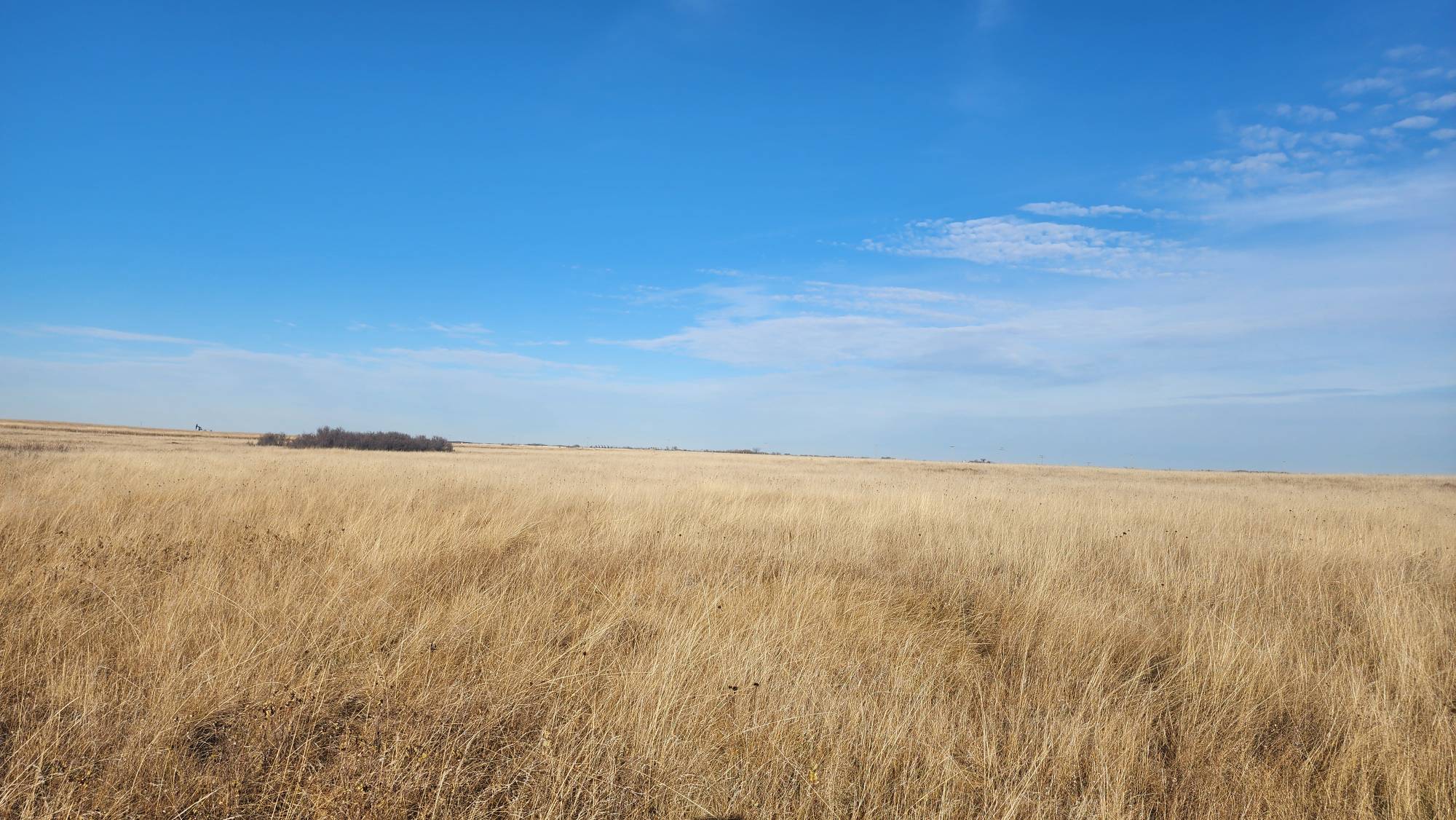
The Green Bluff Acres Demonstration Site encompasses roughly 1300 acres of tame forages, wetlands, native prairie and trees in the Aspen Parkland region near Kennedy, Saskatchewan.
Native grasses found in this area include rough fescue, northern wheatgrass, and western porcupine grass, all providing excellent biomass to contribute to livestock productivity and soil health. Standing trees provide winter shelter from wind and contribute to the area moisture budget through snow capture.
Black chernozemic soils underlay much of the region, with organic matter (OM) content ranging from 6 to 12 per cent. This correlates directly to the region’s high carbon sequestration potential and its agricultural productivity.
Summer temperatures average 15⁰C and in winter temperatures average -12.5⁰C. The mean annual precipitation ranges from 400 to 500 mm, with most falling between May and September.
About the Farm
Tom and Cheryl McDonald acquired their farm in 2020 and began using an Advanced Grazing System (AGS) with bale and cover crop grazing right from the beginning. “It was a challenge to set up the infrastructure across the whole farm, but it’s been rewarding to see the advantages it has given to the land,” Tom reflects.
Given current land prices, Tom understood the need to work smarter to keep his land healthy and producing. He and Cheryl converted the farm to perennial forages upon arrival and have worked to develop pasture pipelines for water and cross fencing to manage forage. In the winter, they establish and move cattle through bale grazing paddocks.
Starting the cattle operation from ground zero has been a challenge, but the support of organizations like Canadian Forage and Grasslands Association (CFGA) has helped.
Learning about Rotational Grazing
The McDonalds learned about rotational grazing systems from magazine articles, peer-to-peer learning with other producers in both Saskatchewan and Manitoba, as well as attending workshops, tours and seminars to increase their knowledge of pasture management.
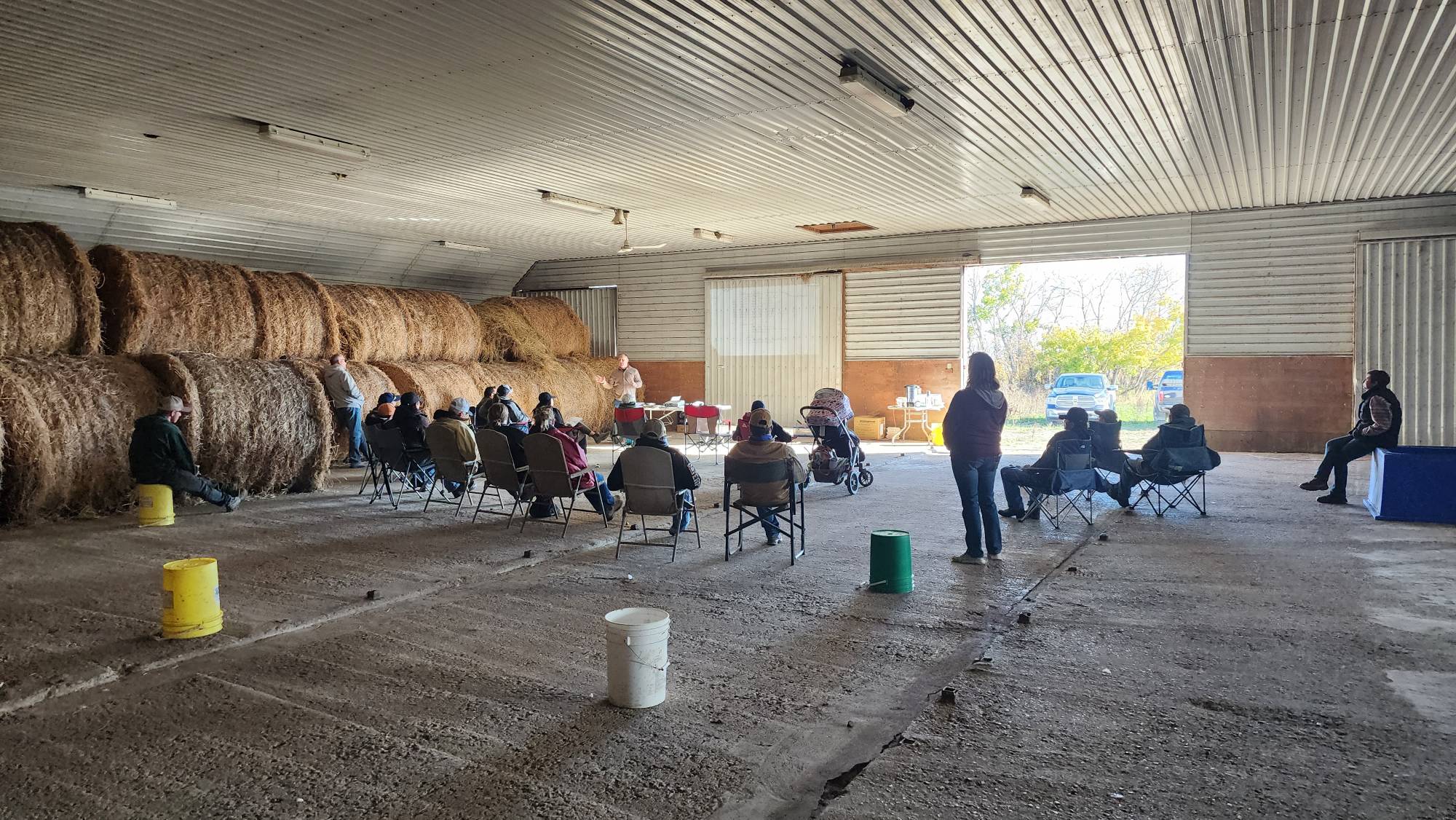
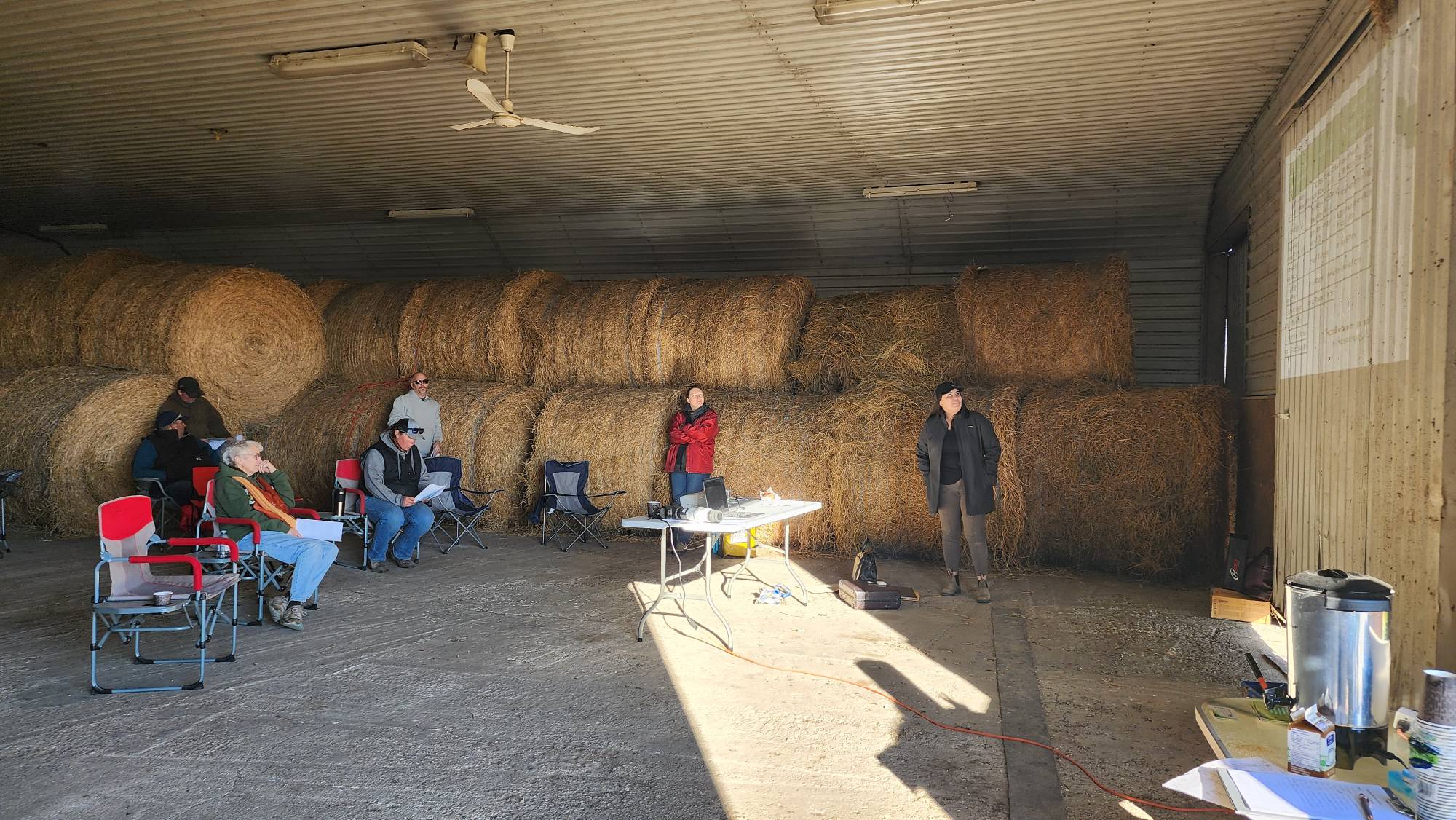
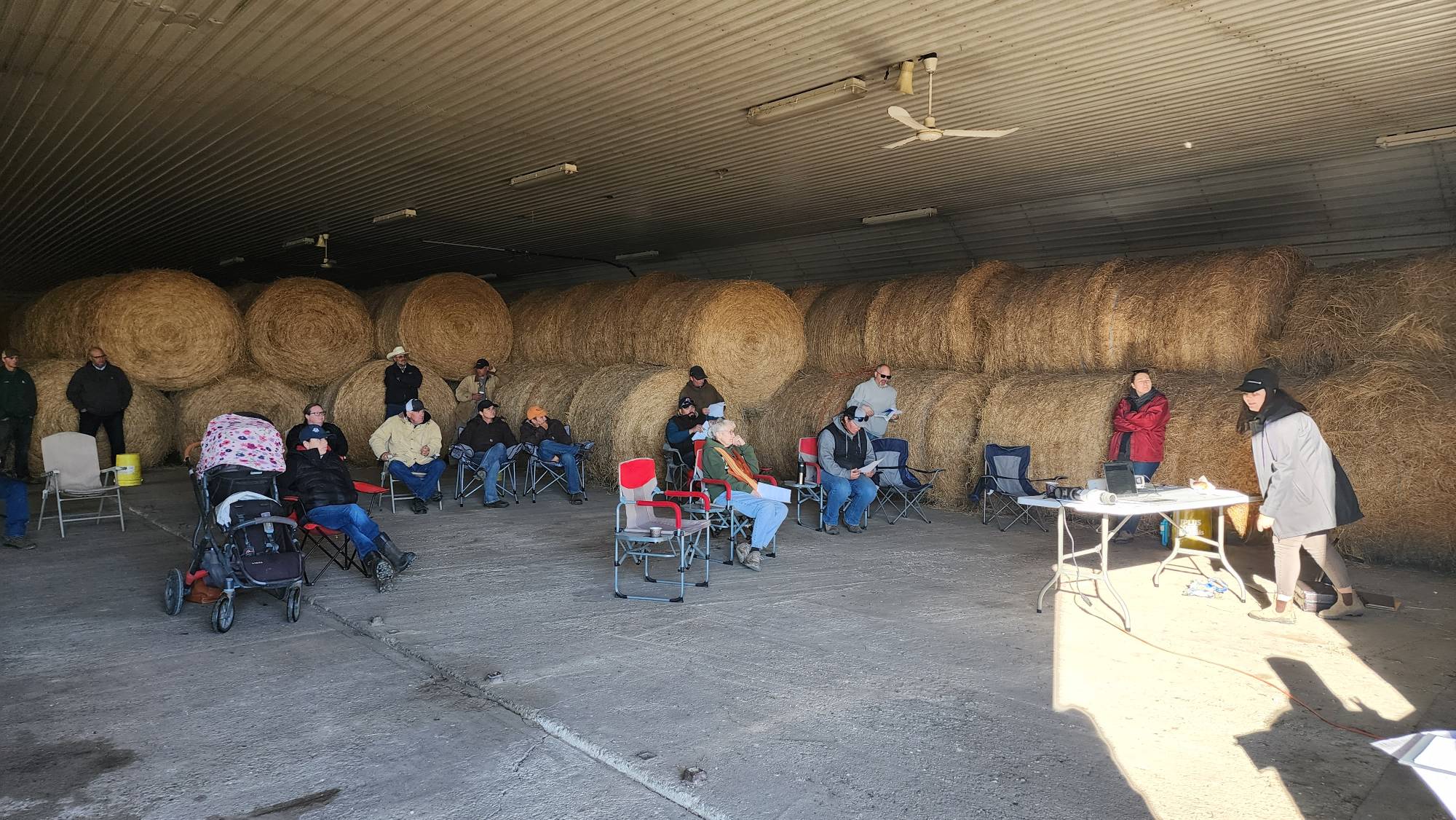
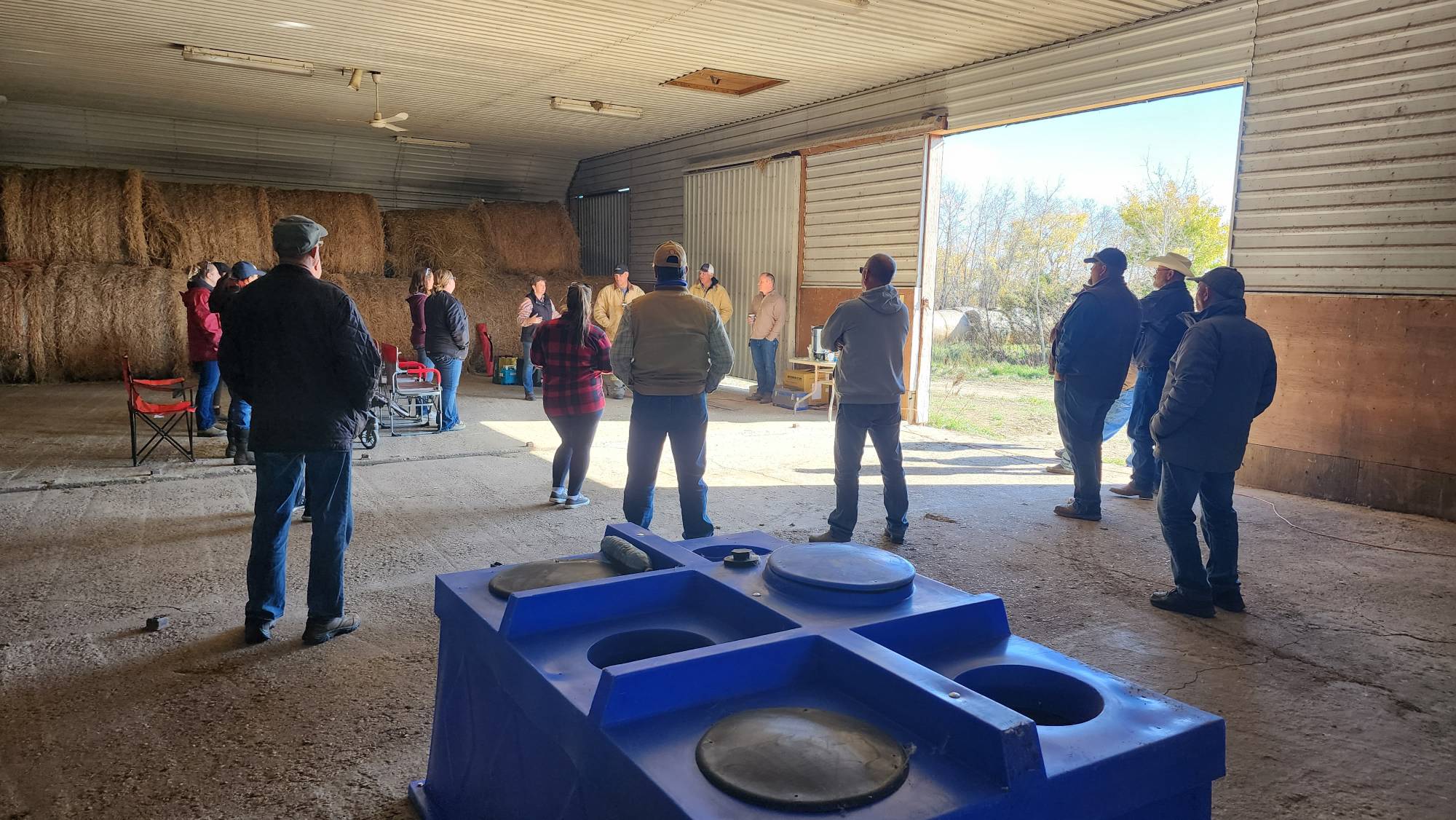
They also hosted a successful CFGA field tour in the fall of 2023.
The Rotational Grazing Objective
Through implementing a rotational grazing system on their operation, the McDonalds aim to reduce overgrazing, improve livestock distribution, reduce risks of erosion, and increase forage productivity.
Tom and Cheryl’s overall goals are to conserve grass and water, improve soil health, continually improve infrastructure, and increase the carrying capacity of their pasture.
Agronomic Details
The McDonalds began converting their land base to tame forages in 2020, seeding a custom blend of 17 species of legume, tame and native forages. They also planted a multi-species annual cover crop on 65 acres for Fall/Winter grazing.
Tom and Cheryl use soil testing at Green Bluff Acres to establish baselines, track changes in soil health over time, and guide management decisions that improve pasture productivity and resilience. In Fall 2019, and prior to seeding forages, they conducted soil testing to acquire baseline information. In addition to measuring typical soil components, they conducted a soil microbial analysis measuring bacteria, fungi and protozoa. When testing was repeated in August 2023, Phospholipid Fatty Acid (PLFA) measurements had increased by 80%, indicating a substantial rise in total living microbial biomass. Separate microbial analyses showed that bacteria, fungi, total biomass, and protozoa had all approximately doubled. Together, these results indicate improved nutrient cycling, soil structure, and water holding capacity. Biologically active soils recover more quickly from stress such as drought, heavy rain, and grazing pressure, and result in a more productive and resilient pasture resource. Converting the lands to forages and managing them through rotational grazing has already resulted in soil health improvements. The plan is to regularly conduct soil tests and document these changes.
Project Overview
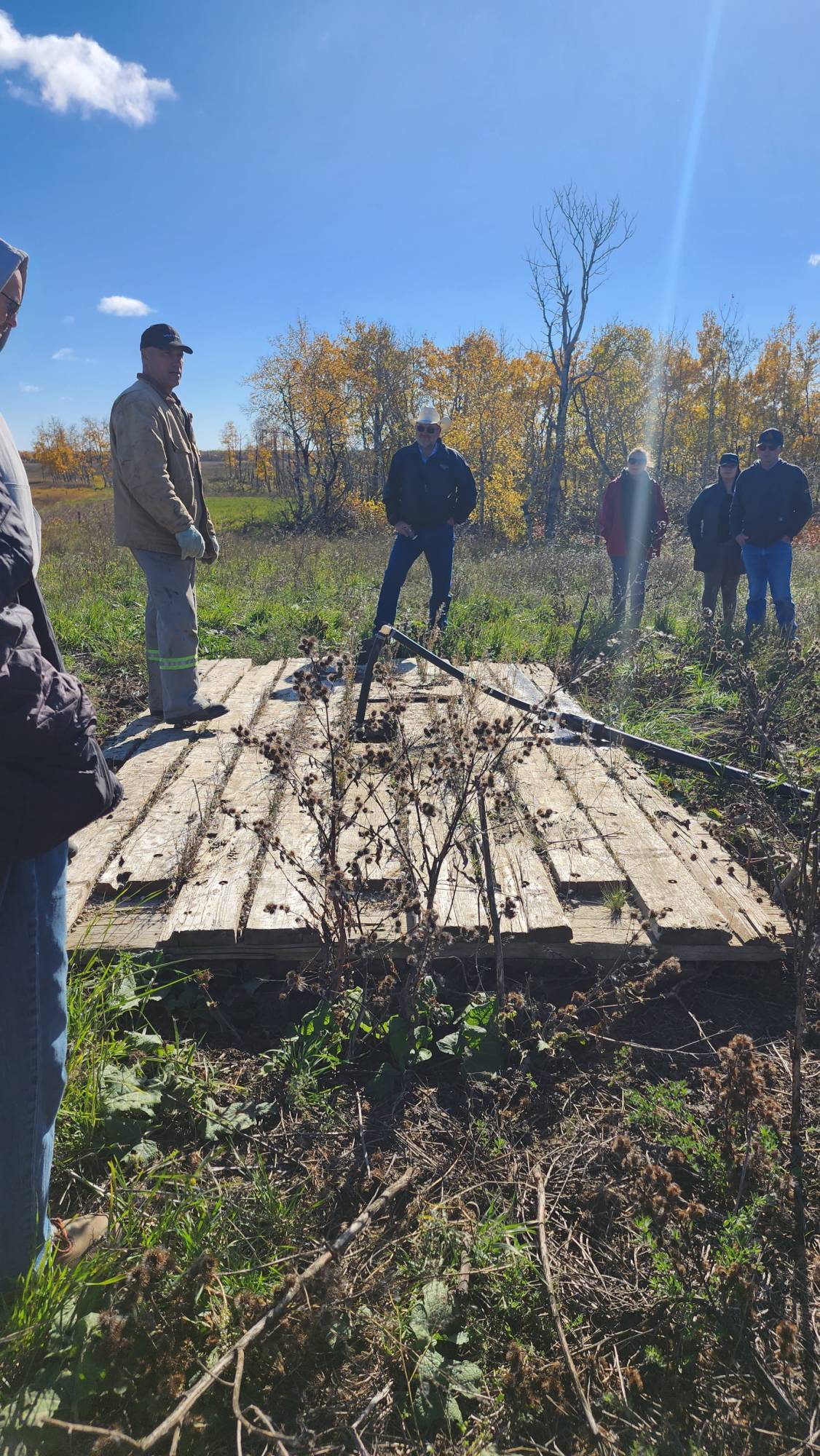
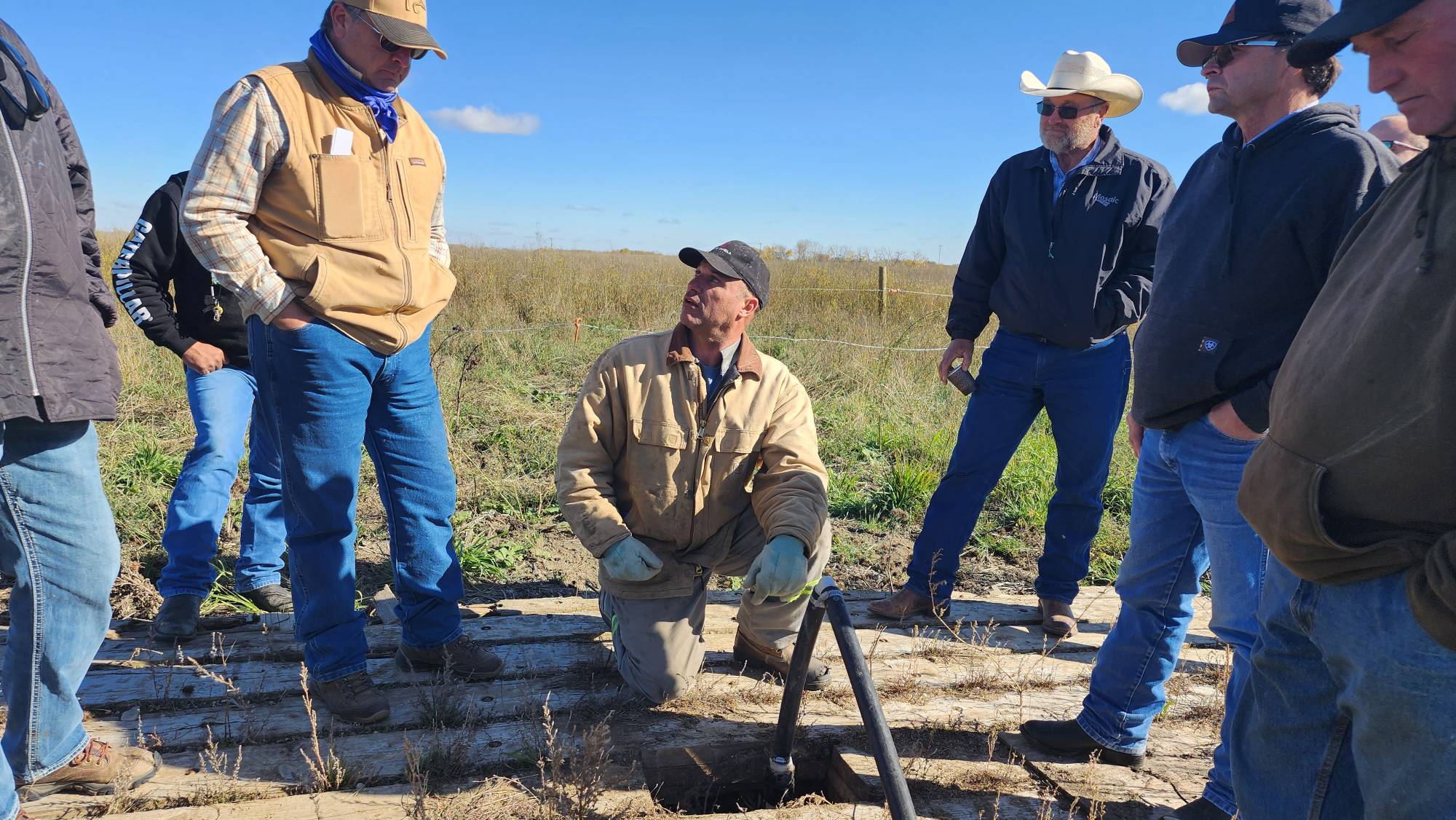
During the grazing season, cattle are managed in one large group of 125 pairs plus 50 heifers. In the breeding season, heifers are separated and grazed away from the cows. Cattle are to be moved to fresh grass paddocks every two to three days, using an electric fence and a Razer Grazer™. Buried waterlines supplied by a deep well feed multiple watering sites and ensure a reliable water supply in both winter and summer.
Over the winter, the McDonalds set up alfalfa/grass hay bales and cattle begin bale-grazing by the end of November. Livestock rotate through multiple established paddocks to feed. Tom and Cheryl calculate forage requirements and days per paddock for winter grazing based on approximately 55 lbs intake/cow/day. Cattle bale graze all winter, with no added supplement required, and by early May, they are begin grazing the forage paddocks for the season.
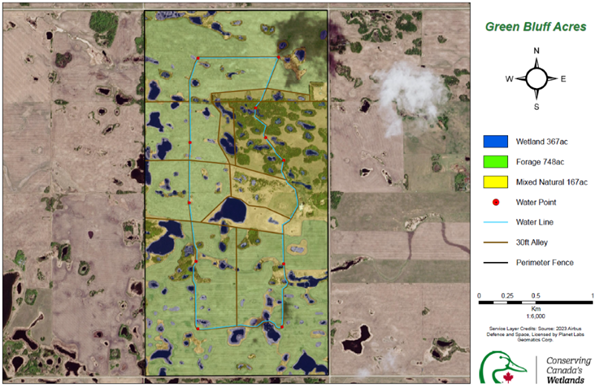
Grazing Map
Short-Term Goals
Due to blocked runs at seeding time, the grass is thinner in places than Tom and Cheryl would like to see. In the short term, they would like to encourage additional growth through rest, with plants eventually creating a canopy to cover bare soil. Legumes and grass seed will be drilled into these areas to thicken the stands. Tools like the RazerGrazer™ and batt-latch openers will help with labour efficiency and daily moves.
Long-Term Goals
Over the long term, Green Bluff Acres plans to increase herd size and continue to build forage biomass in the paddocks, while maintaining both healthy cattle and forages. While factors such as drought can affect plant productivity, Tom and Cheryl feel that their management approach will build a more resilient stand overall.
Site Description
The pasture includes 748 acres of tame forages, 367 acres of wetlands, 167 acres of native prairie and trees (see Grazing Map).
Project Details
An underground waterline was installed to provide reliable water in multiple locations and support the rotational grazing system. 30-foot-wide alleys were constructed to allow cattle to access watering sites from all future paddocks.
To improve production on 60 acres, the McDonalds drilled in sainfoin, bird’s foot trefoil and hairy vetch to increase legume content in the stand.
The project area was perimeter fenced and a portable fencing unit was used to create 40-acre paddocks. In total, 32 paddocks were established, allowing for a minimum 60-day rest period and two to three grazing passes per growing season. Cattle were typically moved every two days from April 1 to September 30.
What’s Happening
2025 Update
The McDonalds feel the carrying capacity of the demonstration site has increased significantly since 2022. The water system has proven dependable, and they have been able to carry out grazing rotations as planned. Another series of soil tests will be performed and compared to previous results. Although the addition of legumes did not produce the expected results, the shift to grazing the entire area—rather than haying a portion—and recycling nutrients through winter feeding on-site has increased overall soil fertility. The improved distribution of cattle has increased the overall productivity of the ranch.
Additional Media





Funding for this project in part has been provided by Agriculture and Agri-Food Canada through the Agricultural Climate Solutions – On-Farm Climate Action Fund.