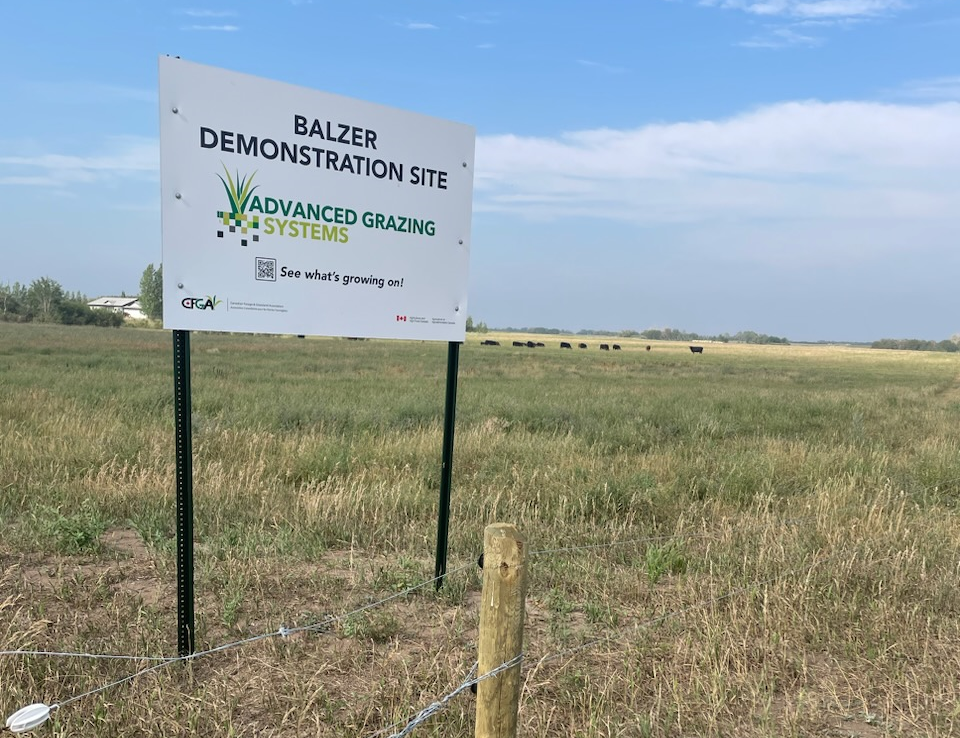
Steven Balzer demonstration site set-up and design.
Site Background
About the Location
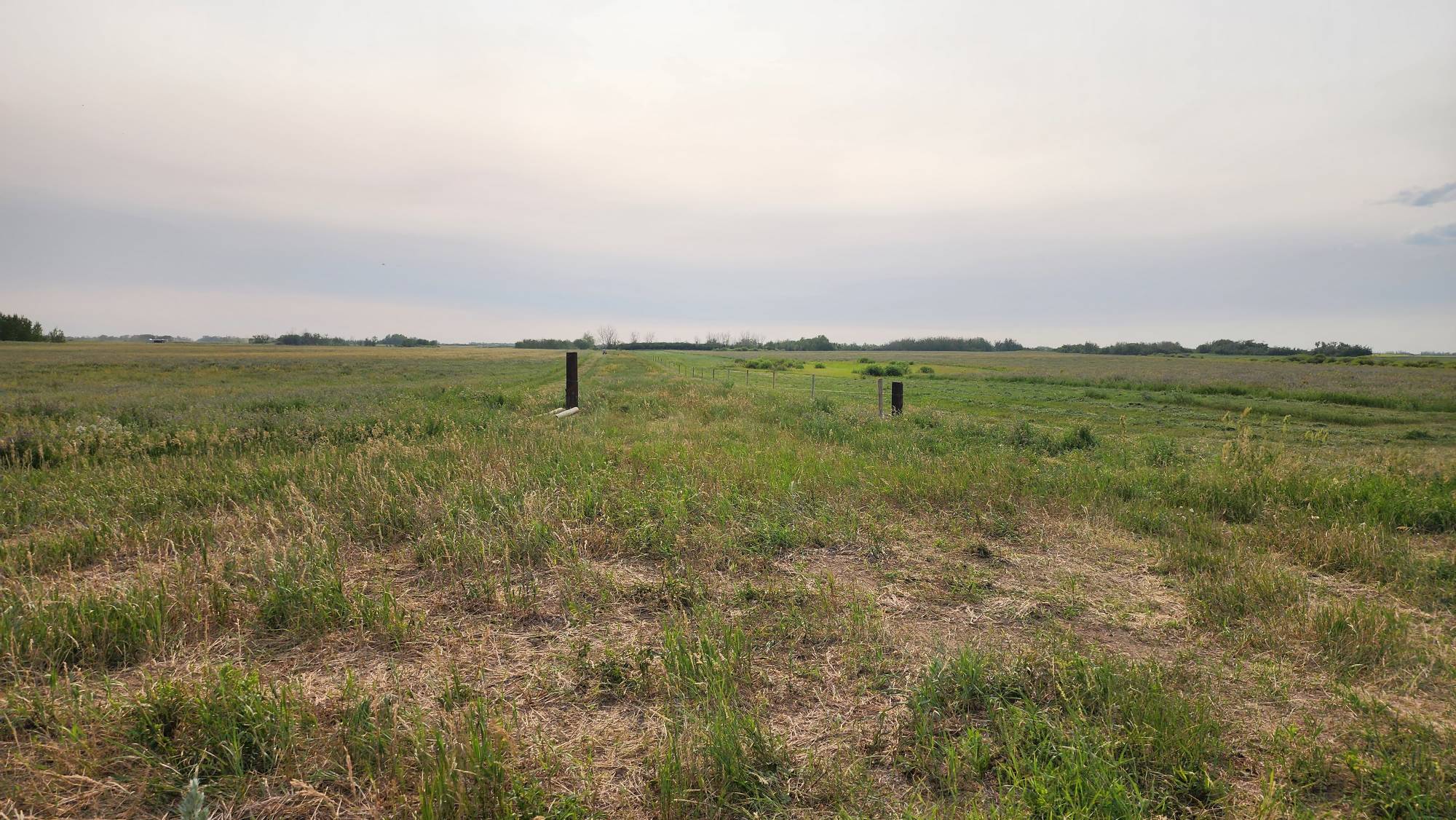
The Steven Balzer Demonstration Site is located in the Moist Mixed Grassland ecoregion approximately three kilometres south of Langham, Saskatchewan. The Moist Mixed Grassland ecoregion represents a transition between the semi-arid Mixed Grassland ecoregion and the Aspen Parkland ecoregion, comprising the northern most extension of the Great Plains of North America.
Dominant native vegetation includes mid-height grasses and sedges, such as needle-and-thread, and western wheatgrasses along with Junegrass, blue grama grass and sedges. These grasses contribute to the five to six per cent organic matter of the soil and also play an active role in the carbon sequestration cycle. Dark Brown Chernozemic soils dominate the area.
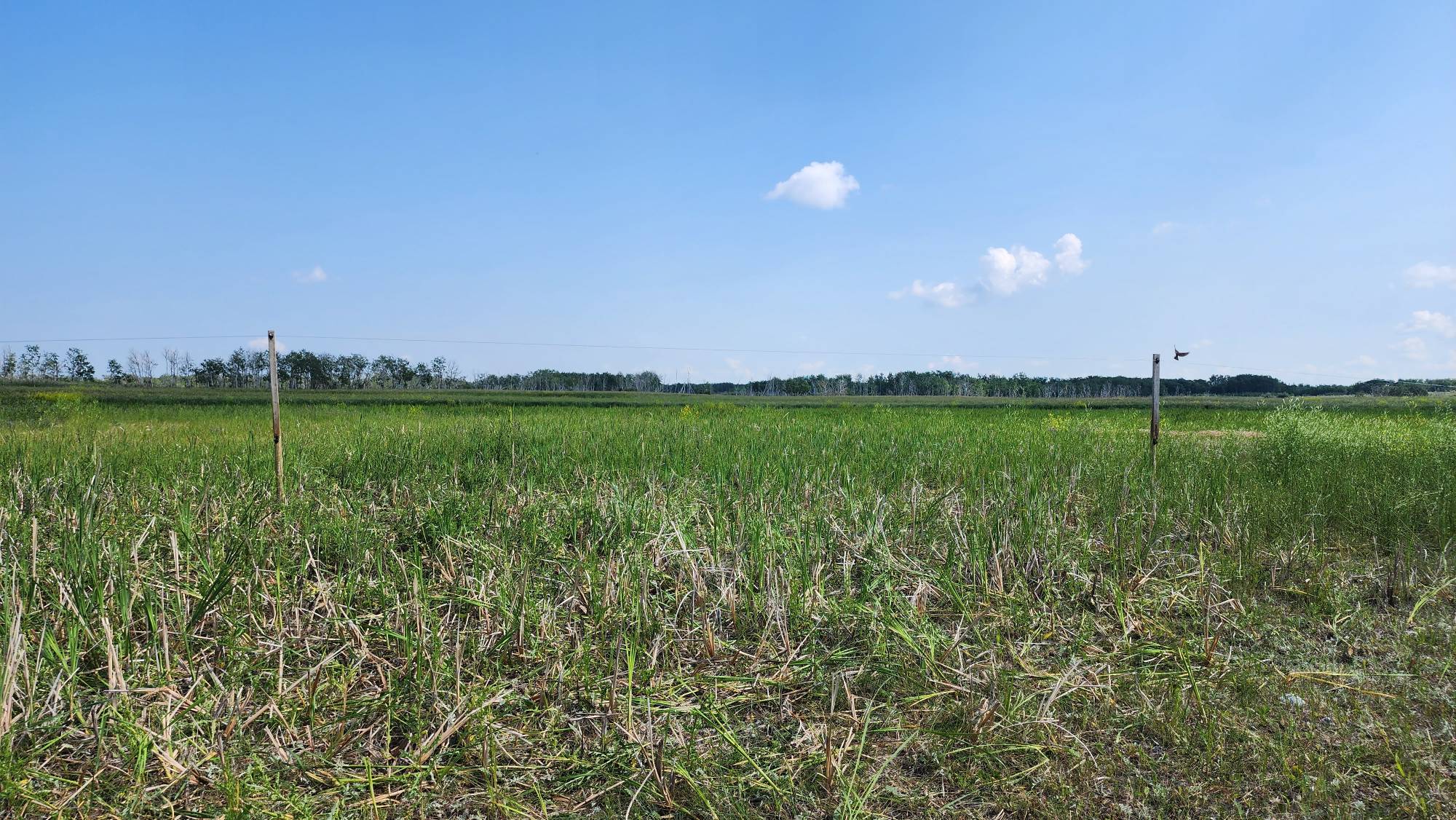
Site topography has resulted in the presence of aspen groves on shaded valley slopes, with aspen, willow, cottonwood and box-elder species all present and providing benefit in the form of livestock shelter and snow accumulation. Natural water sources in this site are semi-permanent and often run dry mid to late summer; as such, water is hauled in for livestock to utilize.
The Moist Mixed Grassland ecoregion typically sees 350 to 400 millimeters of rainfall. This site’s location on the northern tip of the ecoregion may see it receive modest additional moisture. Average temperatures include a summer mean of 15.5°C and a winter mean of -11°C.
About the Farm
Owned by Steven Balzer, Balzer Ranch Ltd. is a third-generation mixed farming operation in the Langham area. With a focus on improving and enhancing the land on both cropped and forage acres, Steven began rotational grazing in 2019 and has seen considerable improvement in the land’s productivity and health.
Learning About Rotational Grazing
Steven became interested in rotational grazing after taking an Advanced Grazing Workshop with mentor Lee Sexton, easily grasping Advanced Grazing Systems (AGS) concepts and implementing the practice on his property. Following his completion of the course, Steven submitted a project through the Canadian Forage and Grassland Association (CFGA) On-Farm Climate Action Fund (OFCAF) program. Although program funding had already been allocated, the proposal was recognized for its merit and when CFGA later required a demonstration site for Ag in Motion, they contacted Steven to discuss developing the project.
Steven began farming in 2017 and, in 2019, adopted planned grazing on his farm. The desire to raise more cattle on the same amount of land was the driving factor behind the change in management practice. In six years operating under AGS concepts, Steven has observed benefits in the form of improved soil texture and increased forage production on his land.
Adjusting grazing duration in cross-fenced paddocks and shifting from conventional grazing habits were the main challenges when implementing intensive grazing. Despite this, Steven quickly saw the benefits and plans to expand permanent fencing and increase the use of temporary electric fencing. He encourages hesitant producers to make the management change.
The Rotational Grazing Objective
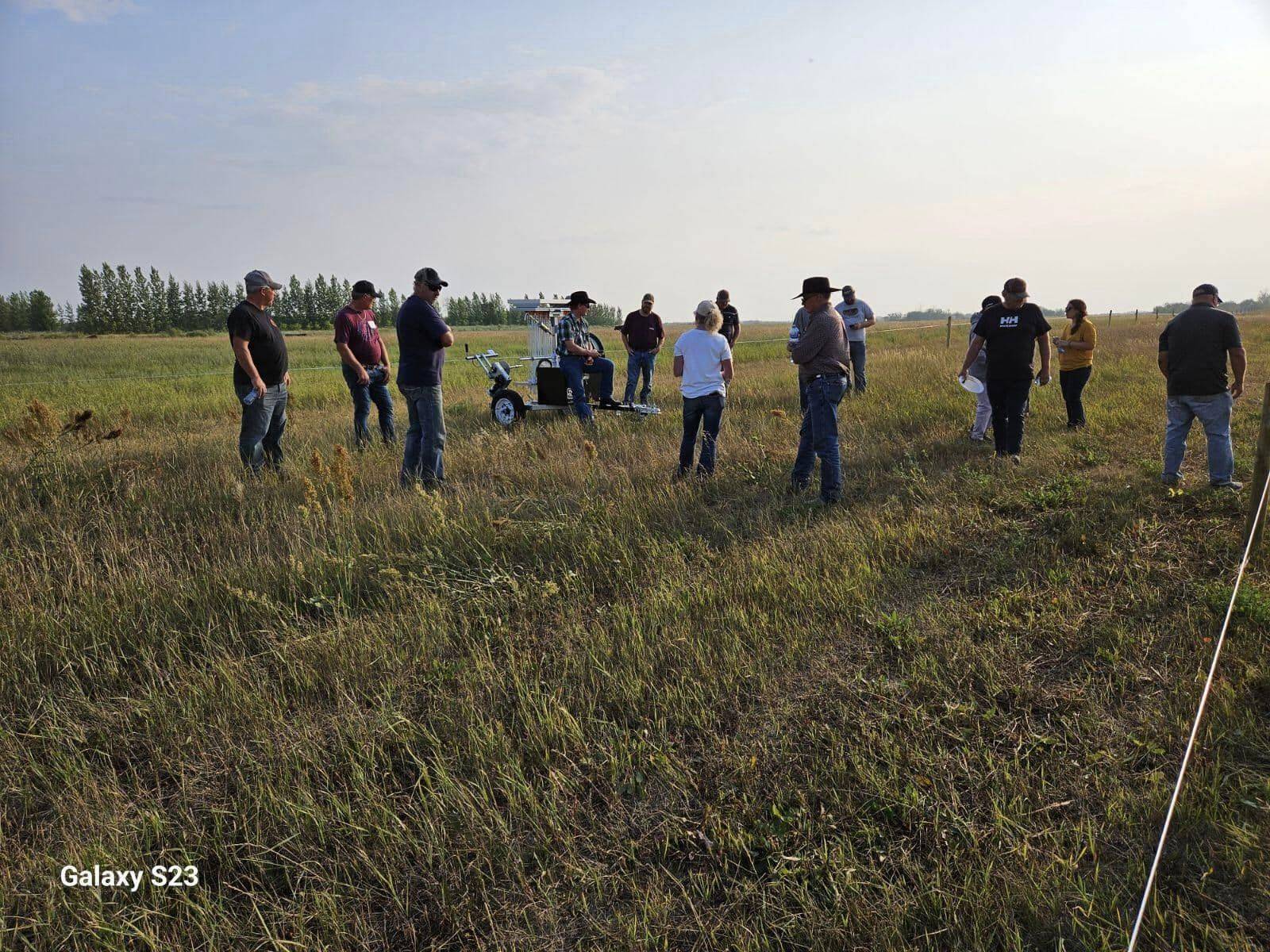
This project aims to demonstrate an advanced grazing system, presenting options for integrating cattle in the landscape, promoting permanent cover and grassland retention, and addressing animal distribution and utilization concerns.
Agronomic Details
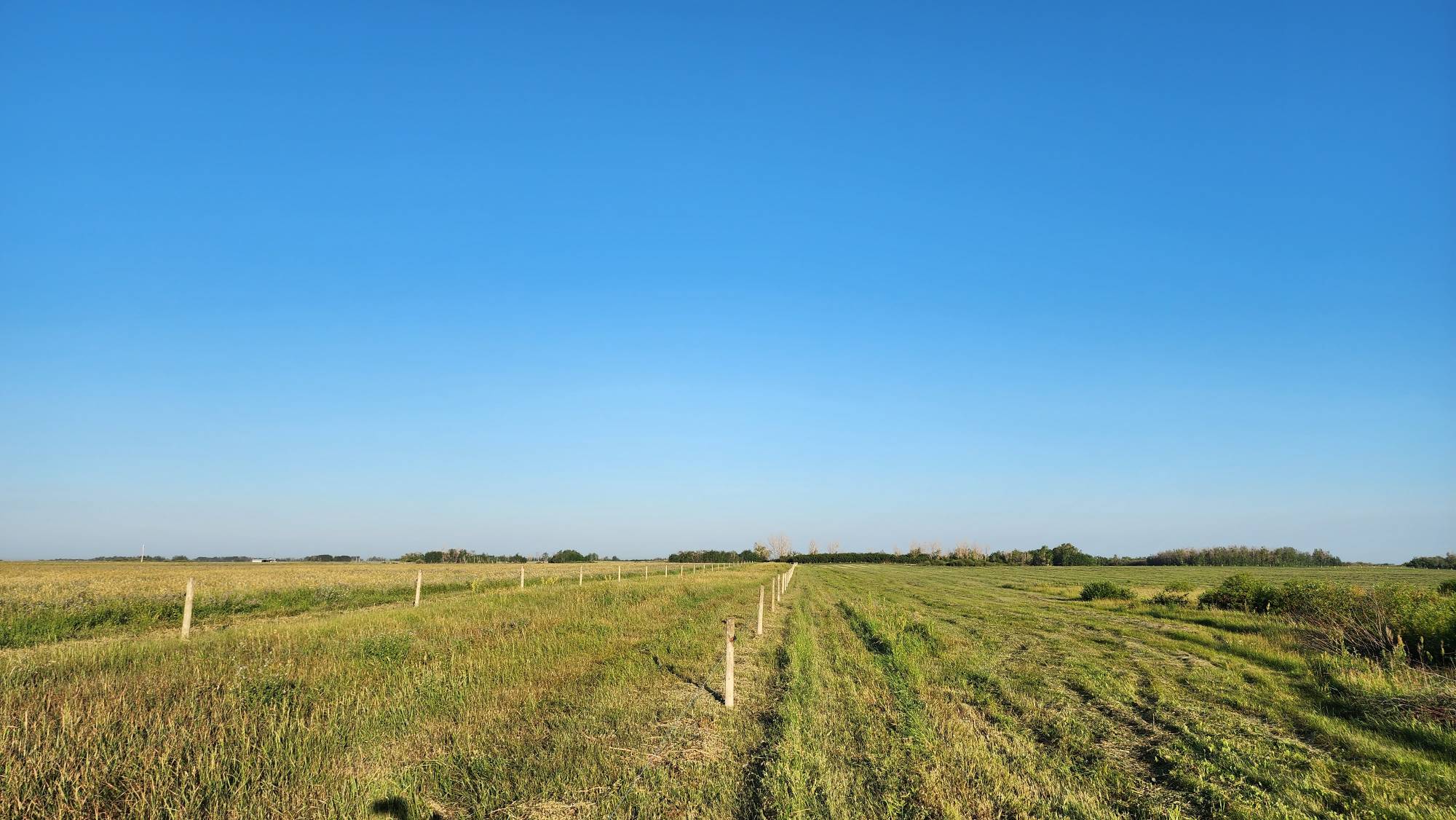
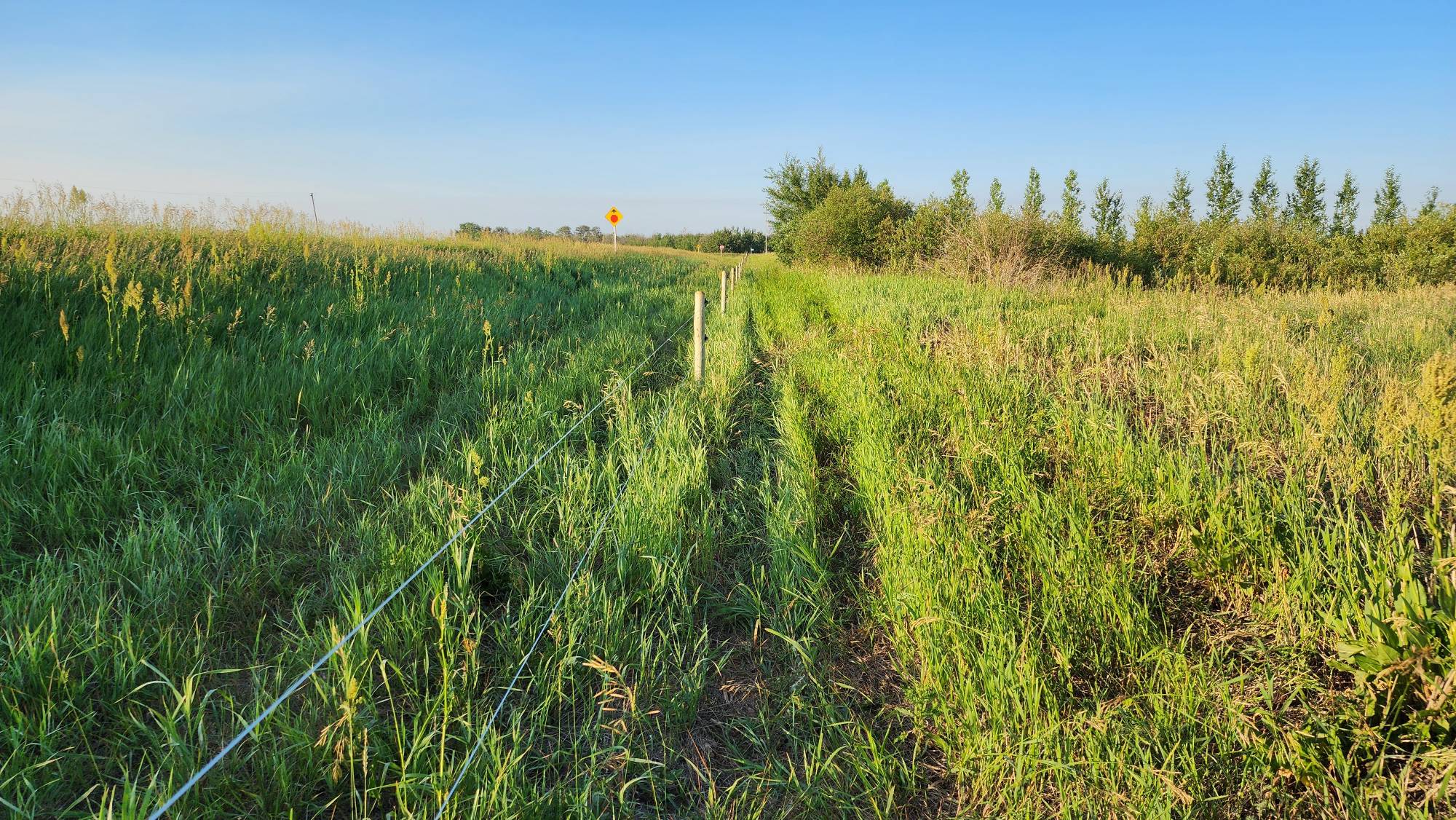
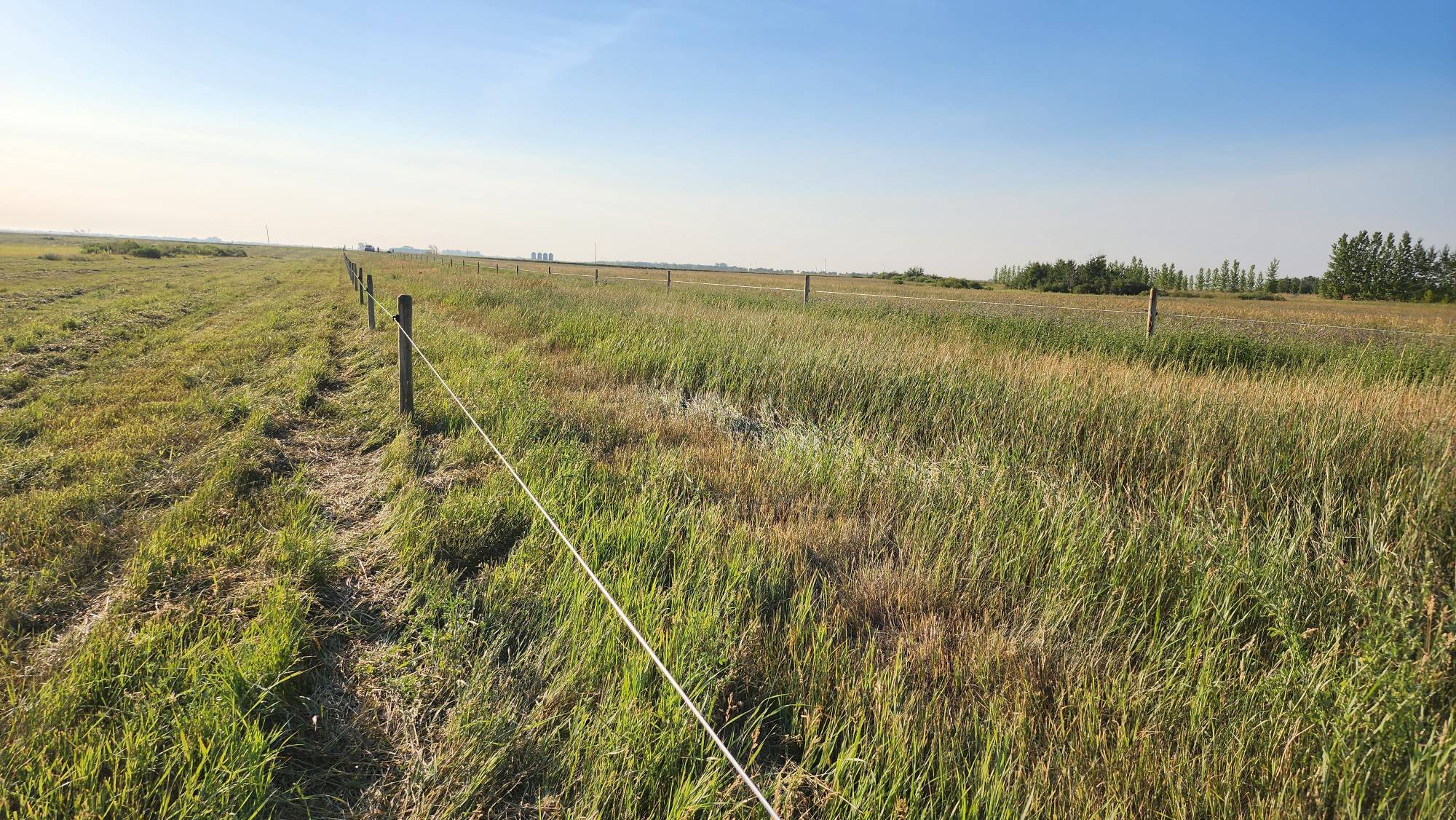
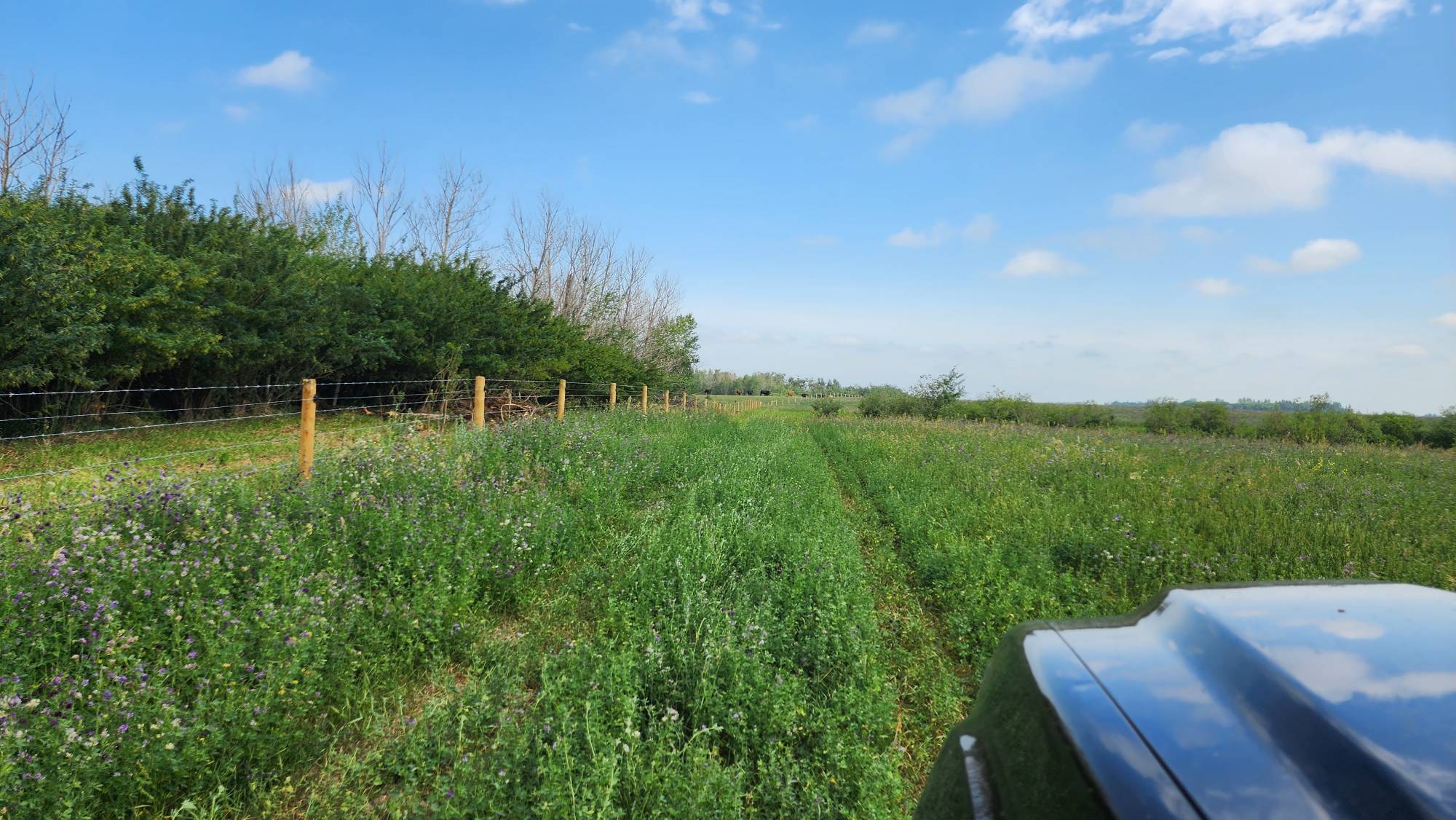
The site includes 105 acres of established tame forage and undeveloped grazing infrastructure. Prior to hosting a CFGA demonstration site, Steven completed a four-strand barbed-wire fence separating a 45-acre treed portion from the tame pasture.
No pasture assessments were completed but Steven reports seeing considerable improvement in pasture productivity in the short time since implementing rotational grazing. Under low moisture in 2023 the pasture recovered well and was in good condition in 2024. Compared to continuously grazed neighbouring pastures, this project was visibly more productive in 2024.
No chemical inputs were applied to the pasture. The Balzer Demonstration Site depends on natural fertilizer provided by herd animals as they graze.
Project Overview
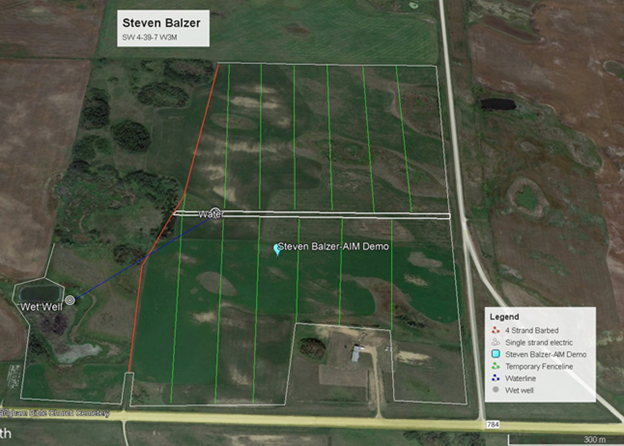
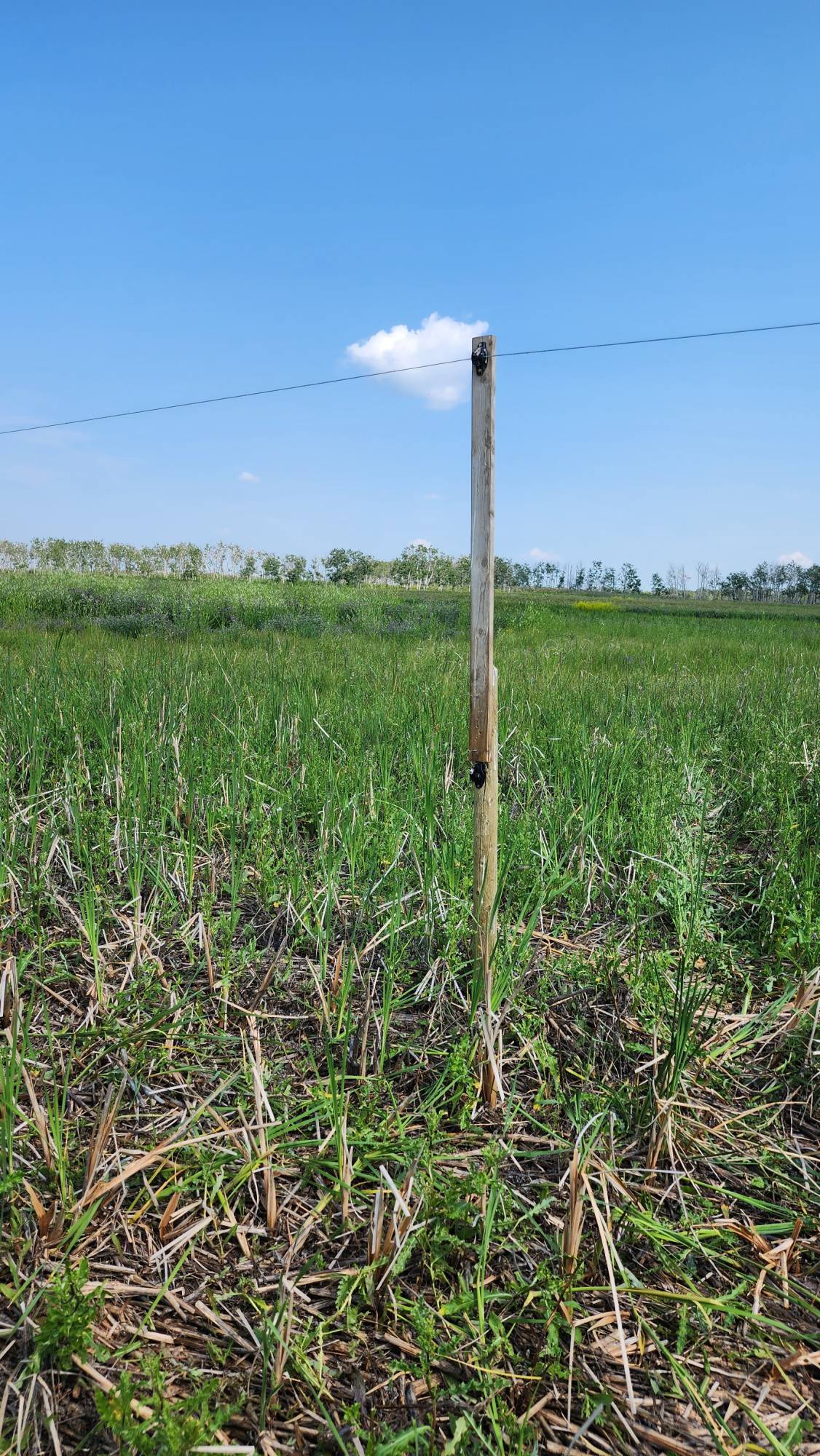
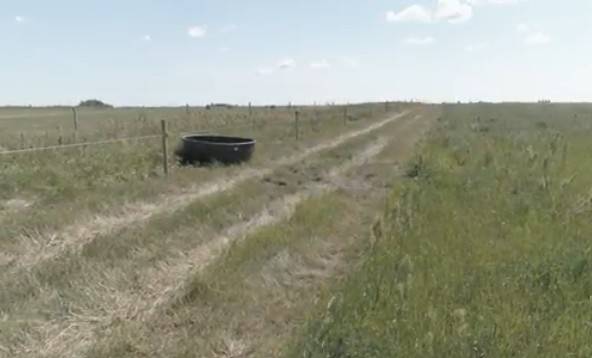
In 2023, the 105-acre tame grass pasture was split into sixteen paddocks using the Razer Grazer ™ temporary fencing unit. Water infrastructure needed to be developed on site, and the plan was to install flowlines and water troughs to the paddocks. In 2023, while water infrastructure was still being developed, water was temporarily provided by Elliot Tree Services and a water truck, supplied by Steven. Elliot Tree Services hauled water at least once per week to a 1,250-gallon tank they provided to supply water for the cattle at the site. Fencing and water-line installation were completed on the demonstration site from June 26 to 28, 2023.
This demonstration site grazes Angus replacement heifers, with spring weights of around 700lbs and fall weights of 950+lbs. The paddocks are typically grazed for 3-5 days with a following rest period of approximately 50 days. In 2024, the 45-acre treed portion was divided into three additional paddocks.
Under Steven’s current management, replacement heifers are moved onto the treed area in April and bale-graze until the grass is ready. In early May, the heifers begin grazing in the tame grass paddocks and usually come home in the fall. The bulls are typically turned out in late May.
Grazing Map
Short-Term Goals
This project aims to demonstrate a simple but effective rotational grazing system using an external permanent fence and internal electric fencing to separate the pasture into paddocks with a Razer Grazer™. Important additional objectives for Steven included establishing a closer-to-home pasture area for new replacement heifers and improving cattle distribution to prevent extended time at the dugout.
Long-Term Goals
The project’s long-term goals were to improve pasture productivity and health, increase stocking rates, and enhance pasture utilization, in order to meet Steven’s ultimate objective of grazing more animals on less land.
Project Details
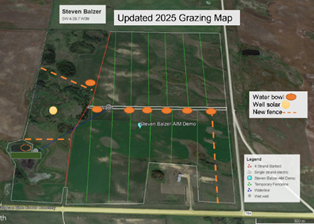
The project was set up in 2023 by splitting up the 105-acre pasture into approximately 16 paddocks and installing water lines. Twenty-four replacement heifers grazed the paddocks for 3-5 days, resulting in approximately 50 days of rest for each paddock. Originally, the plan was to set up an alleyway for cattle to access water. Instead, Steven dug a 60-foot deep solar-powered well in 2024 and delivered water to six watering bowls via pipeline, providing each paddock with a water supply.
Steven considered the project a success from the start, noting the pasture recovered well from the dry year in 2023 and was already showing signs of increased productivity. The tame pasture was able support an increased stocking rate from 24 heifers in 2023 to 42 heifers in 2024. Steven added another paddock in the tame grass pasture and divided the treed area of the pasture into three paddocks. They used this treed area to bale graze in April.
What’s Happening
2025 Update
The Balzer Ranch continued a schedule of bale-grazing the treed area in April and moving to the tame forage pasture in early May. Additional watering bowls were installed on the treed pasture as well. The productivity of the pasture was visibly improved, and the Balzer’s were able to increase their stocking rate again in 2025 to 30 heifers and 20 bred cow/calf pairs.
Steven is happy with the rotational grazing system on this pasture and will continue to graze the area as is. The Balzer Ranch is hoping to expand its rotationally grazed land and has its eye on a neighbouring hayfield to implement a similar rotational grazing system.
Additional Media
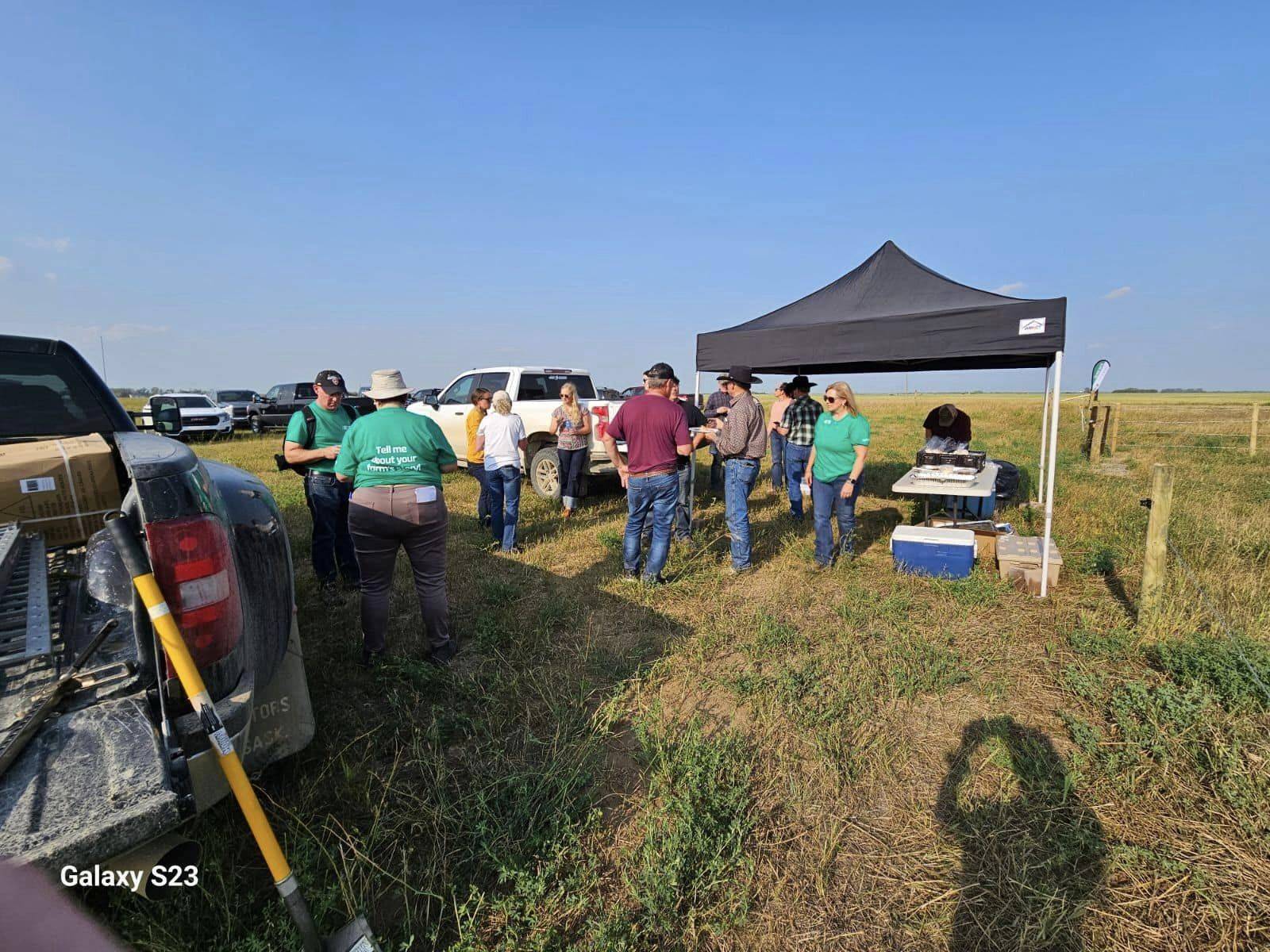
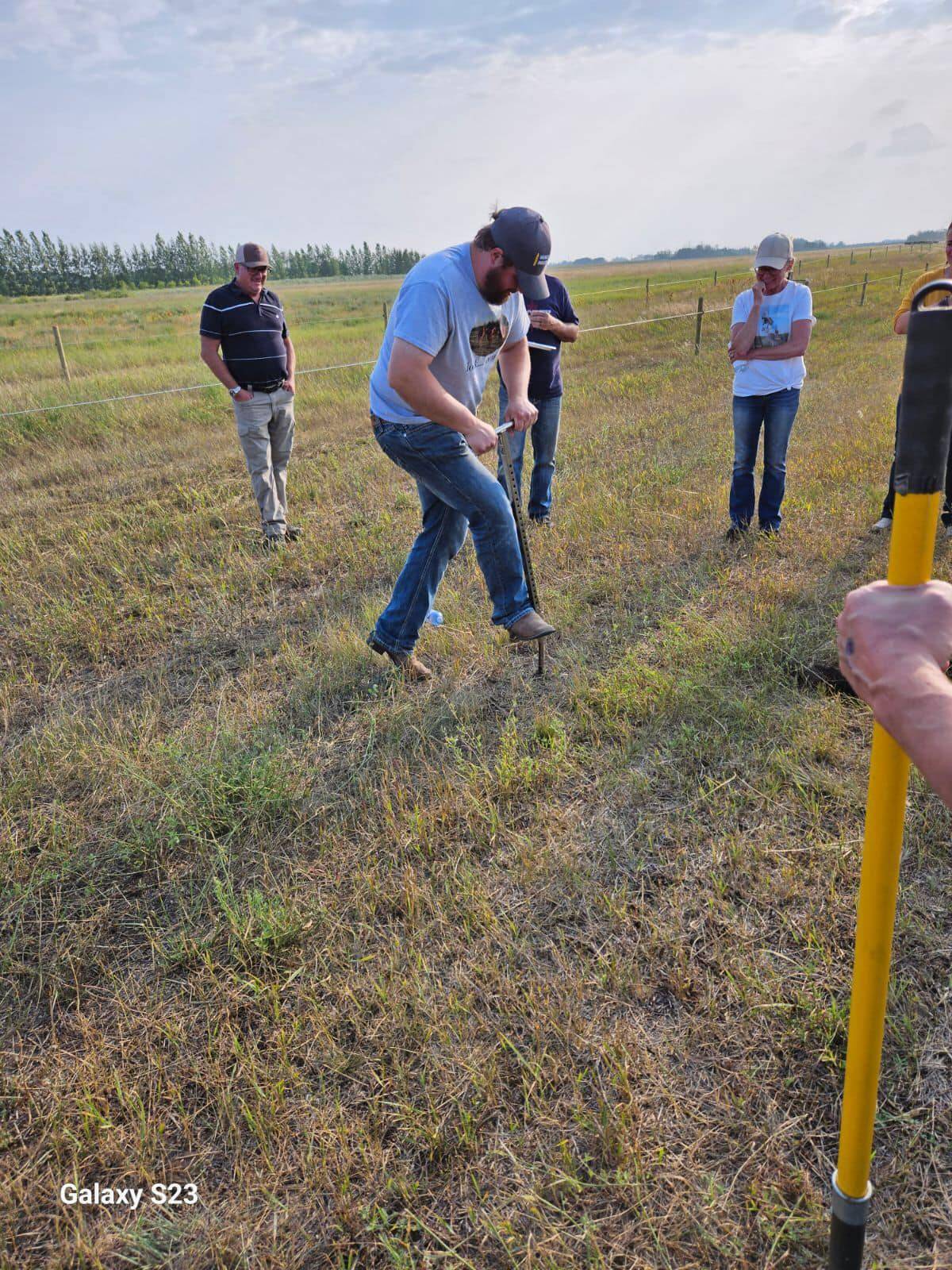
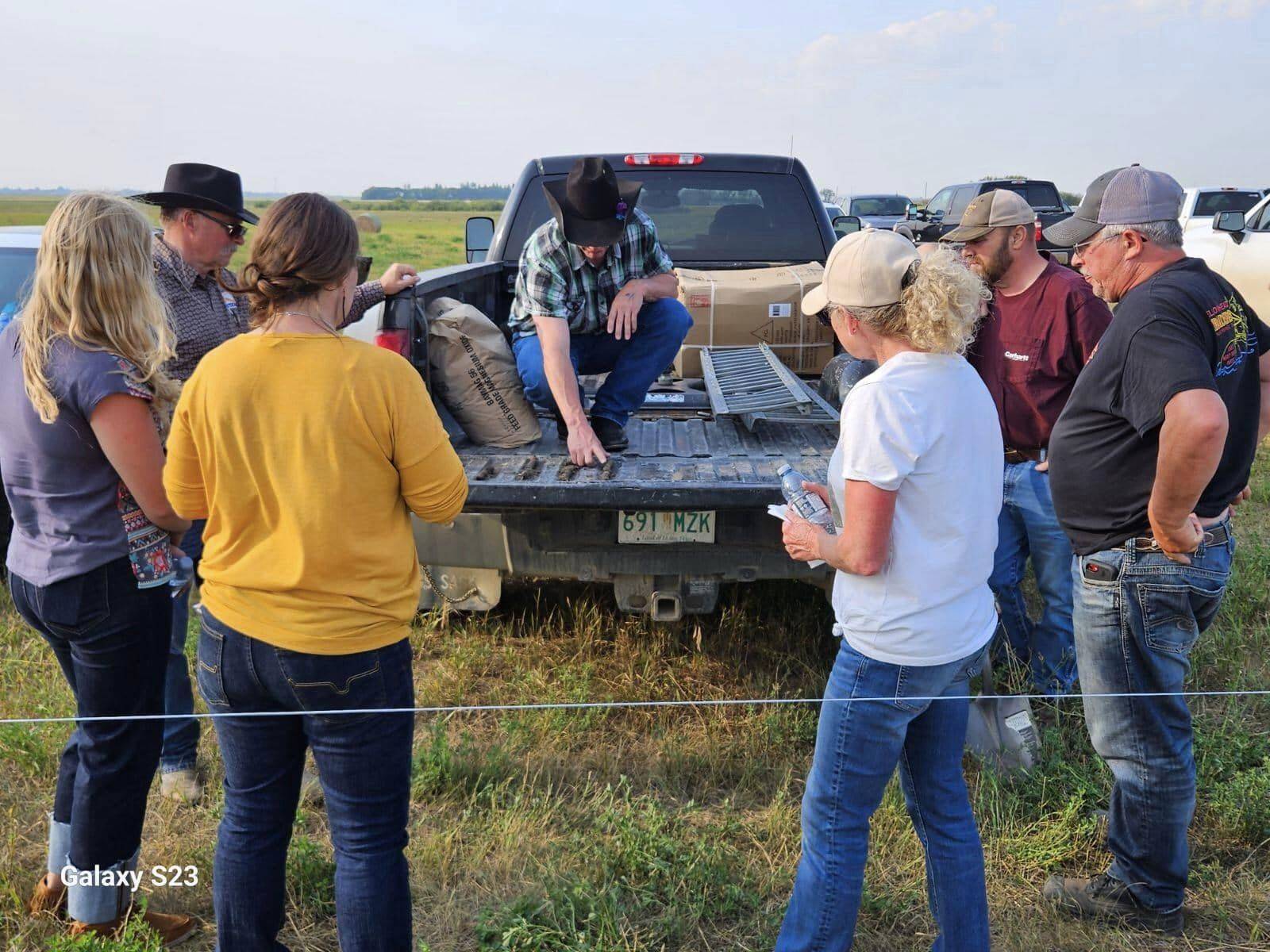
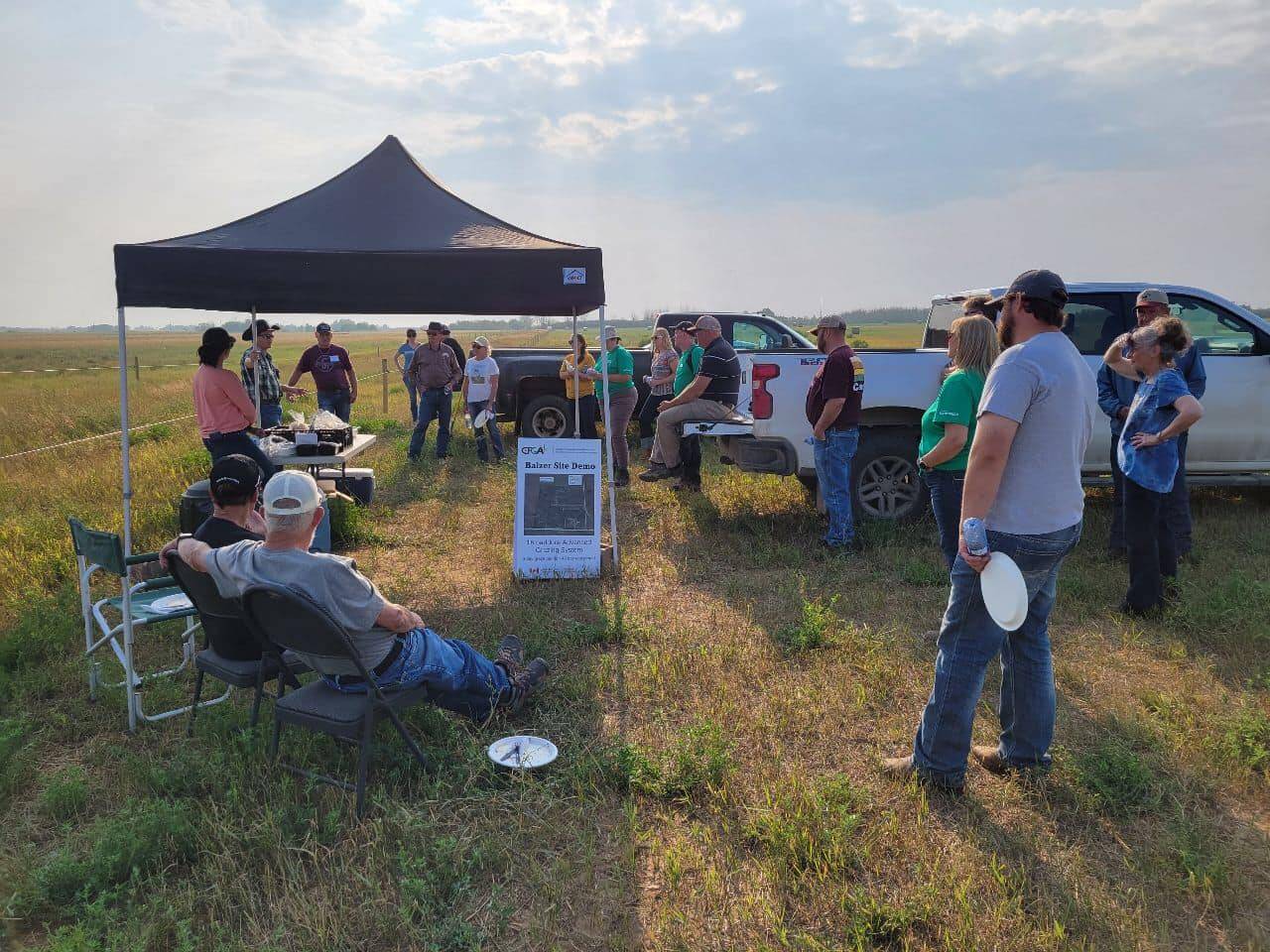
Funding for this project in part has been provided by Agriculture and Agri-Food Canada through the Agricultural Climate Solutions – On-Farm Climate Action Fund.