Site Background
About the Location
The Roy Berg Kinsella Research Ranch (Kinsella) Demonstration Site is located within the central parkland natural subregion, 150 kilometres east of Edmonton, Alberta. Covering roughly 12,300 acres, Kinsella is embedded in a rolling landscape dominated by agricultural lands and punctuated by aspen groves, wetlands and patches of native prairie.
Dominant native grasses are plains rough fescue (Festuca hallii), western porcupine grass (Hesperostipa curtiseta) and Junegrass (Koeleria macrantha). Forbs that are common across the area include northern bedstraw (Galium boreale), bastard toadflax (Comandra umbellata) and prairie goldenrod (Solidago missouriensis). Shrubs and trees, such as western snowberry (Symphoricarpos occidentalis), silverberry (Elaeagnus commutata) and trembling aspen (Populus tremuloides) are also present.
Average summer temperatures range from 14.7 to 16.5C and average winter temperatures range from -9.7 to -14.7C. Mean annual precipitation ranges between 350 and 517 mm. The region is characterized by highly productive Black and Dark Gray Chernozemic soils.
About the Farm
The Roy Berg Kinsella Research Ranch was established in 1960 as a beef cattle breeding facility and is now home to a herd of approximately 850 head of cattle, each of which has been genetically sequenced. It belongs to the University of Alberta.
This farm has five breeding herds.
- 230 cow-calf pairs and 45 yearling heifers of KC-Efficient cows crossbred with a heavy Angus influence and a moderate frame.
- 210 cow-calf pairs and 45 yearling heifers of KC-Control cows crossbred with a heavy Angus influence and a moderate frame.
- 200 cow-calf pairs and 40 yearling heifers of purebred, typical Angus.
- 120 cow-calf pairs and 30 yearling heifers of purebred, typical Charolais.
- 110 cow-calf pairs and 25 yearling heifers of Purebred Hay Converters with moderate to large frames.
Also, bulls to service all herds.
Learning About Rotational Grazing
Adaptive multi-paddock (AMP) grazing divides the larger pasture into multiple sub-paddocks, promoting a period of recovery following intensive grazing. At Kinsella, cattle are rotated through three pastures each divided into 10 sub-pastures. An additional three pastures are managed under continuous grazing, providing the opportunity to compare and contrast the impacts of each grazing system.
The Rotational Grazing Objective
Rotational grazing strategies aim to even out uneven grazing patterns, reducing overgrazed areas of pasture and encouraging use of less preferred areas. Improvements to soil and plant health are also desired. The CAT-G Project (Climate action through Grazing https://cat-g.ca/), funded by Genomes Canada and Alberta and RDAR, contrasts continuous verses rotational (or AMP) grazing systems, and measures holistic responses in the surrounding ecosystem. The aim of the CAT-G Project is to determine if AMP grazing will promote carbon sequestration within grasslands and reduce greenhouse gas emissions.
Agronomic Details
Vegetation on over half of Kinsella’s area is characteristic of aspen parkland. Plant communities on the remainder are dominated by tame forage species.
Project Overview
The CAT-G project is contrasting two grazing systems and measuring responses in cattle productivity, soil fertility and health, forage production and quality, greenhouse gas emissions and carbon sequestration, as well as economic considerations and barriers to adoption of grazing practices. Several platform-enabled projects are layered over this baseline comparison, including insects, nesting birds, biocrusts, and drone surveillance of forage quality and growth. ARECA and the On Farm Climate Action Fund provided financial support for water infrastructure and electric fence capabilities, making the implementation of a project of this size and scope possible.
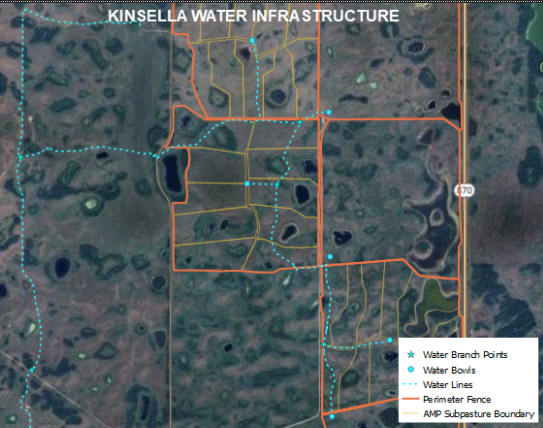
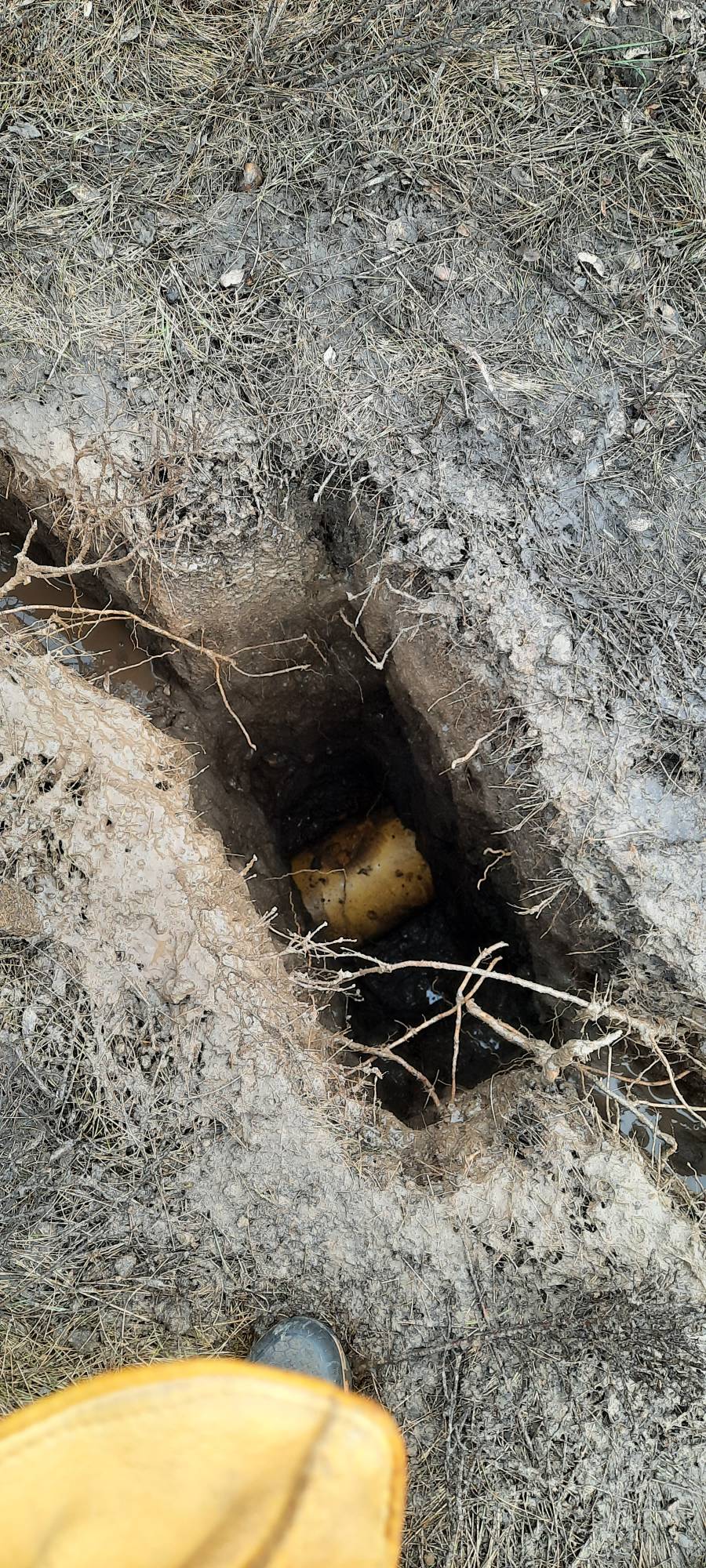
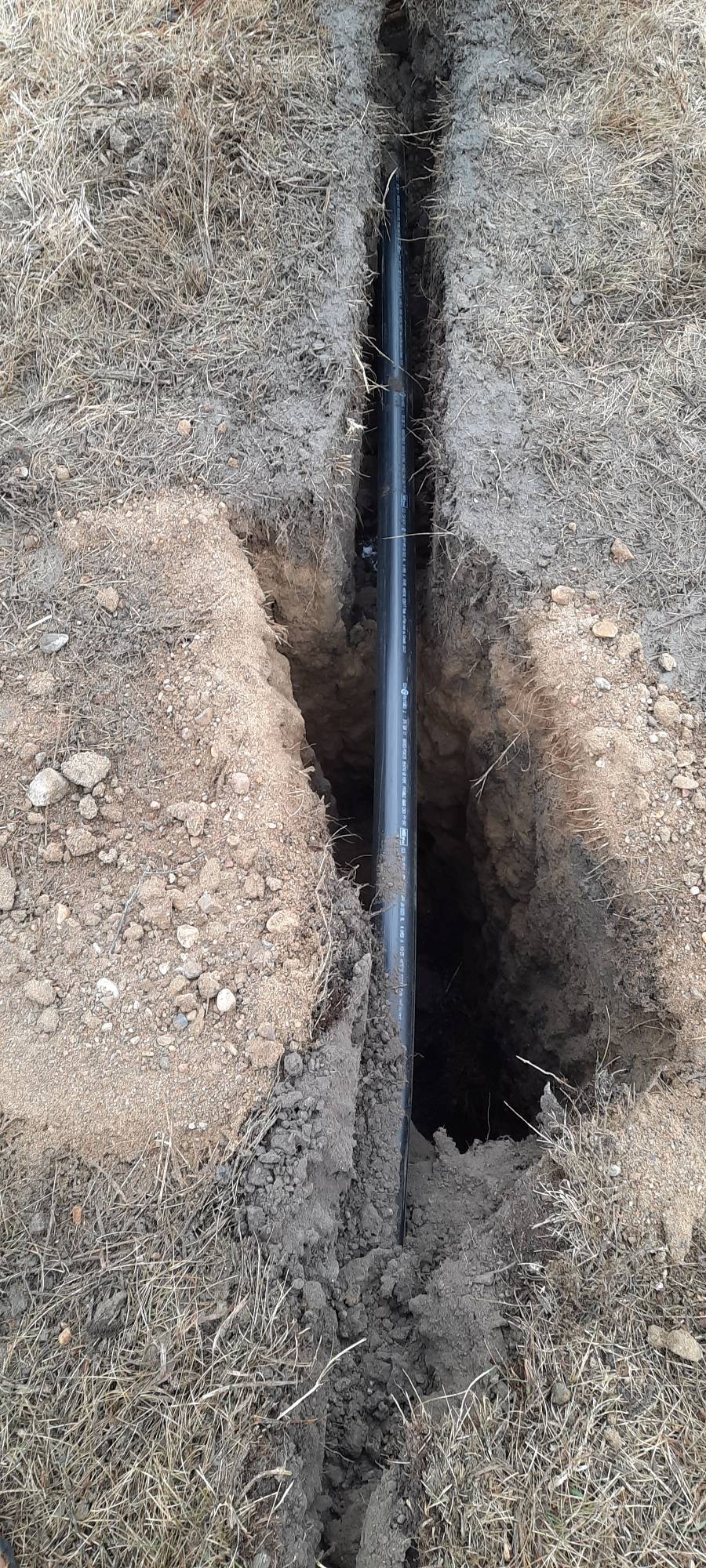
The comparison of continuous grazing versus the rotational systems on the ranch required a significant infrastructure investment. In each rotational field, a central high-tensile alleyway was constructed and electrified with Razer GrazersTM to provide power to temporary electric fence lines and create sub-pasture boundaries. Water infrastructure was also added (Figure 1), including underground water lines, water bowls, and barriers to prevent cattle damage to water infrastructure. Additional necessary upgrades identified at Kinsella included an overhaul of handling facilities to allow for easier processing and sorting of animals into groups (completed in 2025), and a new pipeline to be used to pump water from a well with a higher flow rate (2026).
At the beginning of the 2025 grazing season, 223 Kinsella Composite Control cows and 197 calves were split into seven herds (six experimental herds plus one extra). Three herds were moved into AMP rotational grazing systems and three herds moved into a continuous grazing system. Cow and calf weights, rump fat thickness, rectal fecal samples and rumen fluid samples (subset of cows) were all collected at the start of the trial. Two herds were also fitted with GPS collars. The first rotation targeted a biomass removal of 30%. Once this was reached, cattle were processed and sampled prior to the start of the second rotation. The second rotation aimed for 70% of available biomass removal by the conclusion of the grazing season. Cattle were again sampled at the conclusion of the second rotation.
Grazing Map
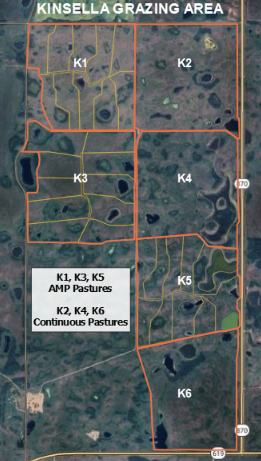
Figure 2. Overview of the grazing area at the Roy Berg Kinsella Research Ranch that is being used in the Climate Action Through Grazing (CAT-G) project. AMP = adaptive multi-paddock.
Short-Term Goals
A True North Technologies Grasshopper rising plate meter (Figure 3) was utilized to measure the available plant height at high, medium and low slope positions in each sub-pasture in order to quantify the biomass removed by cattle. Cattle were stocked according to the previous year’s available biomass, targeting a removal of 30% biomass in the first rotation and 70% removal by the conclusion of the second rotation. The project team was able to meet the target utilization rates in most pastures (see example in Figure 4), with some refinements and adjustments planned for next year. Converting the Grasshopper-derived plant height data to standing biomass allowed for evaluation of our 2025 grazing goals.
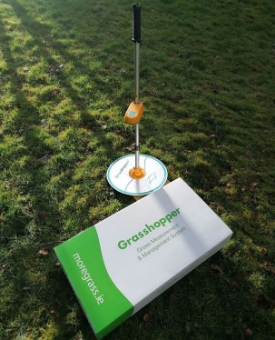
Figure 3. Image of a True North Technologies Grasshopper. A rising plate meter used to measure plant height. Image credits - https://www.swseeds.co.uk/platemeters/grass-hopper-platemeter/.
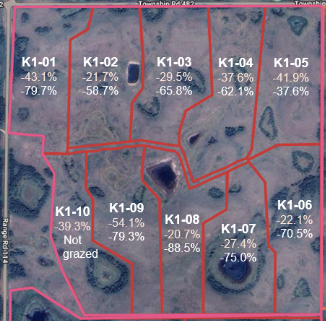
Figure 4. Percent biomass removal for each sub-pasture in K1 in the first rotation (orange number), and at the end of the second rotation (white number). This was calculated by looking at the available biomass calculated from the Grasshopper plant height measurements that was removed and comparing it to the initial biomass that was available.
Long Term Goals
The project aims to facilitate methods for improved carbon storage in Canadian grasslands by identifying and promoting improved grazing management practice, while also reaping productivity and financial benefits for producers.
The goal at Kinsella is to improve pasture quality in the rotationally grazed fields, improve carbon sequestration, and maintain a productive cattle herd. The research team will continue to evaluate fecal forage and soil samples as well as other metrics collected in 2025 and build on the data set in the 2026 grazing season. The ultimate aim of this research project is to provide producers with practical data-driven tools such as rapid forage assessments through near-infrared spectroscopy (NIRs), science-backed rationale behind choosing a rotational grazing system, and identify potential barriers and drivers of adopting rotational grazing systems.
Site Description
See Grazing Map.
At Kinsella, pastures are divided into three AMP grazing pastures, K1, K3, and K5, which are then divided into 10 sub-pastures using temporary electric fence (Figure 2). Cattle have continuous access to water bowls located in the central alleyway of each AMP pasture. On three continuous grazing pastures (K2, K4, and K6) cattle have access to existing water sources in addition to new water bowls installed in each pasture. On average, each pasture is approximately 109 acres in size, with the smallest, K4, consisting of ~82 acres, while the largest consists of ~119 acres (K3).
Project Details
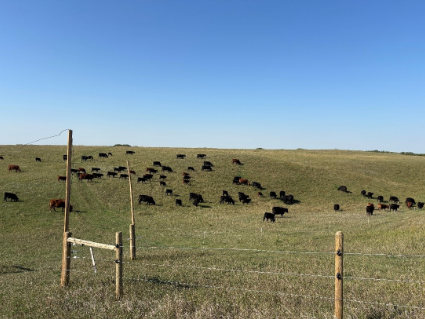
Figure 5. Photo of cattle grazing in K3. Shows some of the infrastructure developed for the AMP pastures.
What’s Happening
2025 Update
In 2025, the CAT-G Project made significant progress towards objectives. Cattle were successfully rotated within a rotational grazing system in three pastures at Kinsella, removing roughly 30% biomass in the first rotation and 70% by the end of the second rotation. Little difference was noted in the productivity of cattle on pasture, and early findings suggest that there may be lower methane emissions associated with the AMP grazed cattle (K1) as compared to cattle in the continuous pasture (K2). Additional water and fencing infrastructure functioned well, with few escapes and minimal damage. Rapid assessment tools such as NIRs for forage quality analysis have been developed to allow interpretation of forage quality changes during the season; results differed between AMP-grazed and conventionally grazed pastures. The evaluation of soil carbon differences between AMP-grazed and conventionally grazed pastures will illustrate the impact of grazing management on environmental metrics.
Acknowledgment
Additional Media
Funding for this project in part has been provided by Agriculture and Agri-Food Canada through the Agricultural Climate Solutions – On-Farm Climate Action Fund.