
.png)
Site Background
About the Location
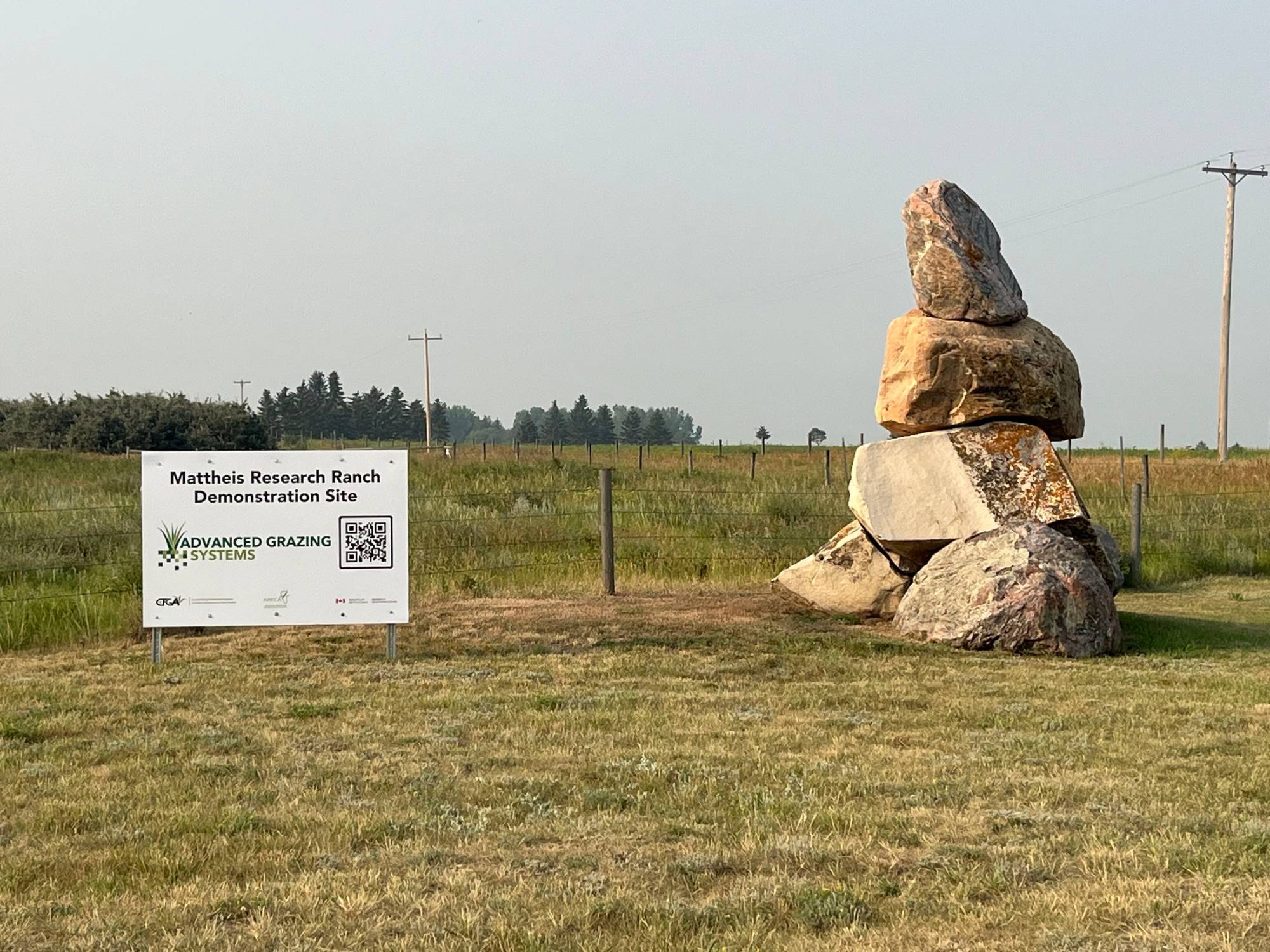
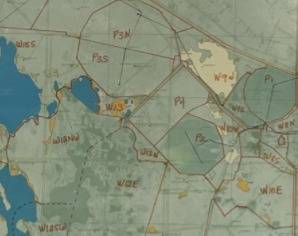
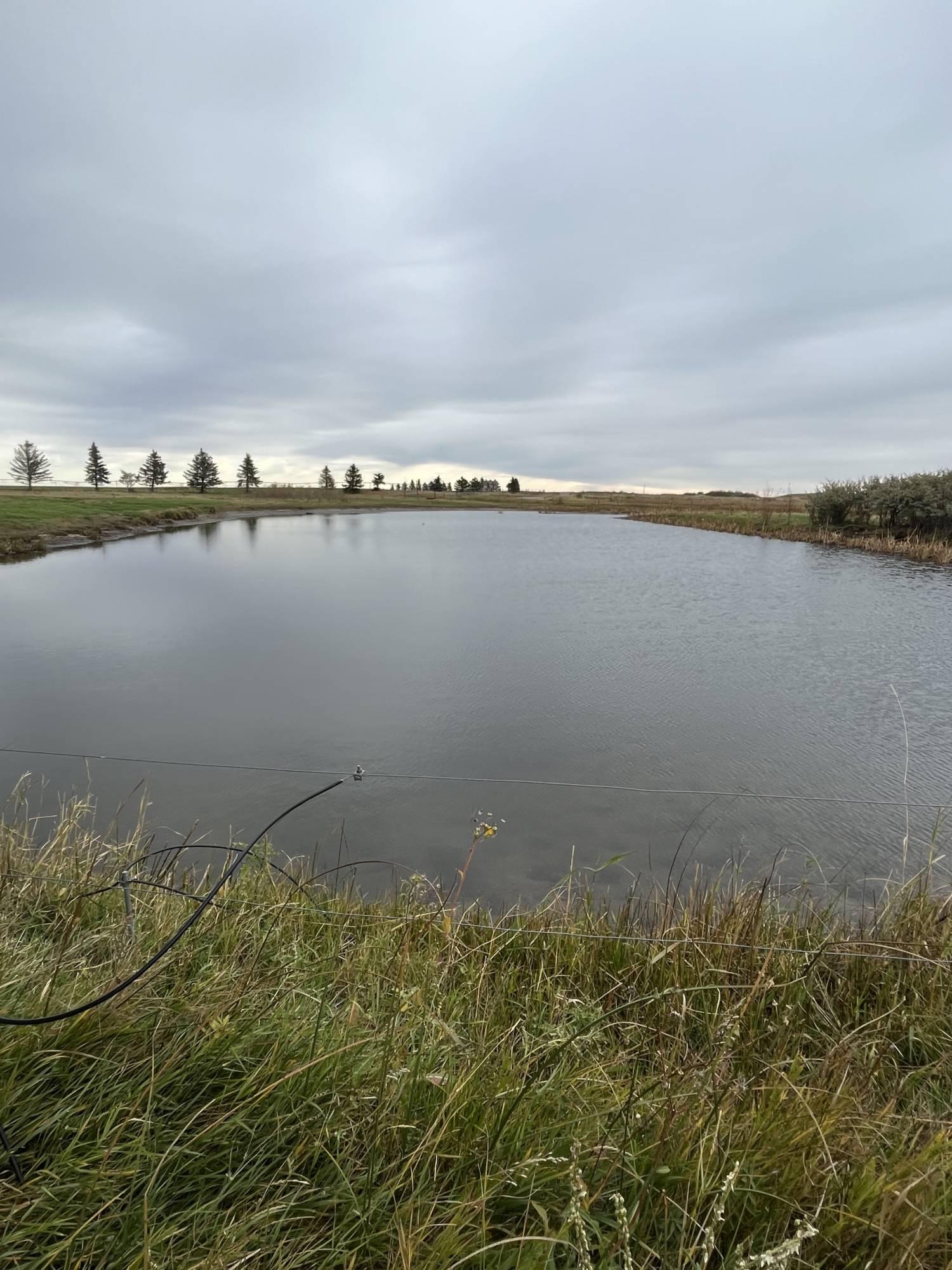
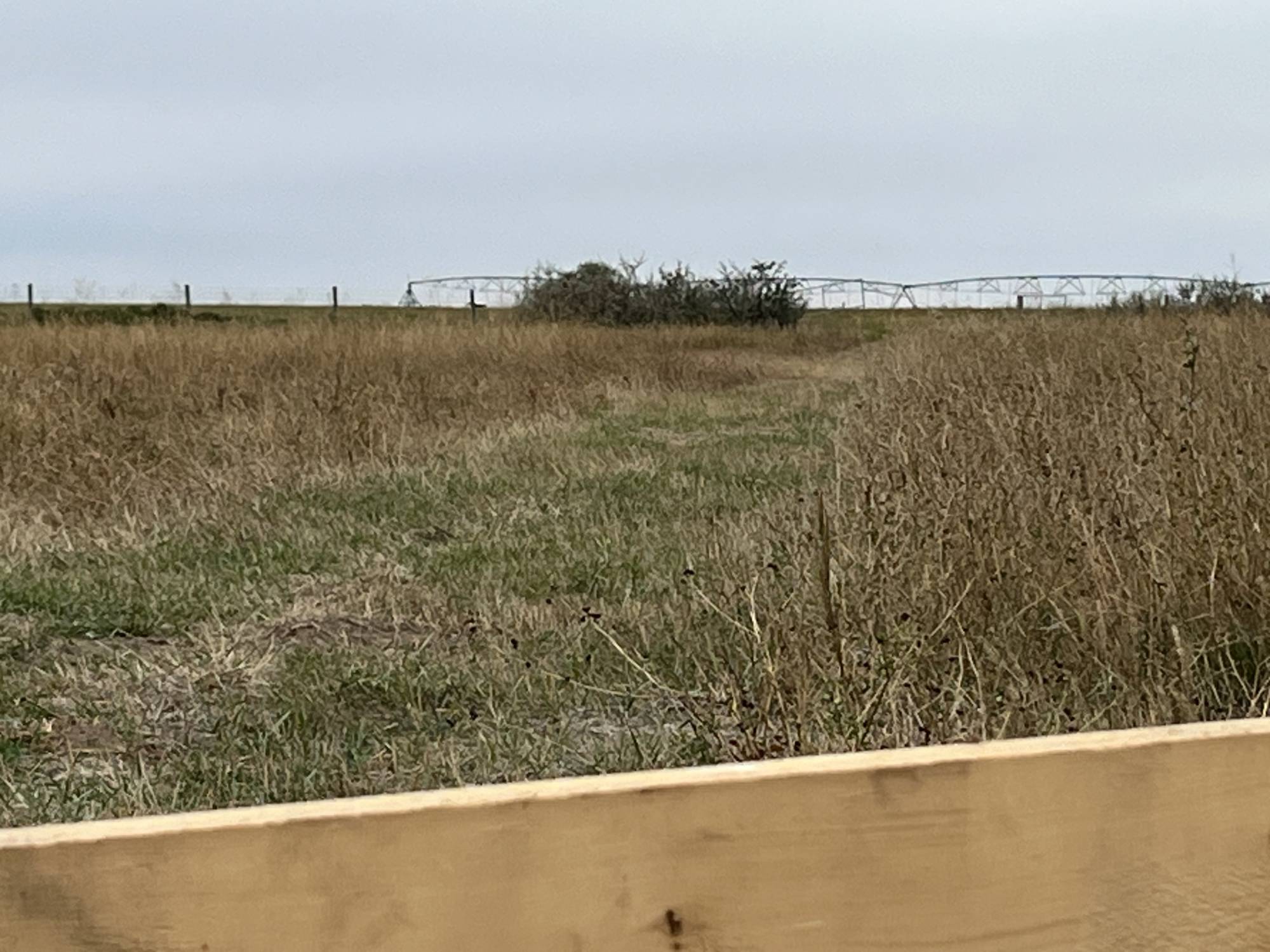
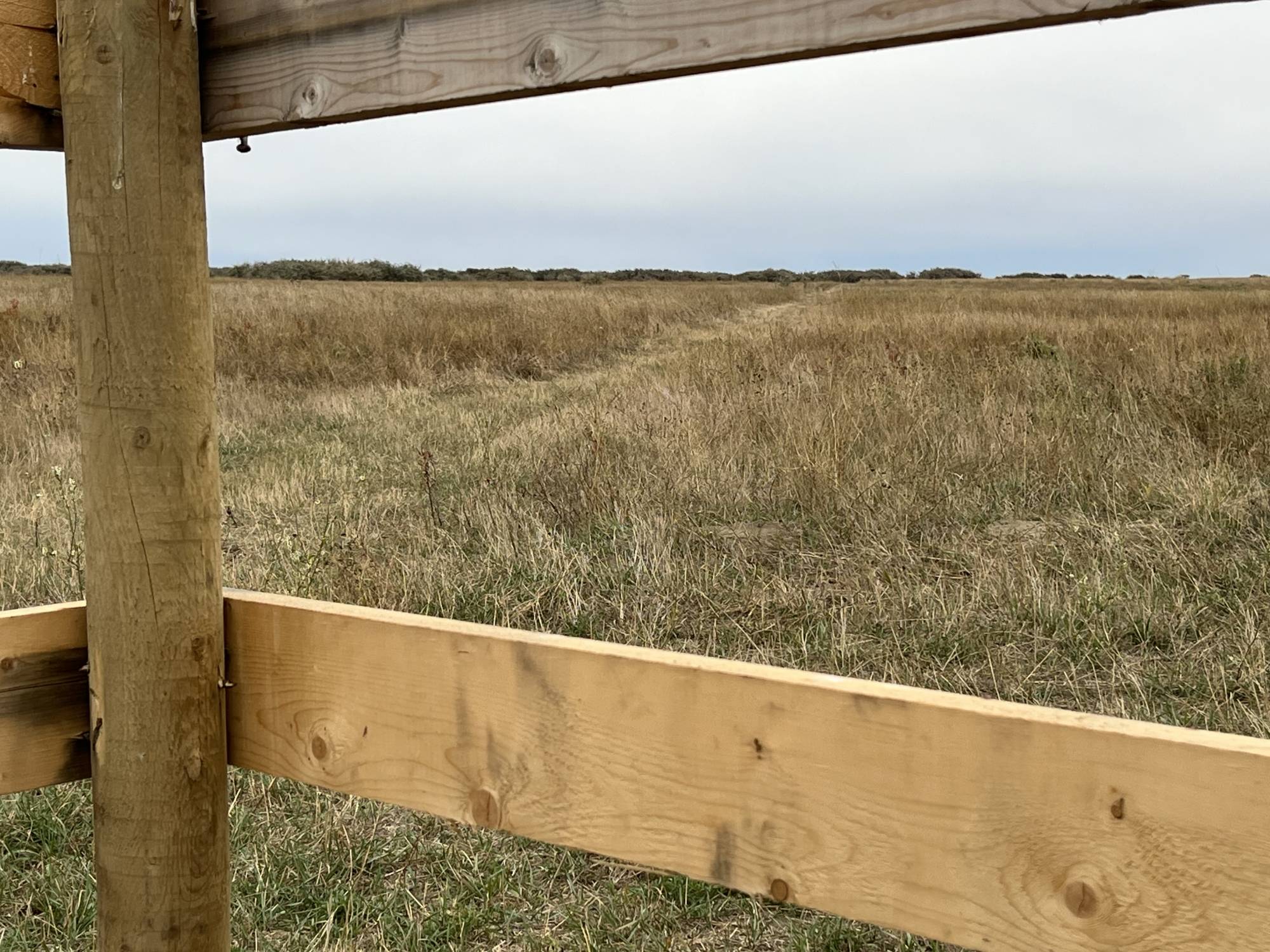
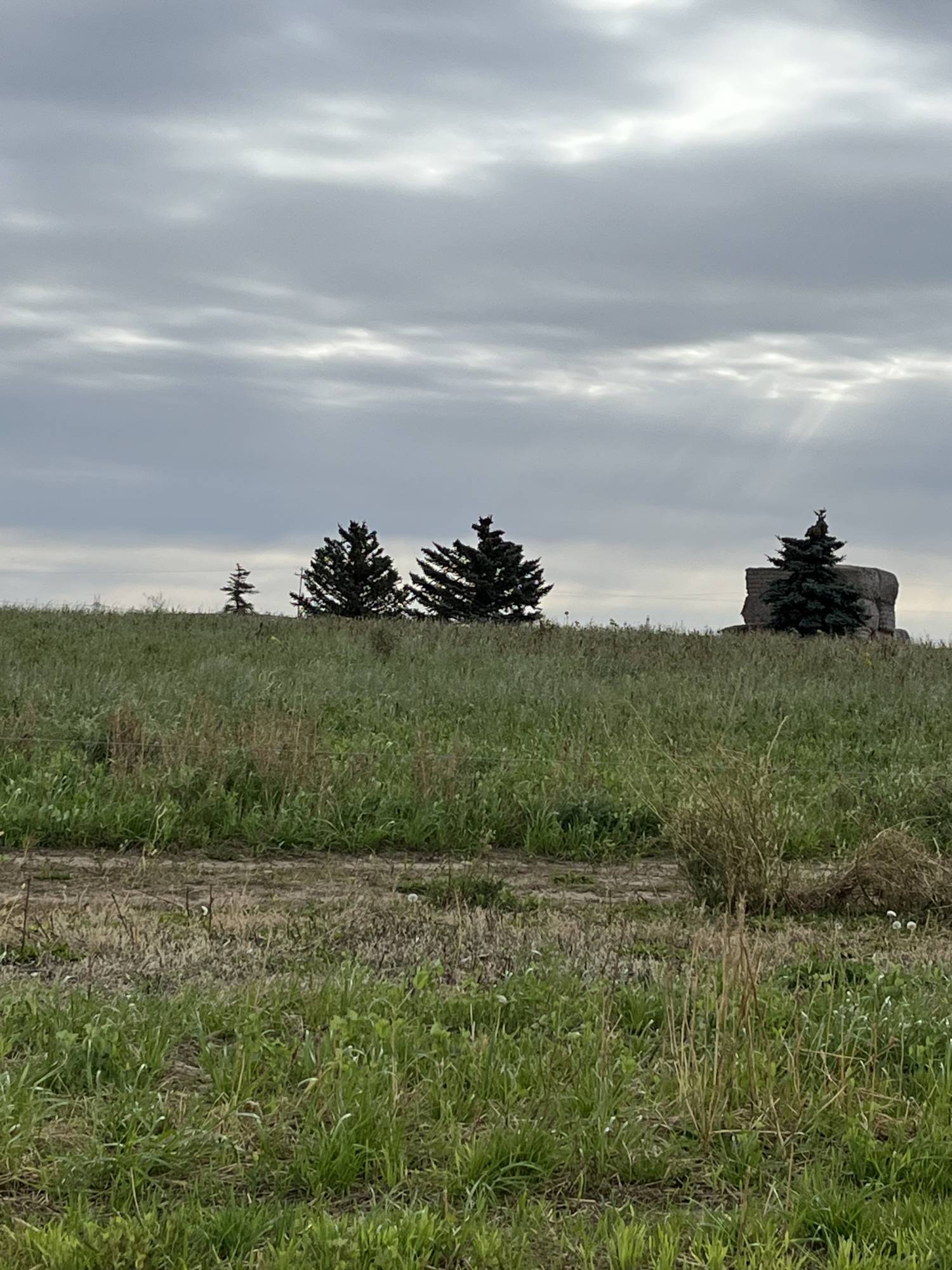
The Mattheis Research Ranch Demonstration Site is located in the Dry Mixedgrass Natural subregion, 25 kilometres north of Duchess, Alberta. The Ranch is part of a large contiguous tract of rangeland with diverse topography, vegetation and wildlife. Adjacent to the Red Deer River in the north, it encompasses 10,000 acres of native prairie, Ducks Unlimited Canada (DUC) wetlands, 420 acres of pivot irrigation, 200 acres of annual forage, and riparian areas.
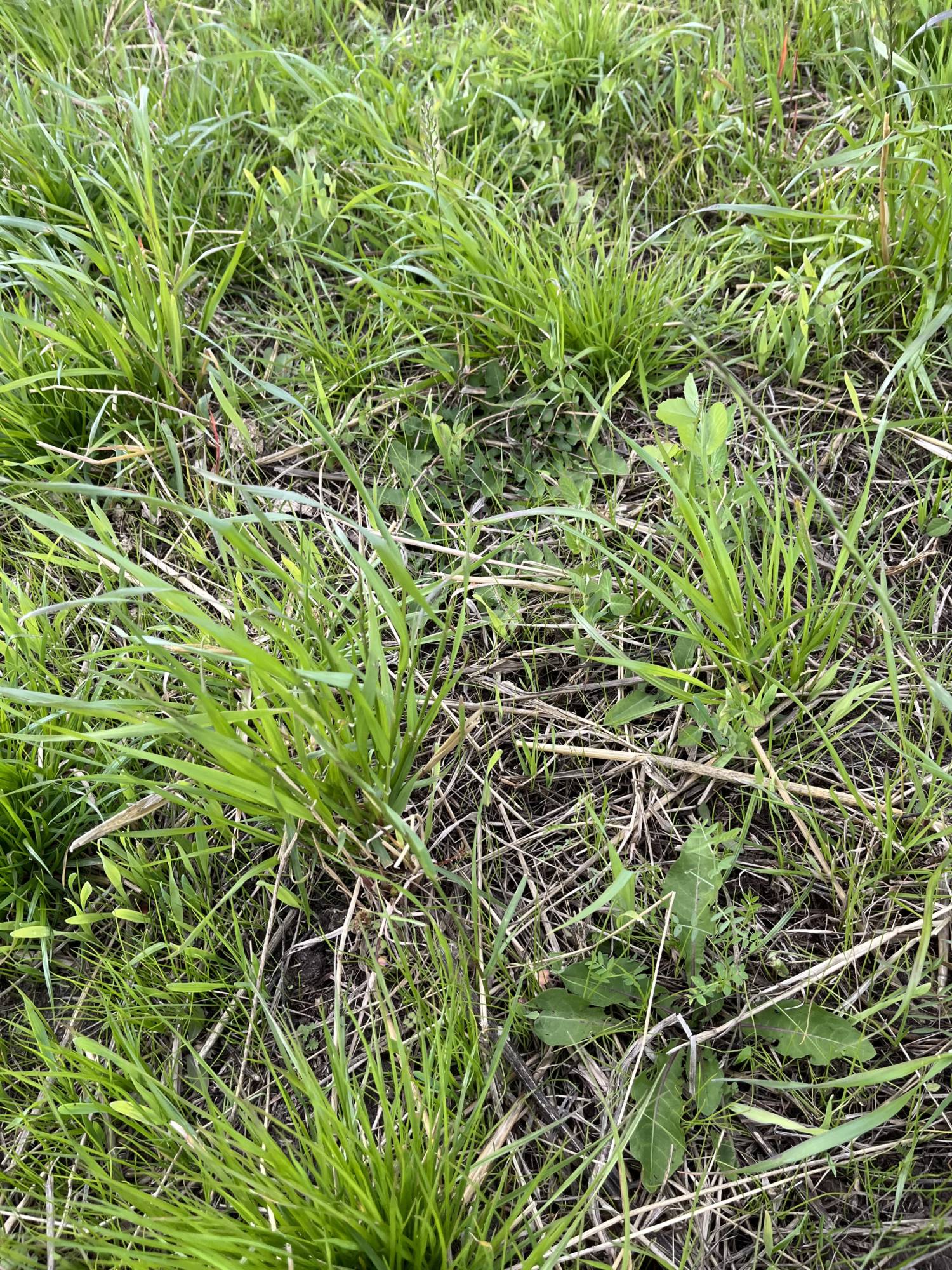
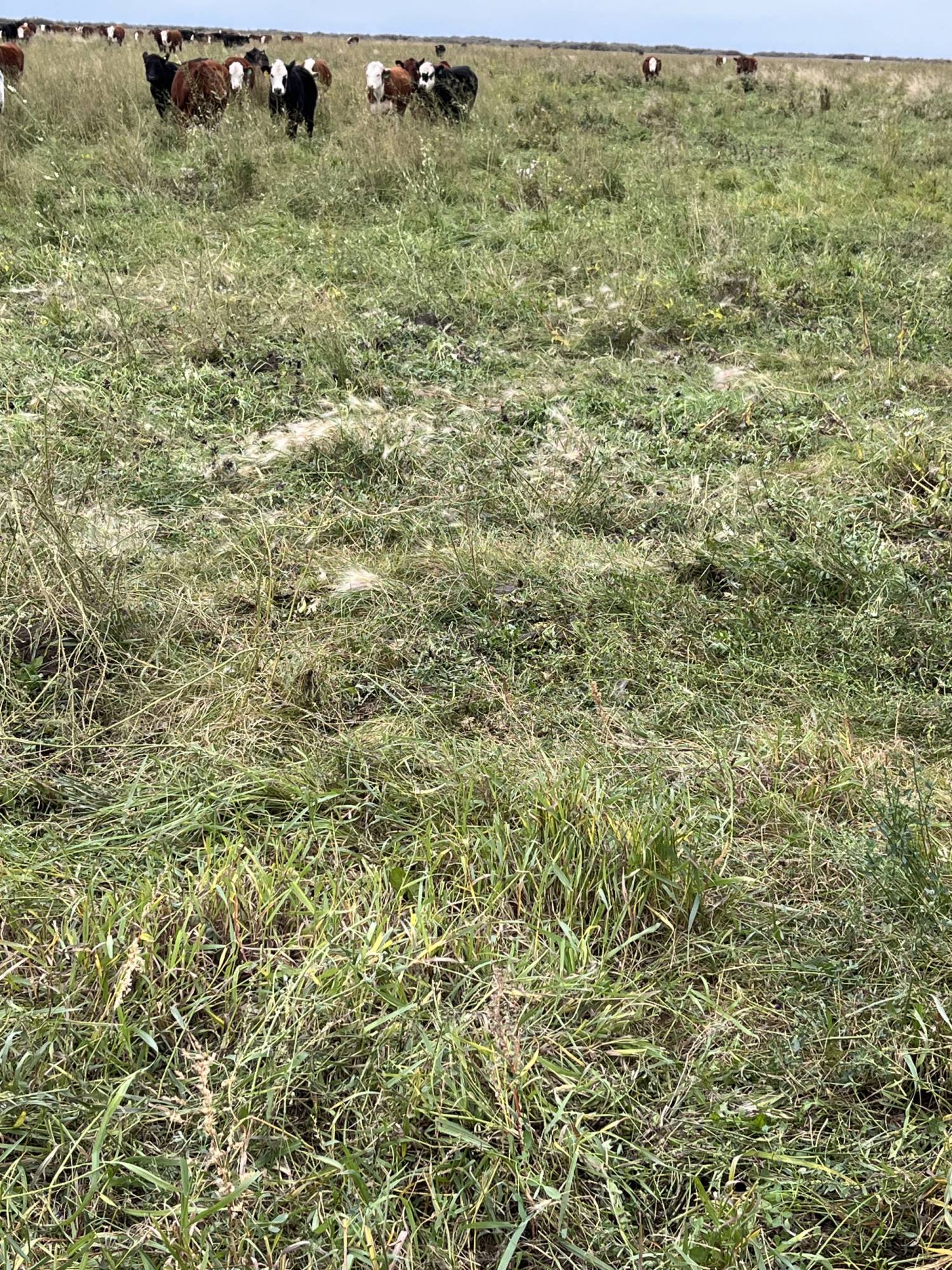
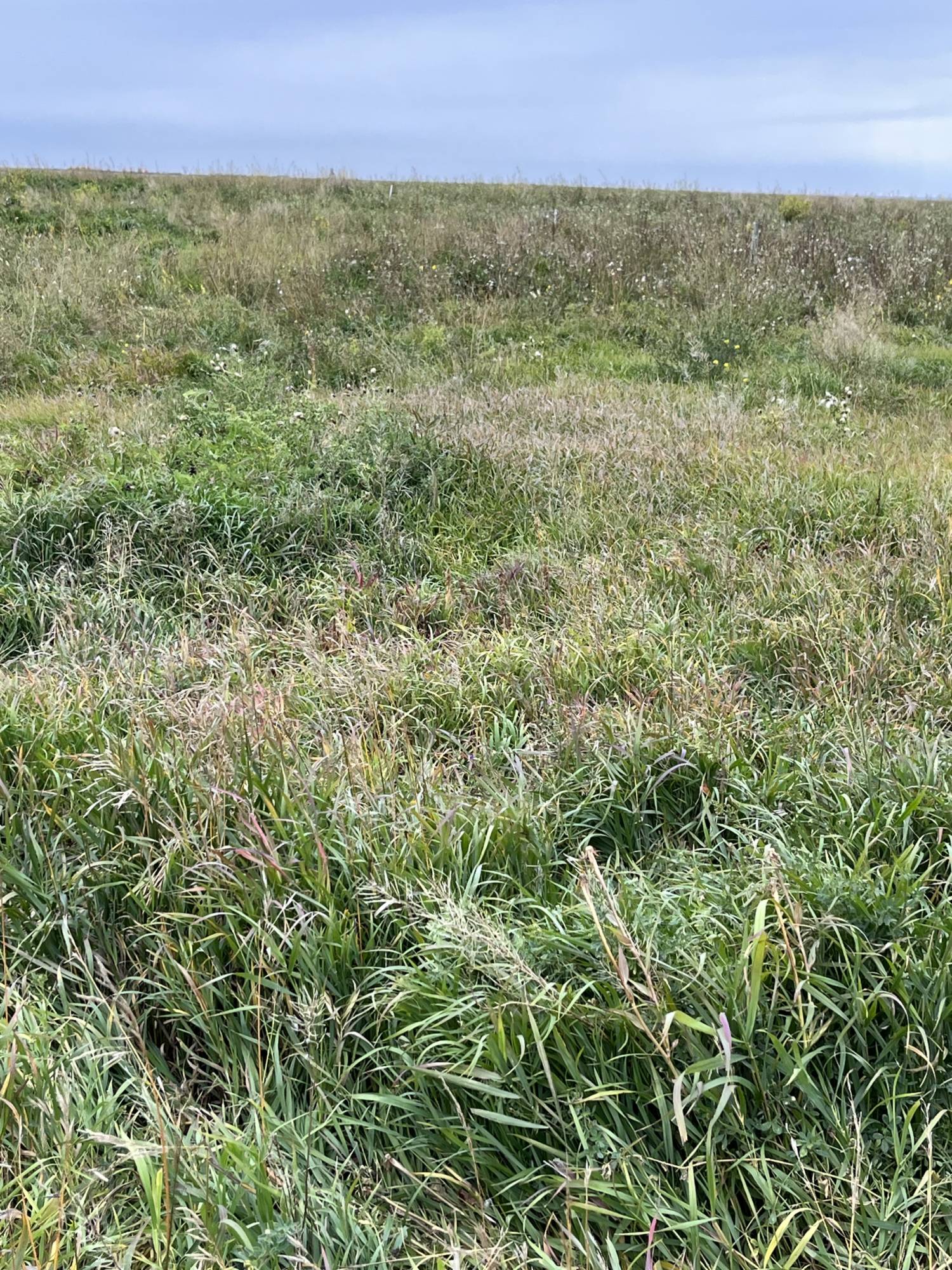
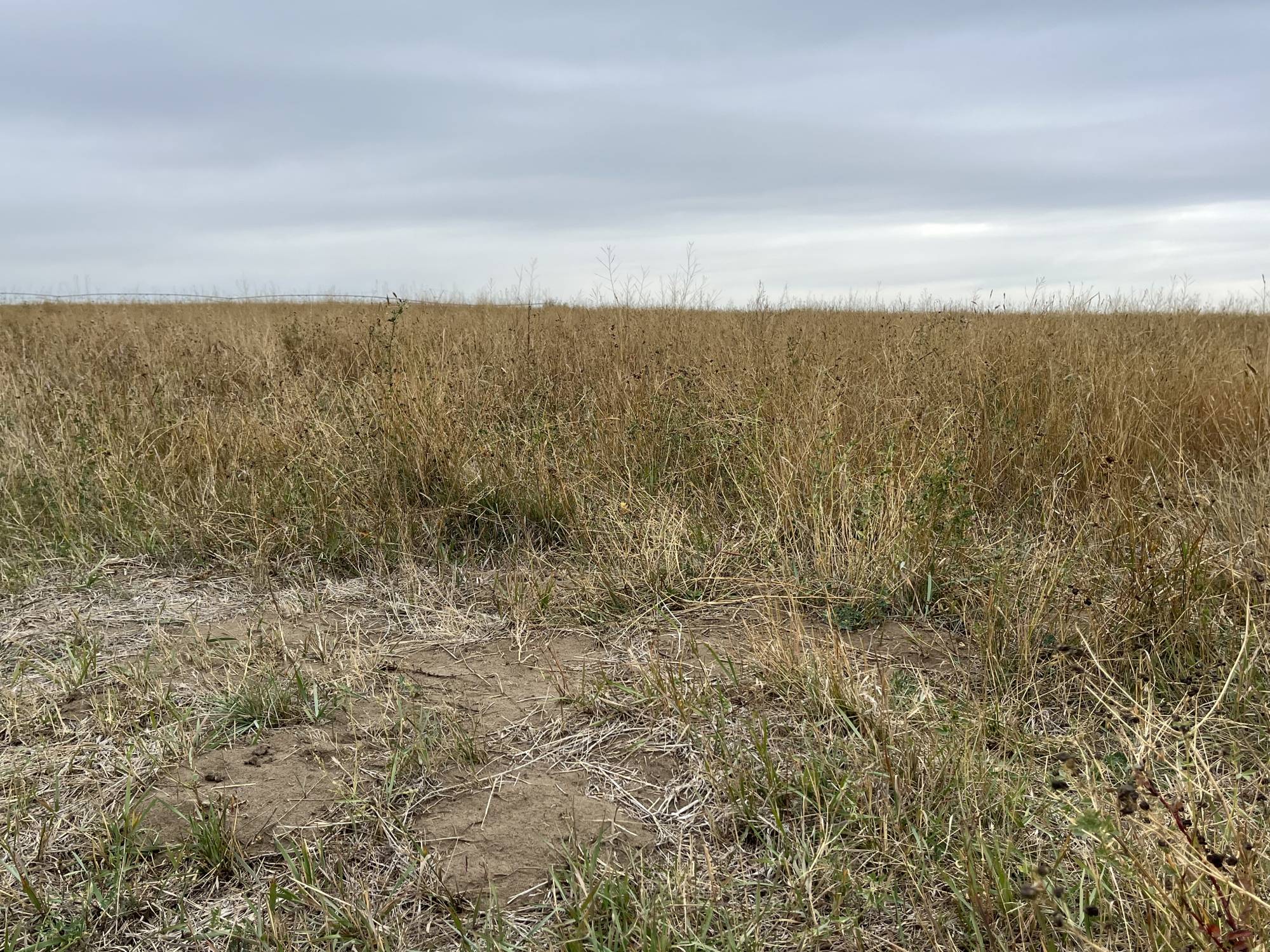
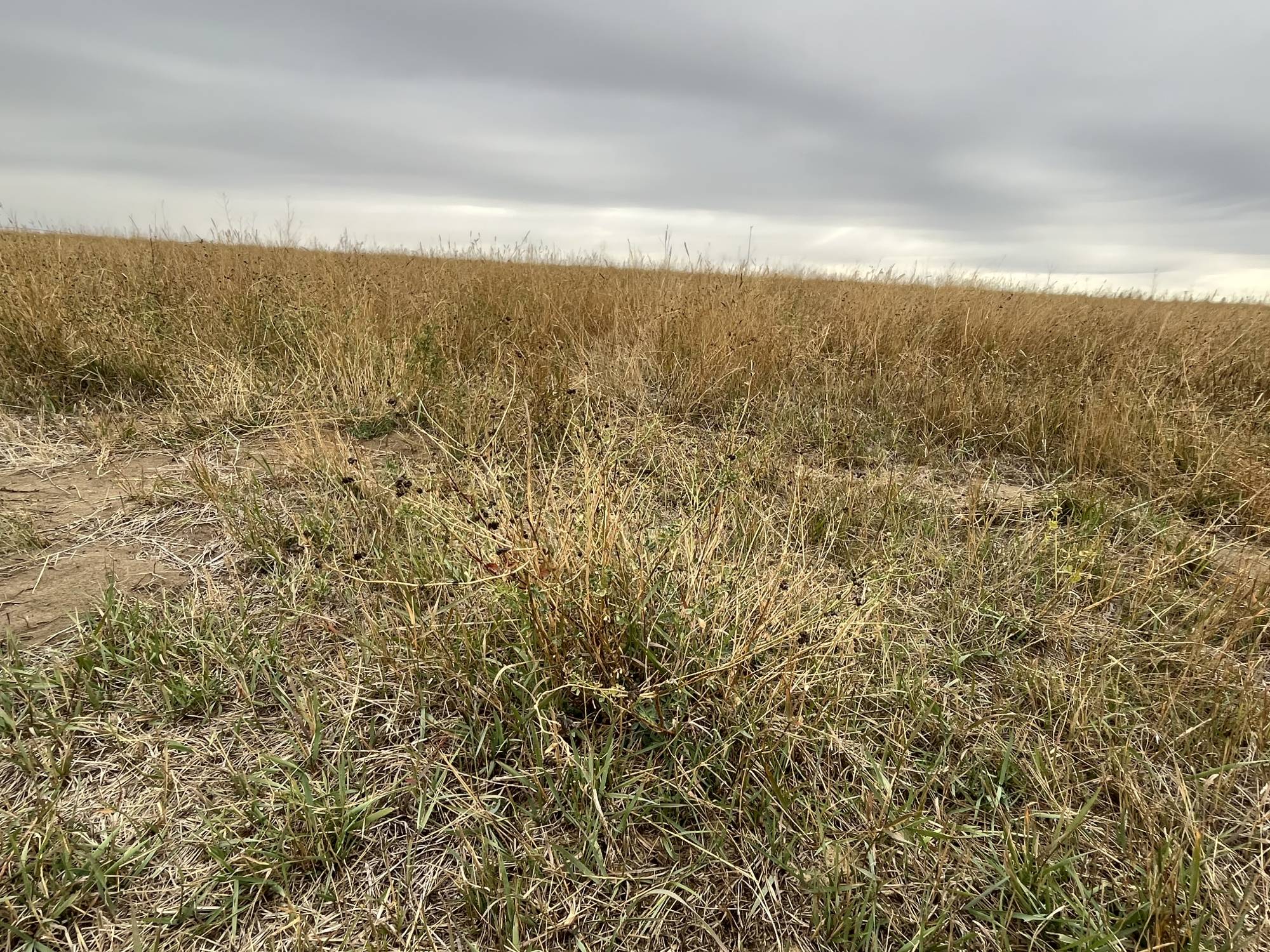
Dominant grass species include needle-and-thread (Hesperostipa comata), Junegrass (Koeleria macrantha), blue grama (Bouteloua gracilis) and sand grass (Calamovilfa longifolia). The plant community also includes several forbs, such as pasture sage (Artemisia frigida) and scarlet mallow (Sphaeralcea coccinea) and shrubs, including prickly rose (Rosa acicularis), western snowberry (Symphoricarpos occidentalis) and thorny buffaloberry (Shepherdia argentea). Soils are predominantly thin-to-average Brown Chernozems.
The warmest and driest part of the Canadian Prairies, the Dry Mixedgrass Natural subregion typically sees less than 350 mm of precipitation annually. Average temperatures include a summer mean of 19°C and a winter mean of -12°C.
About the Farm
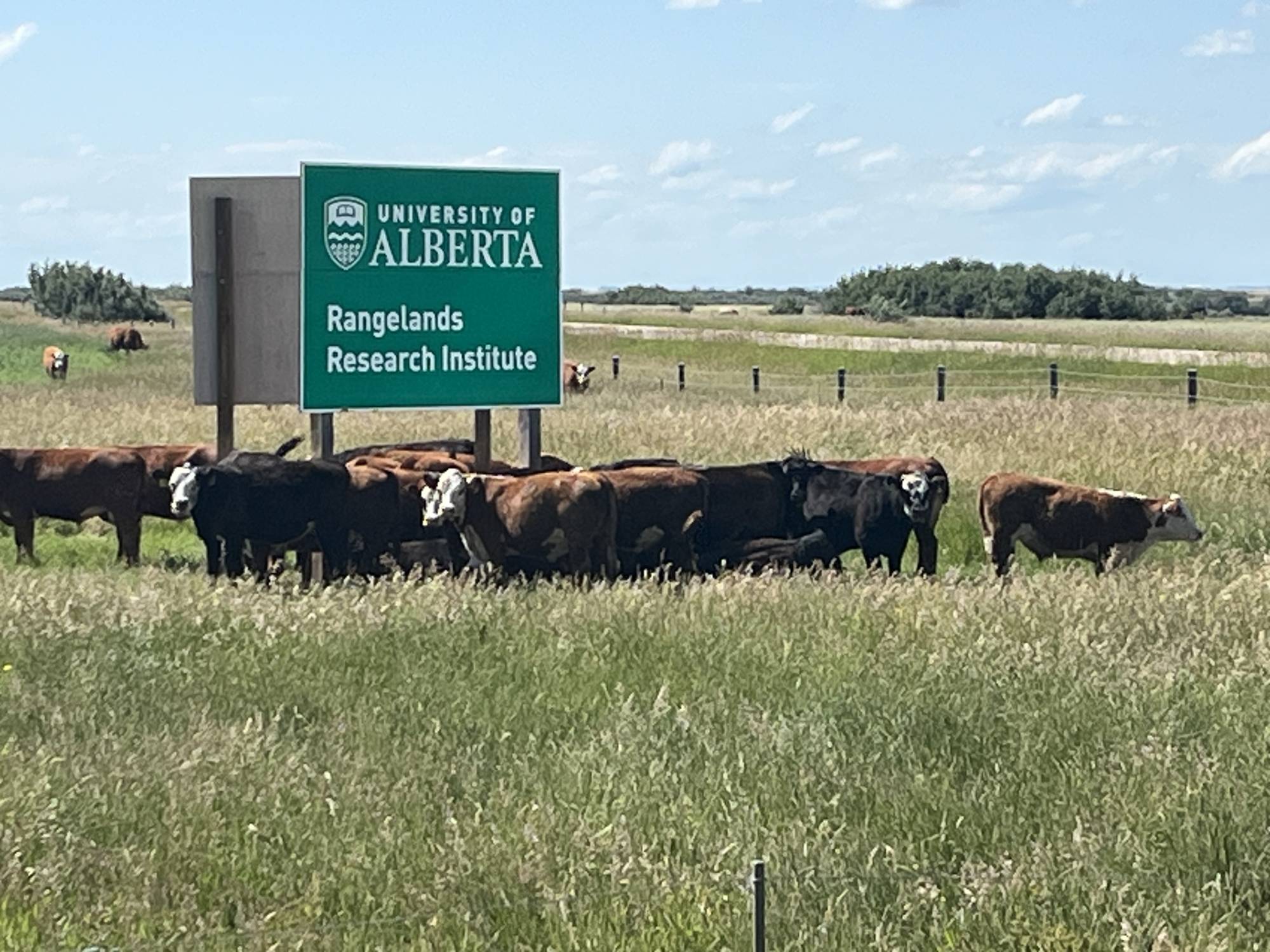
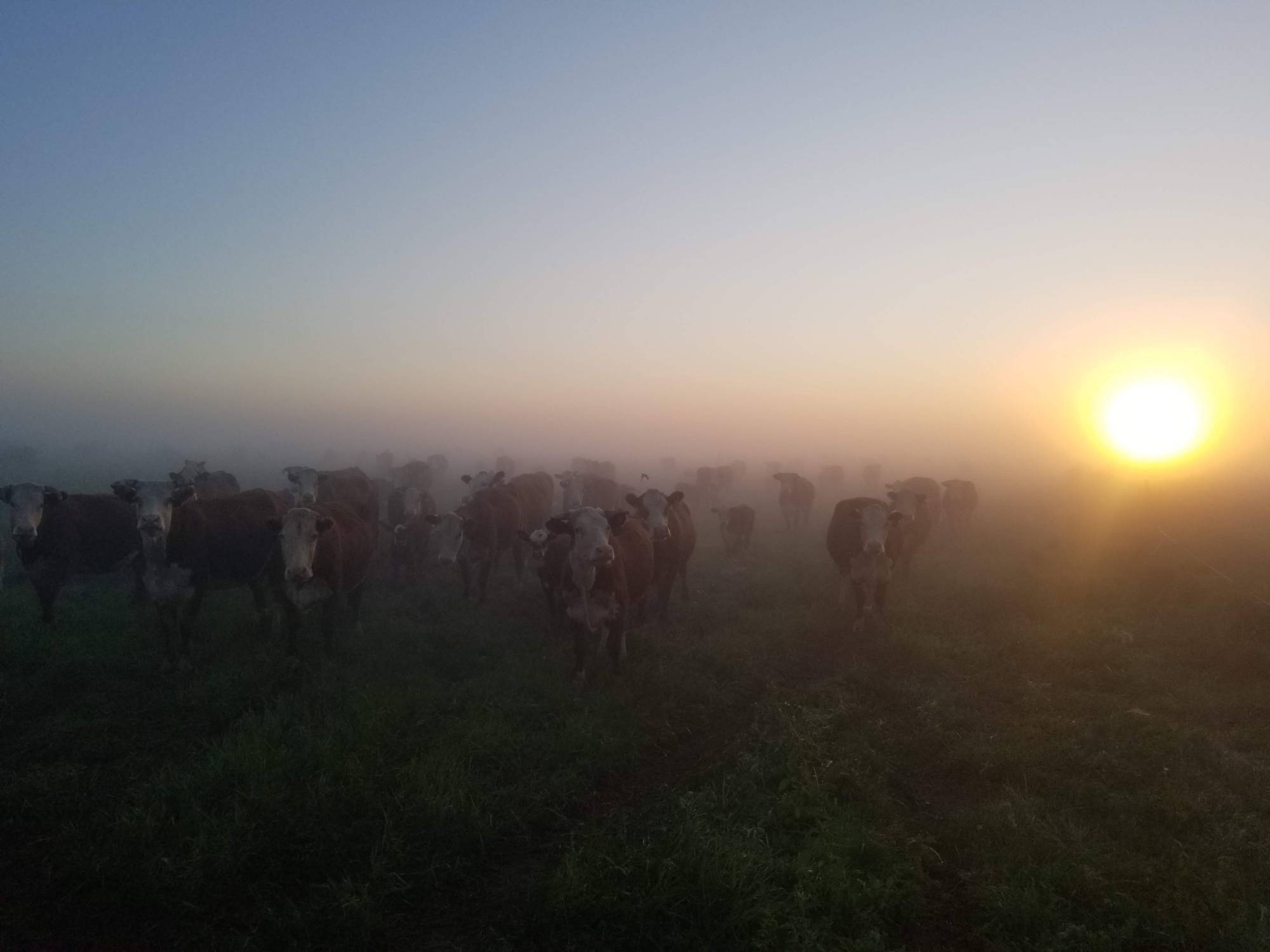
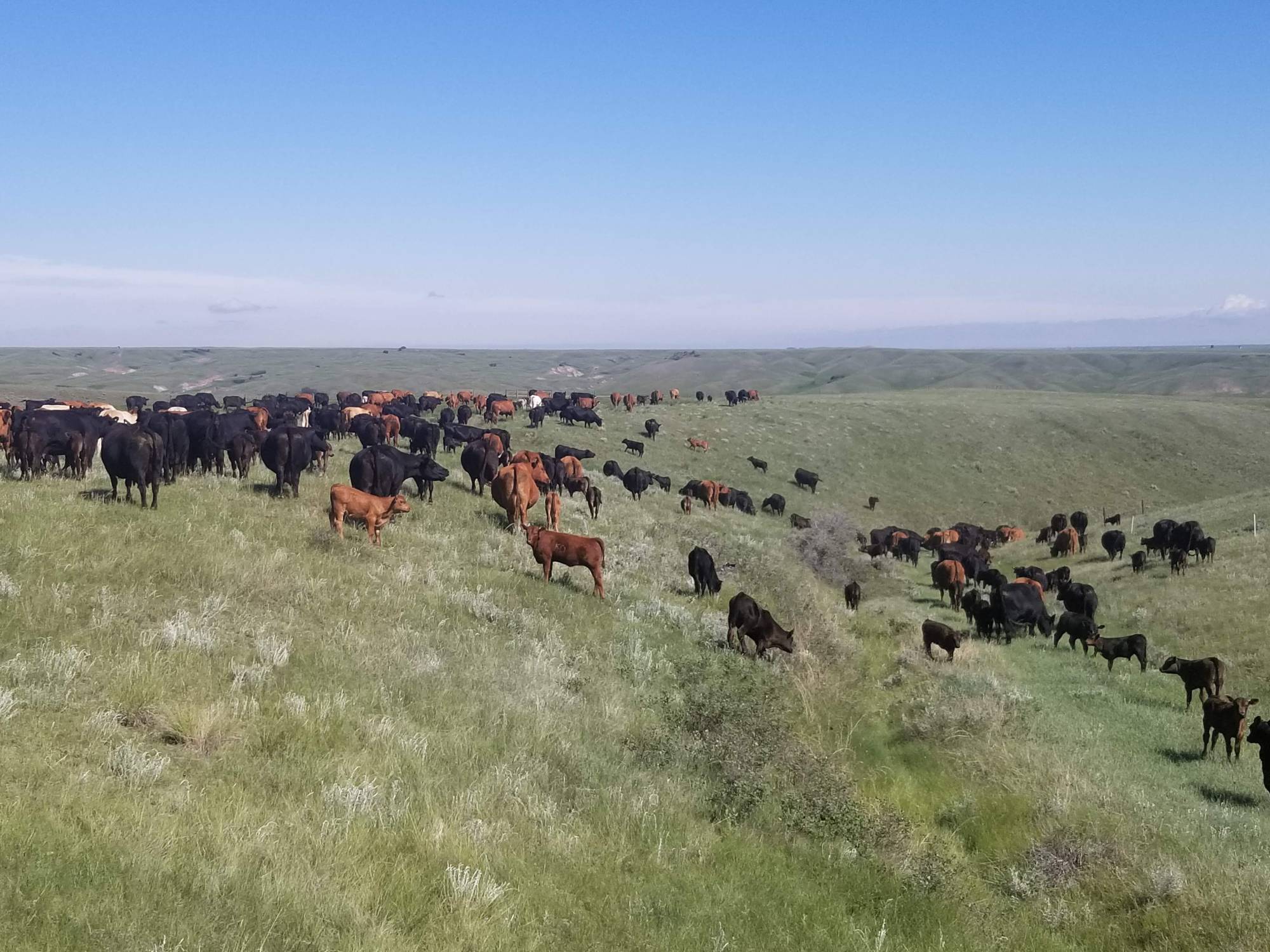
Donated to the University of Alberta in 2010 by Edwin and Ruth Mattheis, the Mattheis Research Ranch is managed as a custom grazing operation. Since the university acquired it in 2011, the 12,300-acre Ranch has been rotationally stocked with approximately 800 beef cattle for an average of six months each year, beginning in early May.
Learning About Rotational Grazing
The University of Alberta supports research that addresses issues related to the competing demands of ecosystem conservation and resource use, including energy exploration and extraction, grazing, water management, wildlife management and biodiversity conservation. Implementing a management system that is adaptable and fulfills the main research goals stated above, makes rotational grazing at Mattheis an accepted strategy.
Rotational Grazing
Creating paddocks for rotational grazing is difficult in expansive native prairie. Water is the biggest limitation given few existing natural waterbodies and this can result in poor distribution of animals and an uneven use of the available forage. Overgrazed areas experience declines in plant biodiversity and desirable species and increases in bare ground and weeds. Meanwhile, areas removed from grazing access can accumulate plant material and present a fire hazard.
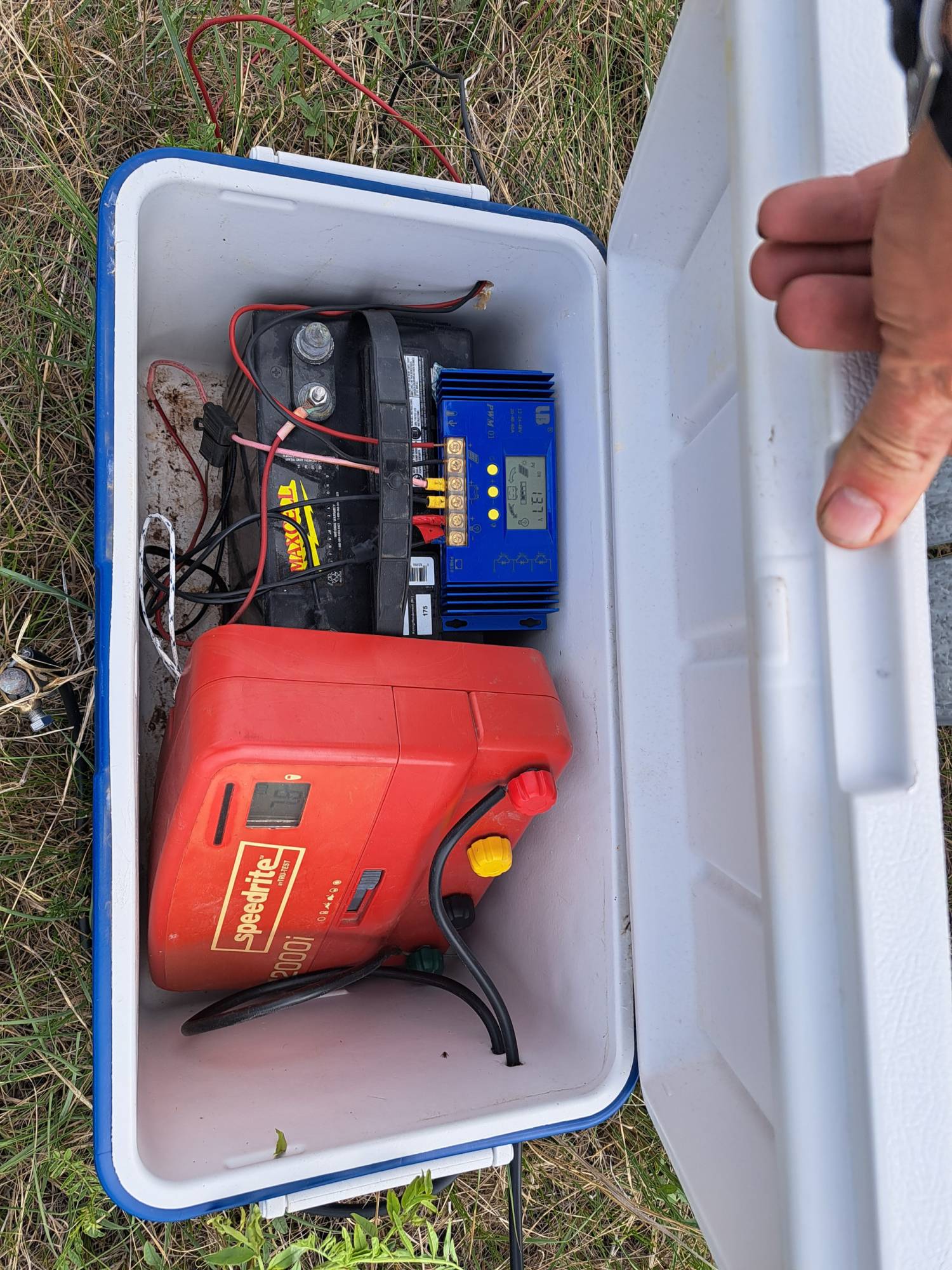
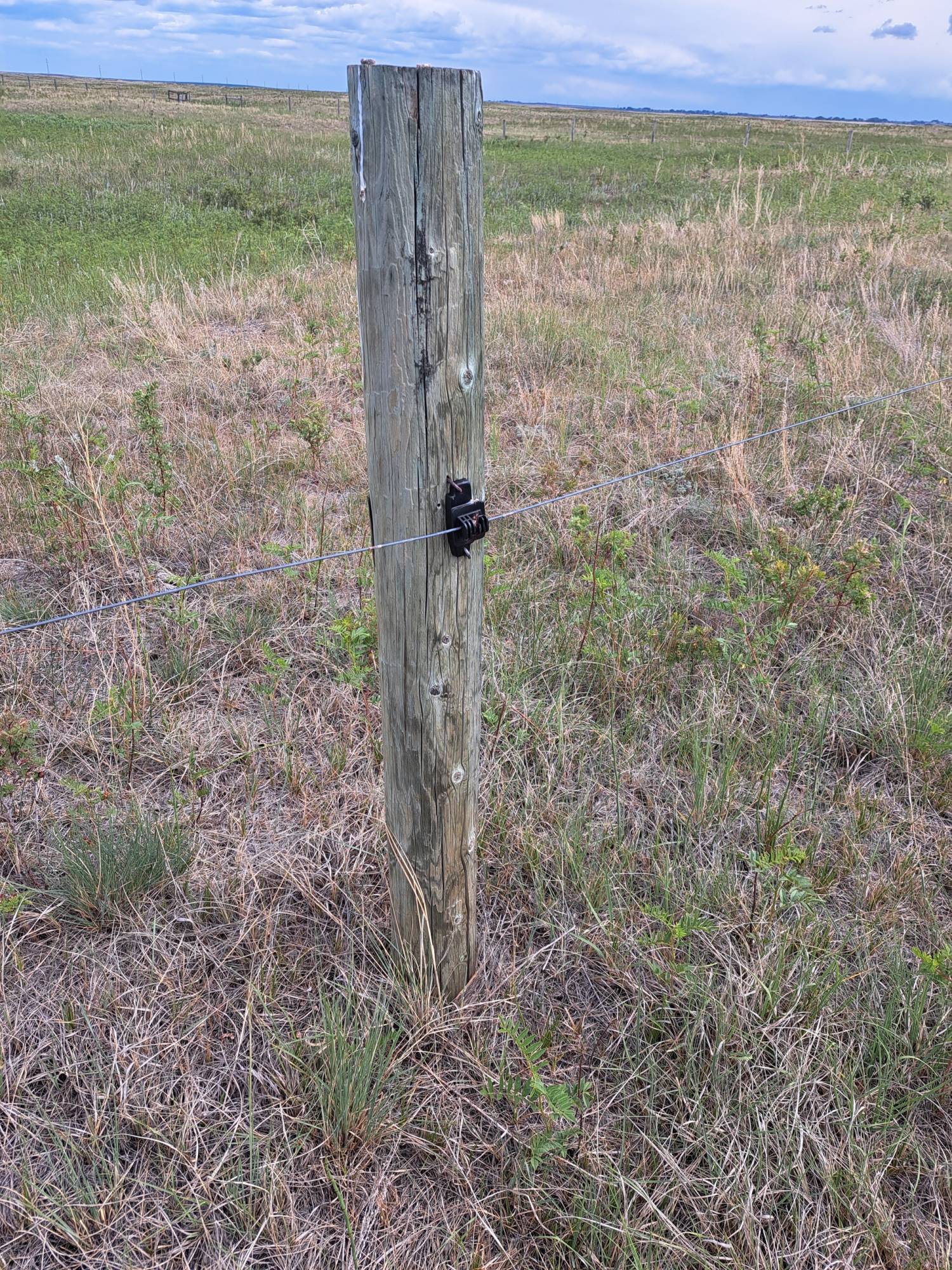
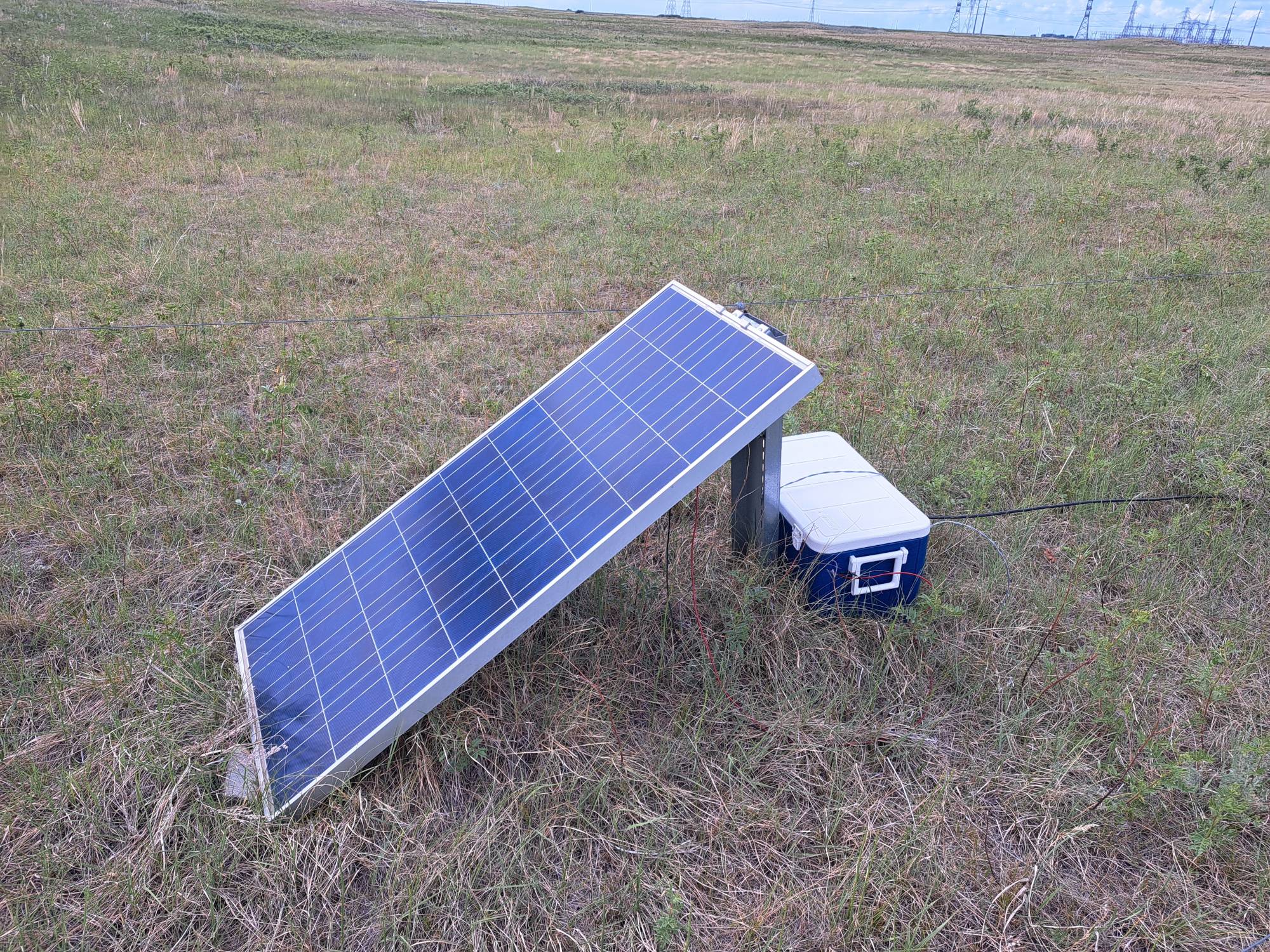
Fencing requires labour; limited staffing at Mattheis makes maintaining miles of fence infrastructure difficult. A system that is portable, solar-powered and easily adjusted ensures that adding paddocks is feasible.
Agronomic Details
The Mattheis Research Ranch covers approximately 12,300 acres, including 10,000 acres of native grassland.
Irrigation-fed wetlands cover approximately 1000 acres of the ranch. The water that circulates through these wetlands, most of which DUC created in 1952, is delivered to 620 acres of cultivated land that is used to grow winter cattle feed, spring grazing pasture and annual crops.
Irrigation water augments several of the property’s natural wetlands.
Other anthropogenic features on the ranch include high-voltage transmission lines, two provincial highways and an extensive network of oil and gas infrastructure.
Fencing and water installation was completed in August and September, 2023, along with shallow-buried pipeline.
Project Overview
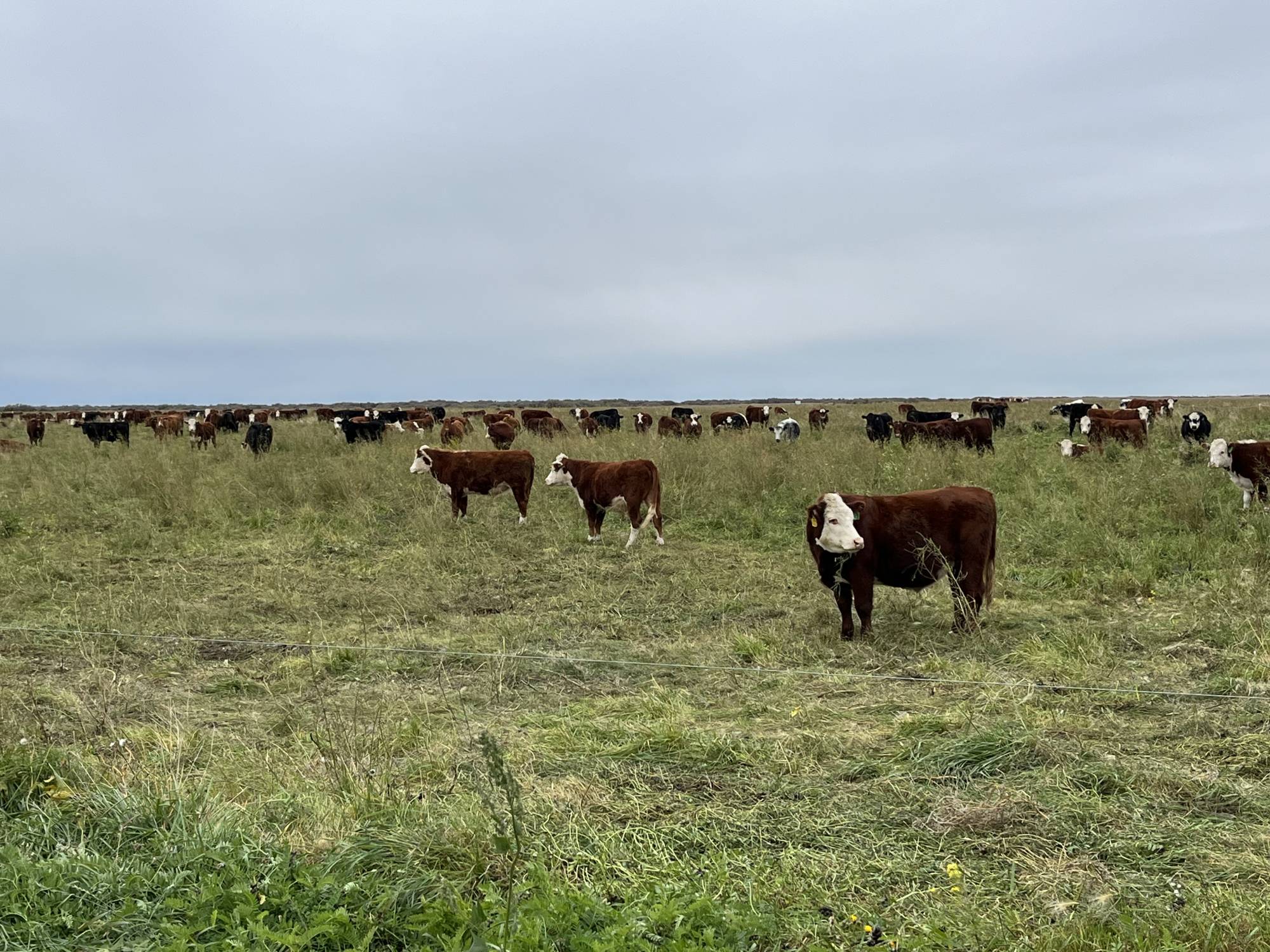
During the grazing season, the Mattheis Ranch provides grazing to three separate groups of cattle. These herds included 450 yearlings, 250 cow calf pairs, as well as a second group 300 cow calf pairs, all rotating across the 12,300 acres of native and irrigated perennial and cover crops. In most years, cattle remain on pasture for 365 days of the year. However, in some years snow cover has required additional on-pasture feeding.
Grazing Plan
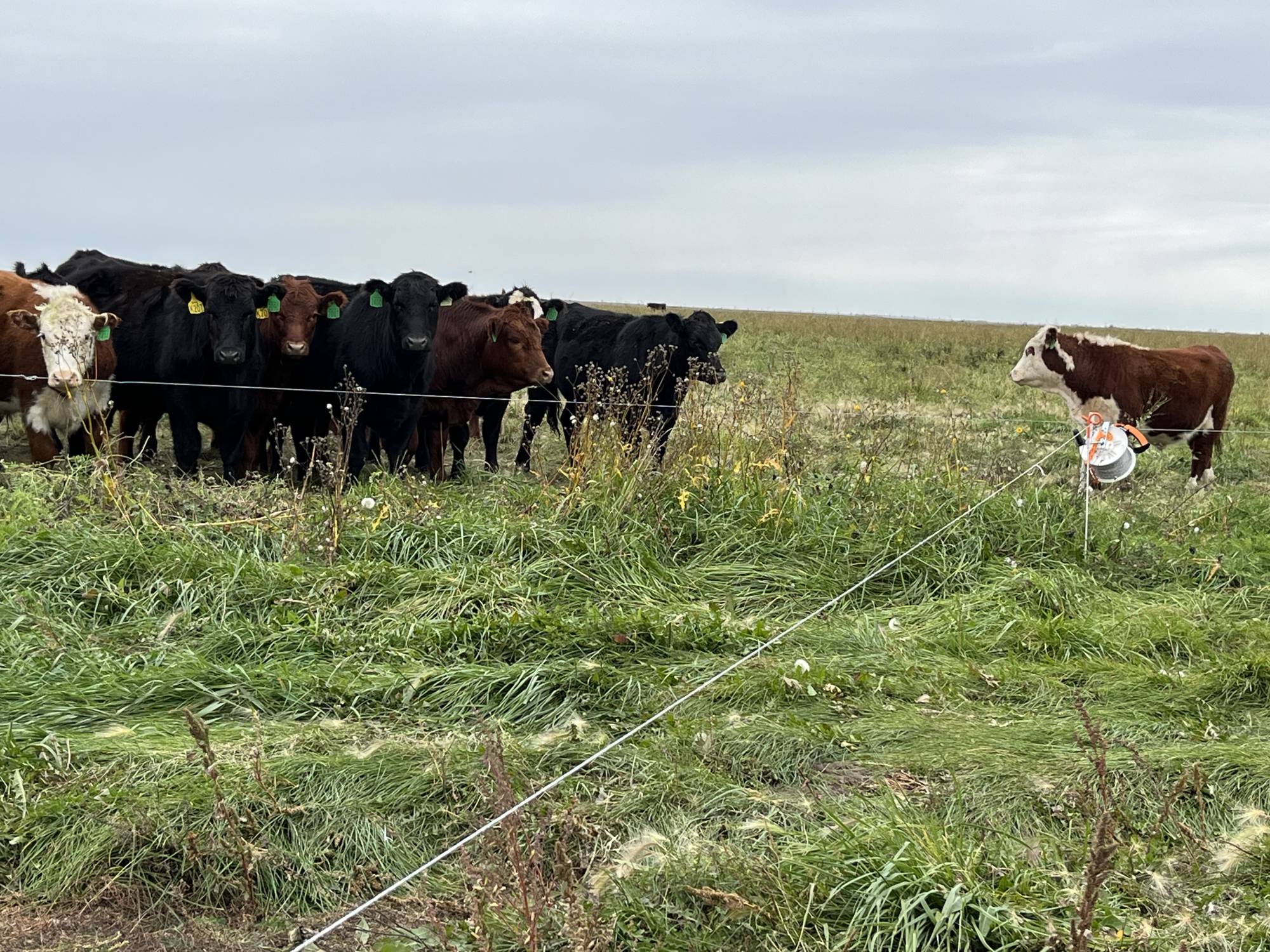
Yearlings are run on irrigated paddocks. Pivot plots ranging in size from 100 to 300 acres are subdivided into wedge-shaped paddocks with water troughs at the center and seeded to a mix of annuals with strong regrowth capability. Yearlings are moved to a new paddock every four or five days, with the intention to graze each of the pivot plots three times throughout the grazing season.
In contrast to this, the native range is managed with grazing periods and rest intervals determined by the growth and recovery of native plant species.
Short-Term Goals
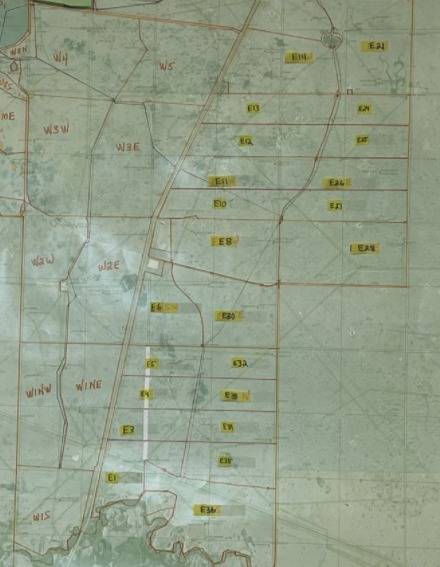
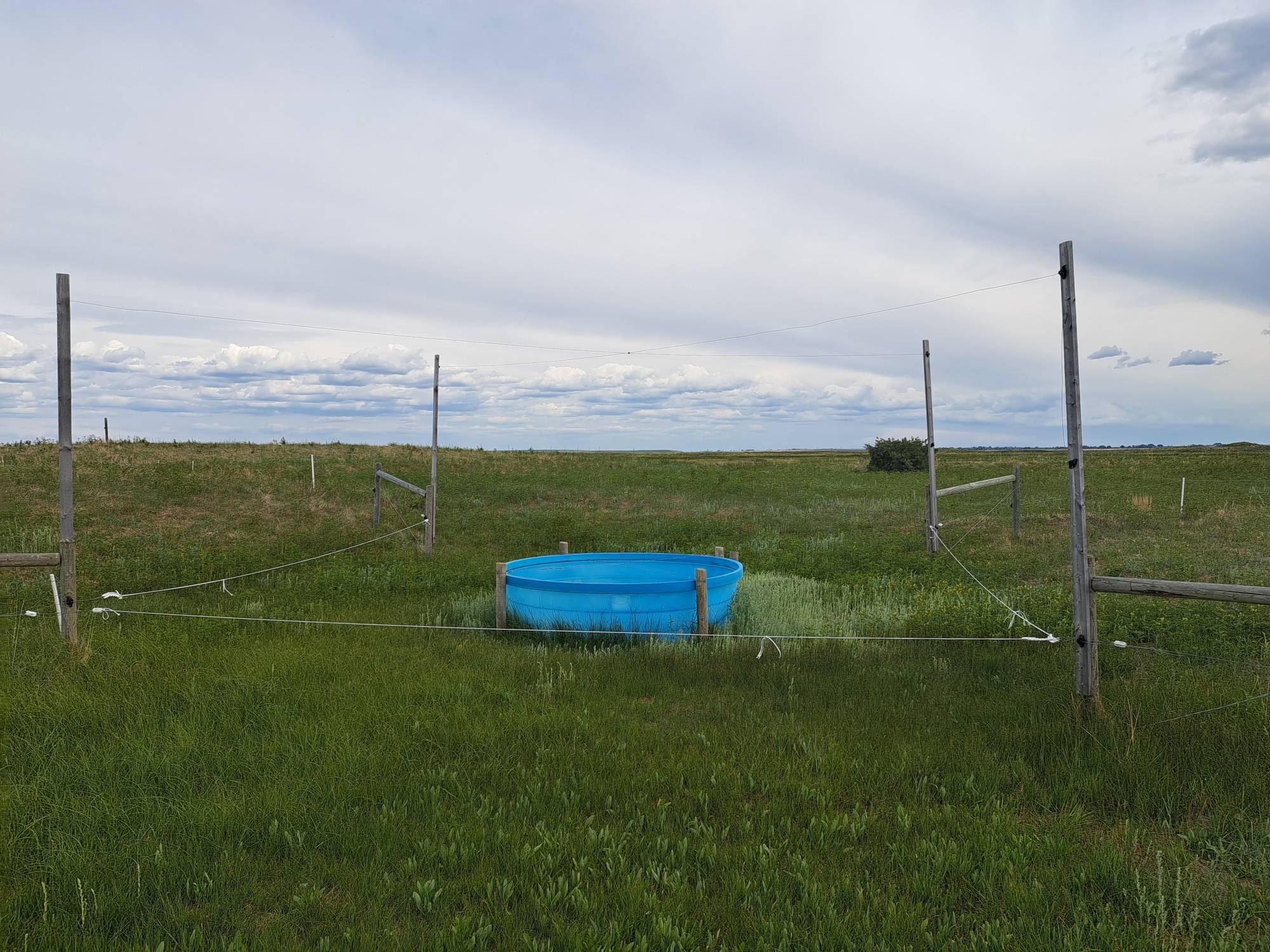
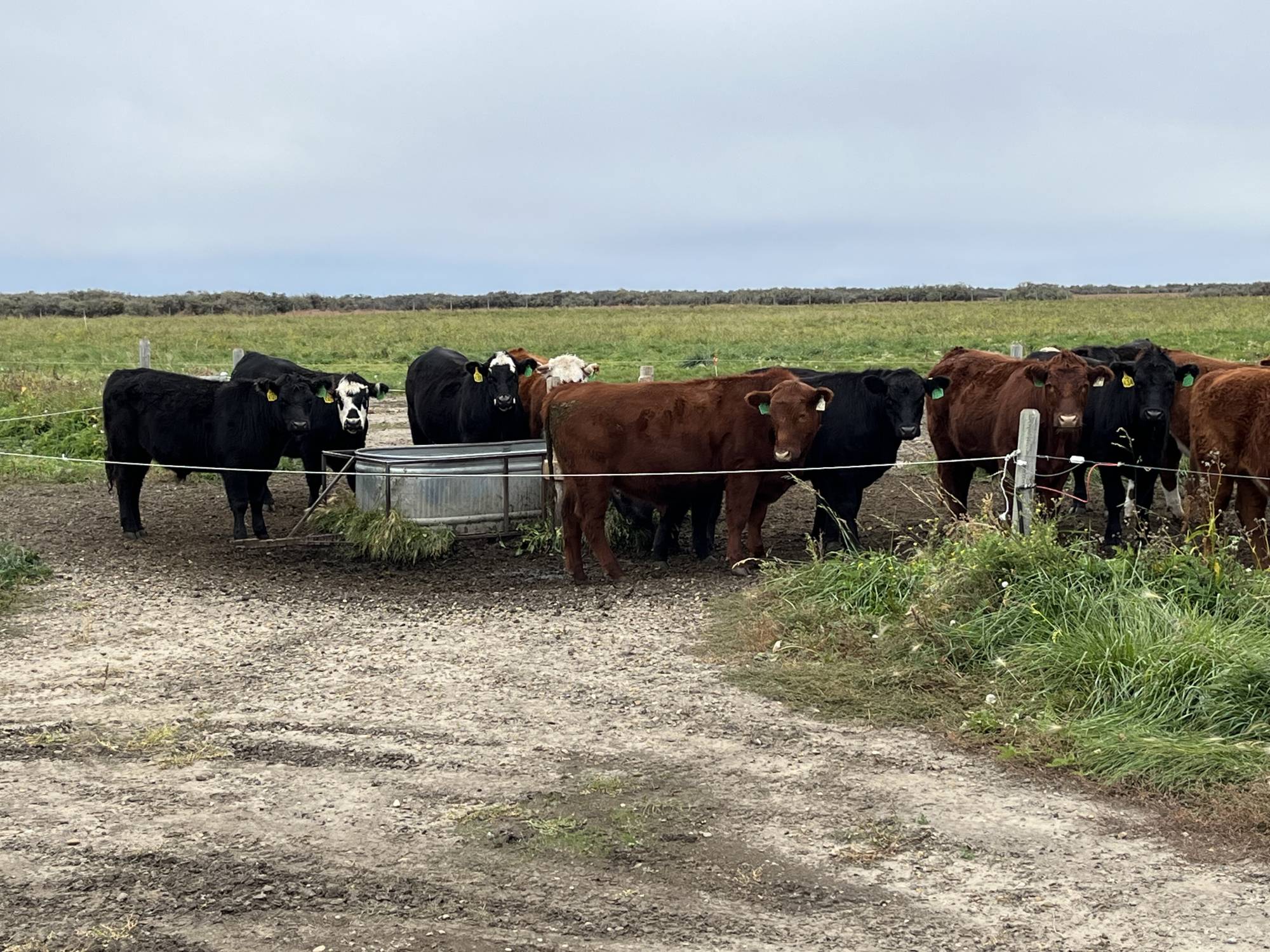
Watering sites development on the native pasture allowed the creation of several smaller paddocks, and giving the manager greater control over where cattle graze and how long they remain in one area. In addition, the centralized water sites make paddock moves easier; it becomes possible to open a gate to provide access to the adjacent paddock, while animals are at the water trough.
Monitoring a pasture of this size can be challenging; however, subdividing it into smaller paddocks improves efficiency since livestock location is always known. Checking herd health, maintaining fences, and monitoring available forage and regrowth are also easier when animals are managed in smaller paddocks.
Long-Term Goals
Planned rotational grazing makes better use of the entire landscape by controlling animal movement. When animals are left to graze an entire pasture for a prolonged period, certain areas and even individual plants can be grazed repeatedly. These desirable plants become stressed and susceptible to drought, disease, and insects with no stored energy to recover, potentially disappearing from the stand all together. Areas farther from water, with steeper hills or less desirable plant species may be avoided altogether. Without animal disturbance, ungrazed areas become a fire hazard and can revert to less desirable woody or brush species.
Providing rest and recovery between grazing periods will benefit the pasture and contribute to improved soil health over time. Regrowth increases plant biomass, which eventually becomes litter on the soil surface. This protective cover helps reduce water erosion, moderate soil temperature, and return organic matter to the soil. Above-ground regrowth also reflects increased root development below ground, creating a plant community that is more resilient to drought. Over time, this grazing approach is also expected to increase the diversity of plant species, as well as insects and pollinators.
Site Description
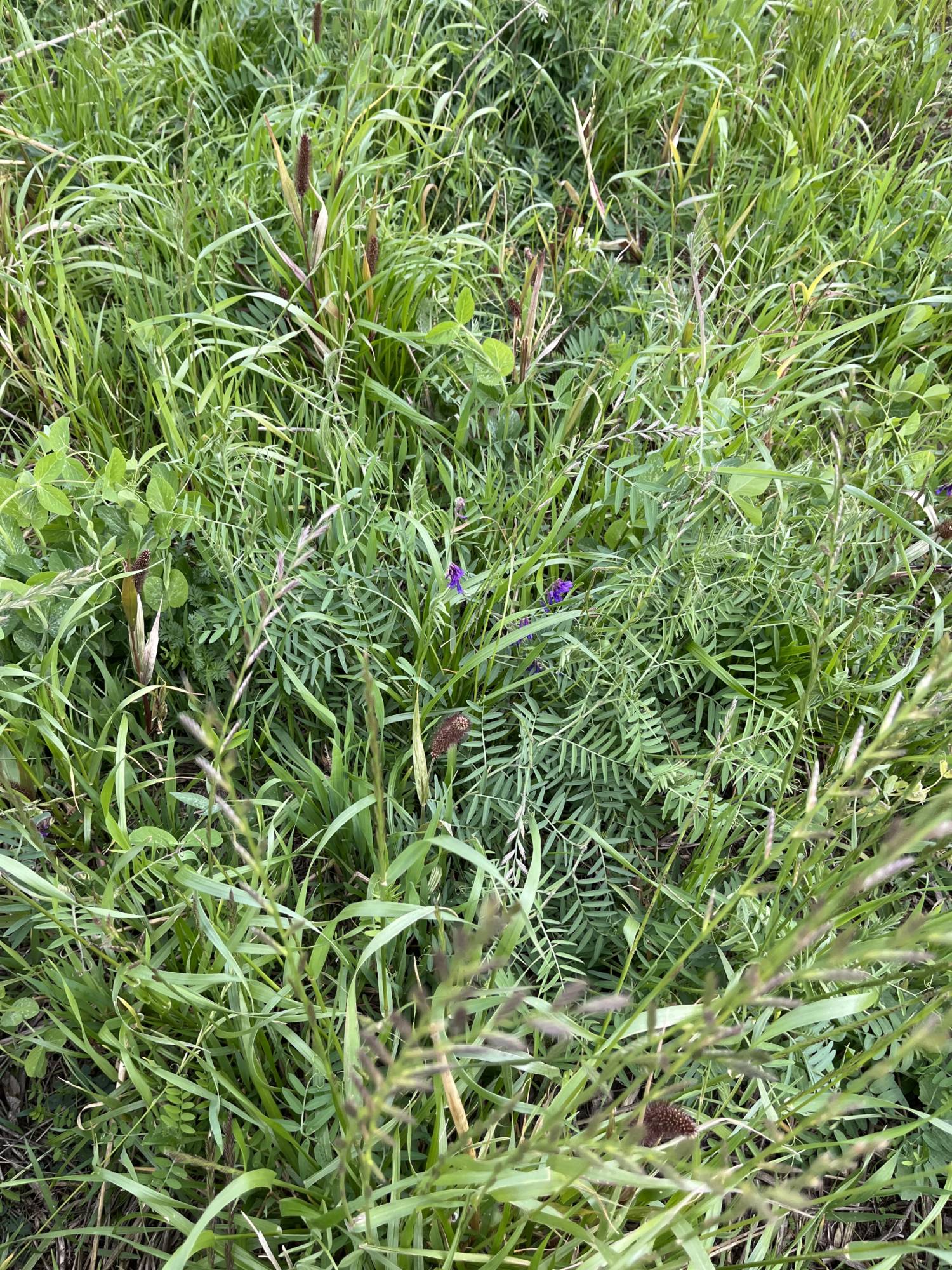
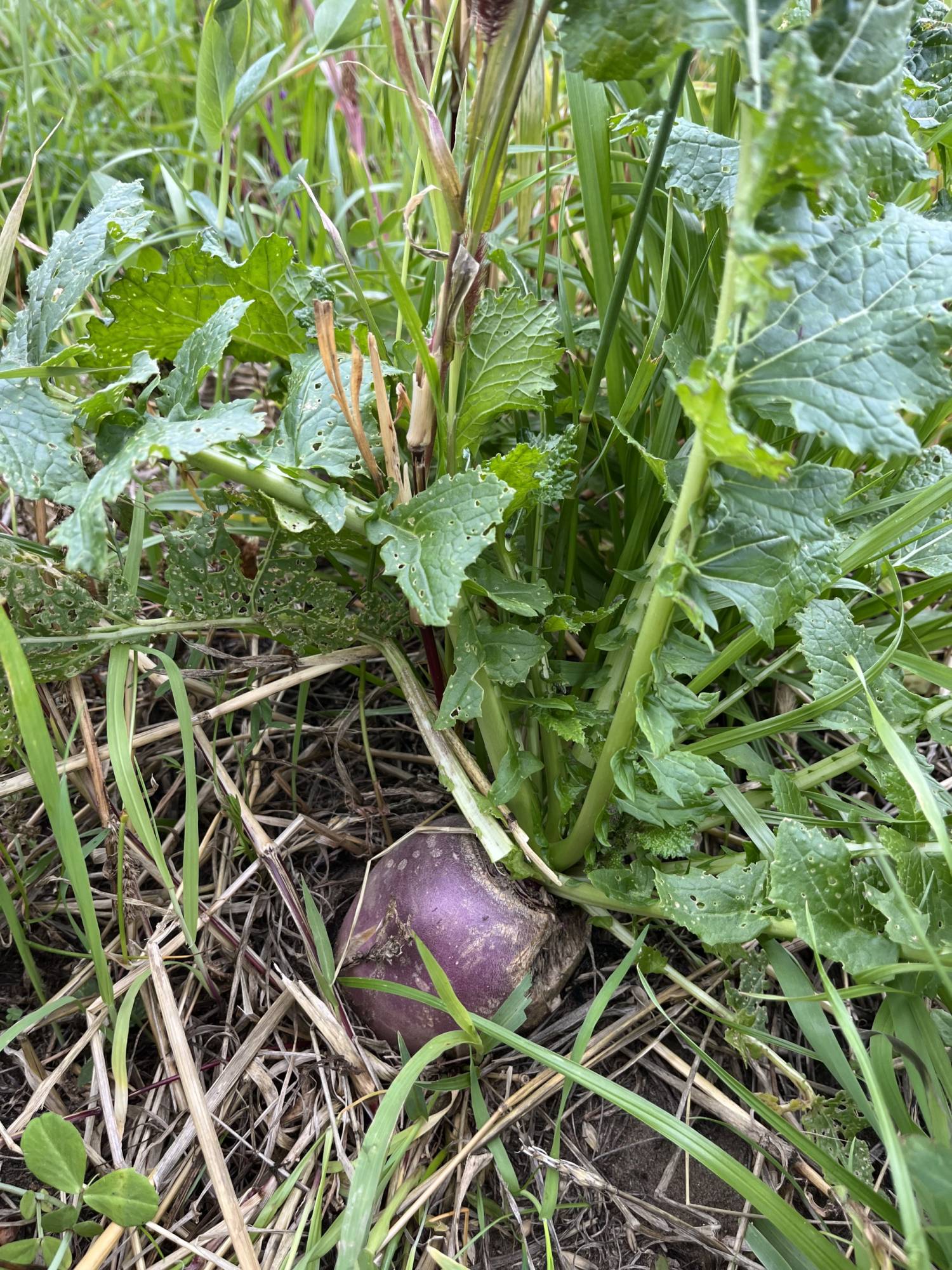
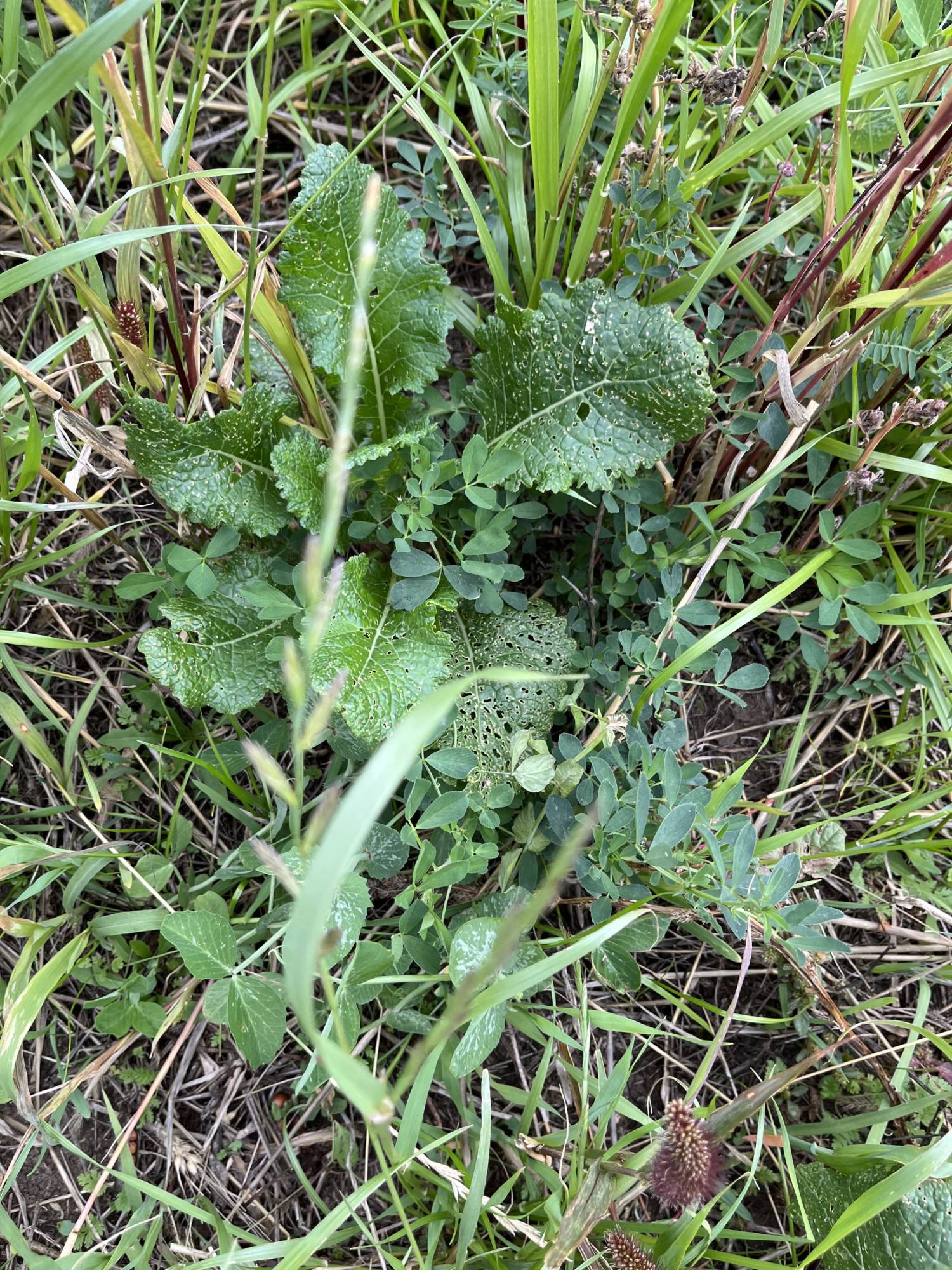
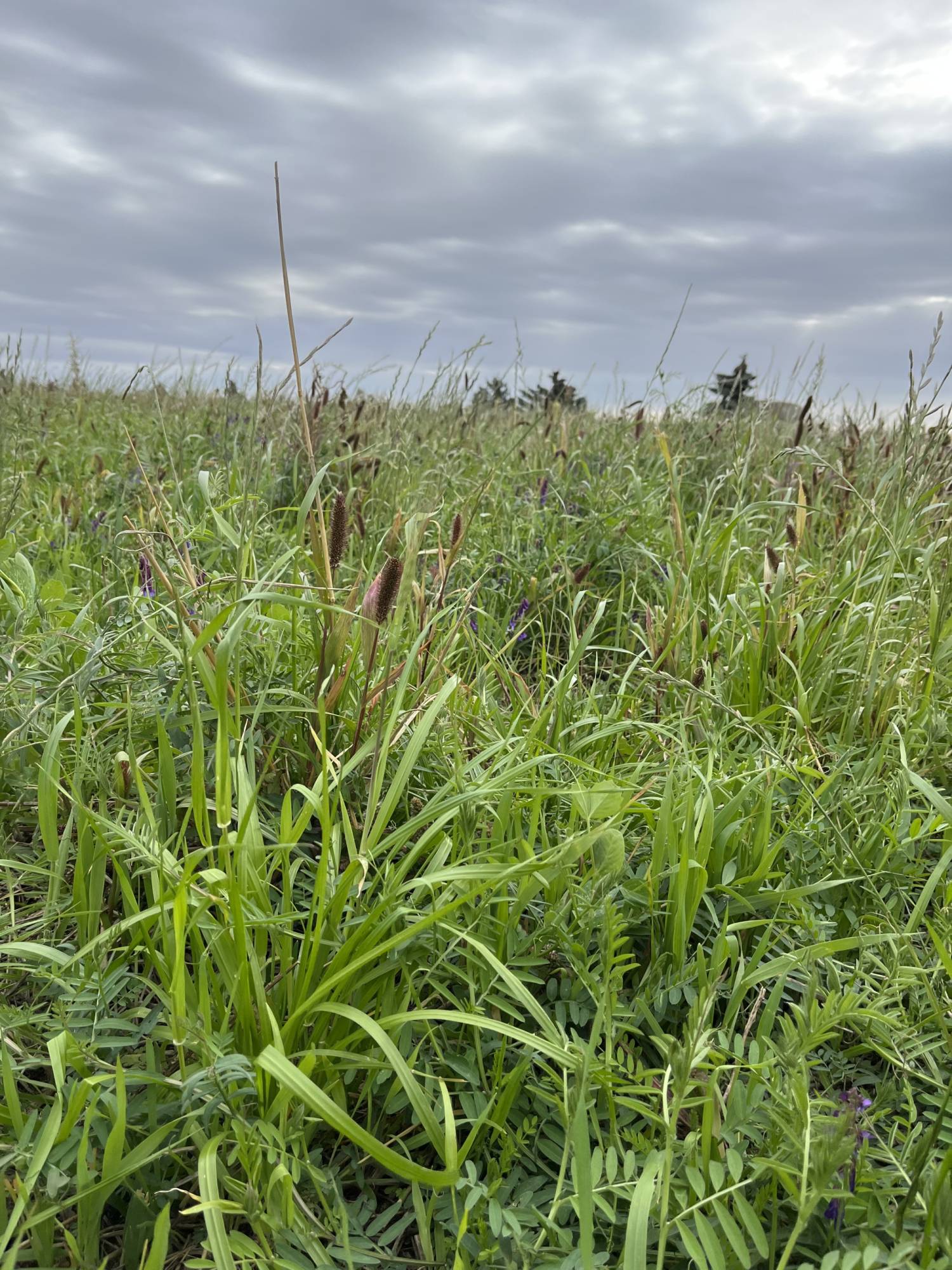
Pie-shaped pastures under pivot irrigation were seeded to a mix of annual cover crops containing sunflowers, oats, barley, peas, sorghum, turnips, and radishes. A second irrigated paddock was seeded to a two-way mix of oats and ryegrass.
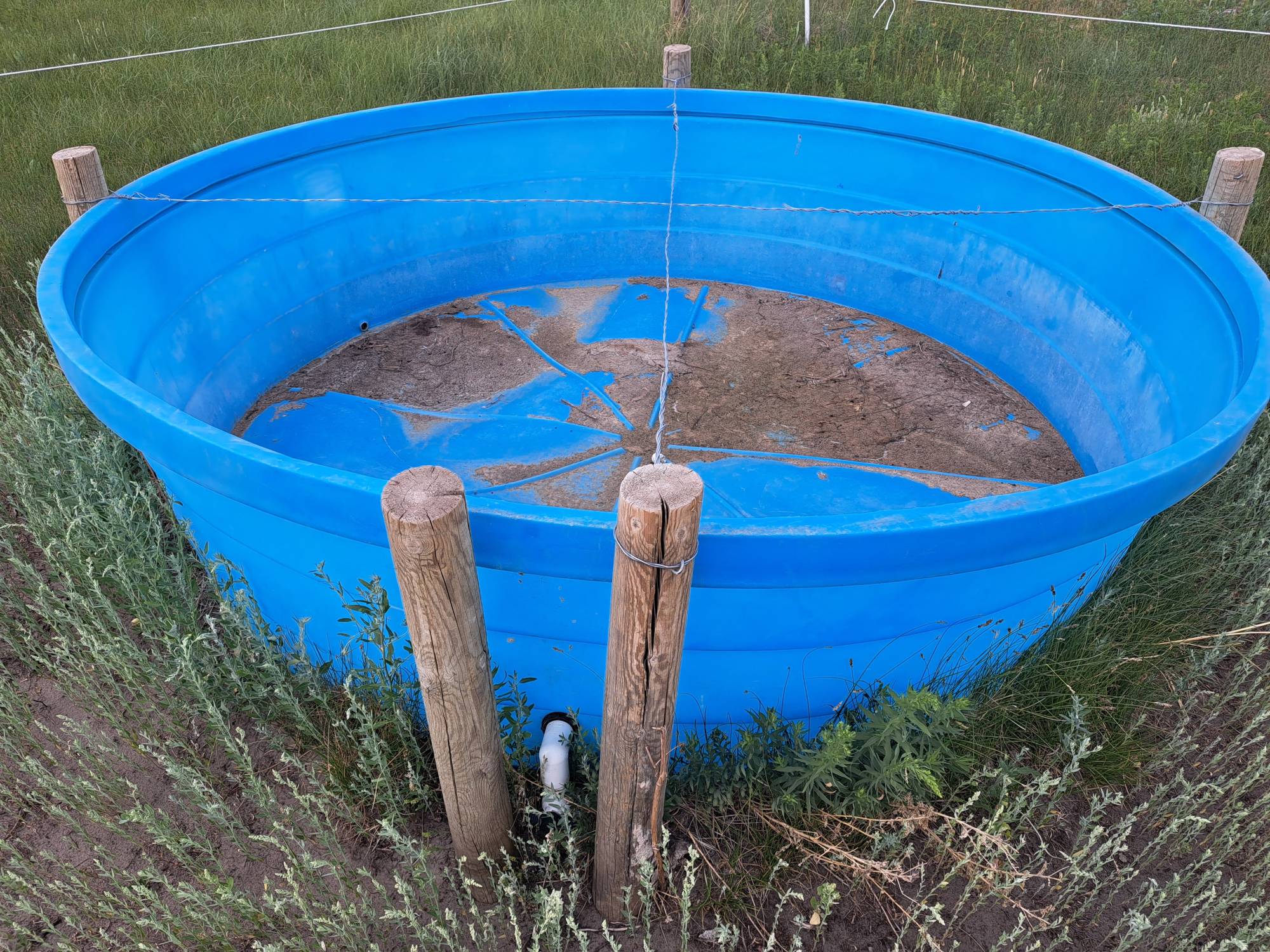
Water sites were developed in native prairie areas to facilitate the creation of paddocks. New infrastructure made use of a water source near the main buildings and delivered water three miles onto the range.
Project Details
The water line was installed across three miles of pastureland in late August 2023. The need to acquire crossing agreements with impacted pipeline companies resulted in the largest delays in infrastructure development. In total, 17 crossing agreements were needed, including one with the Trans Canada pipeline.
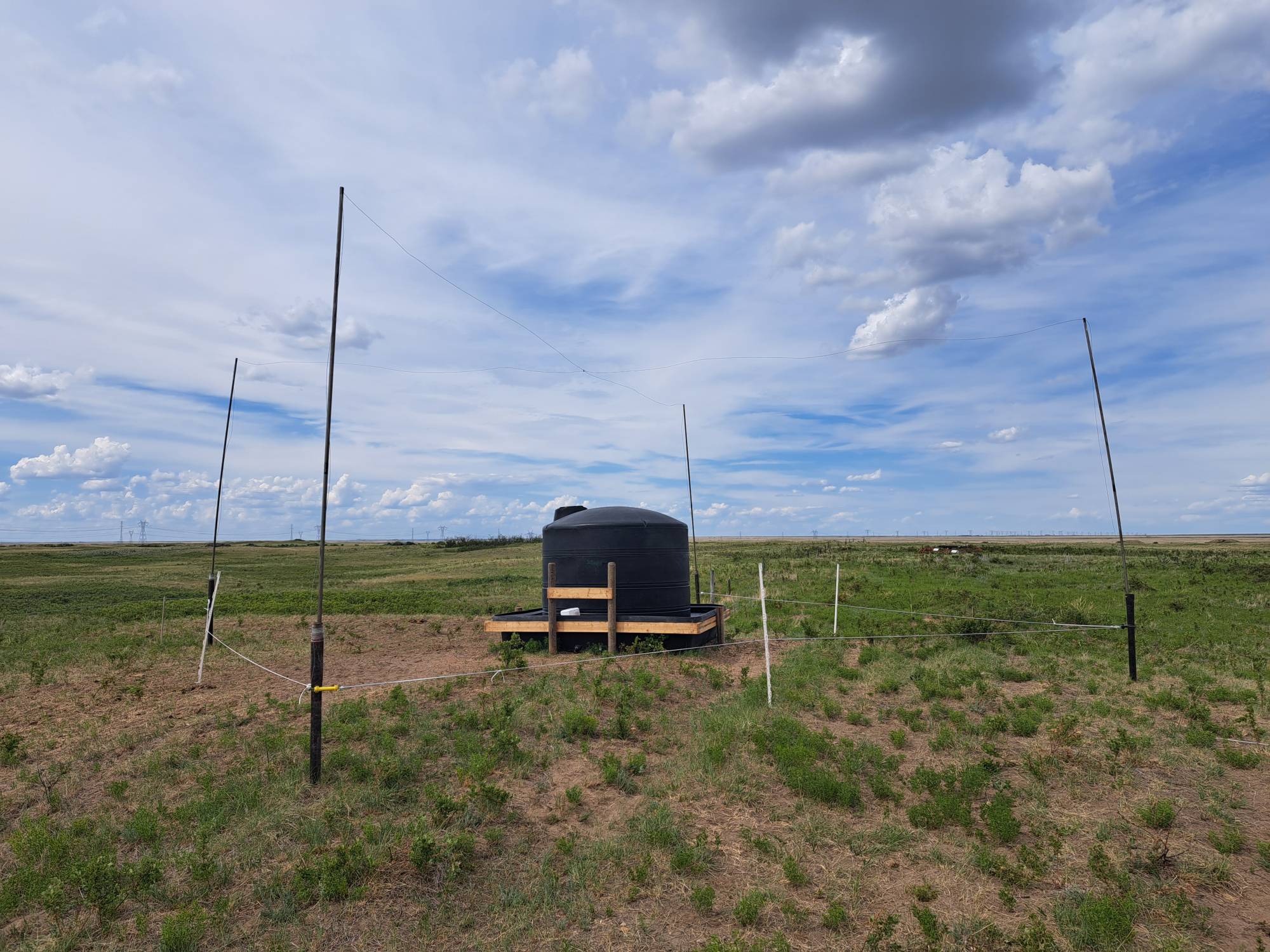
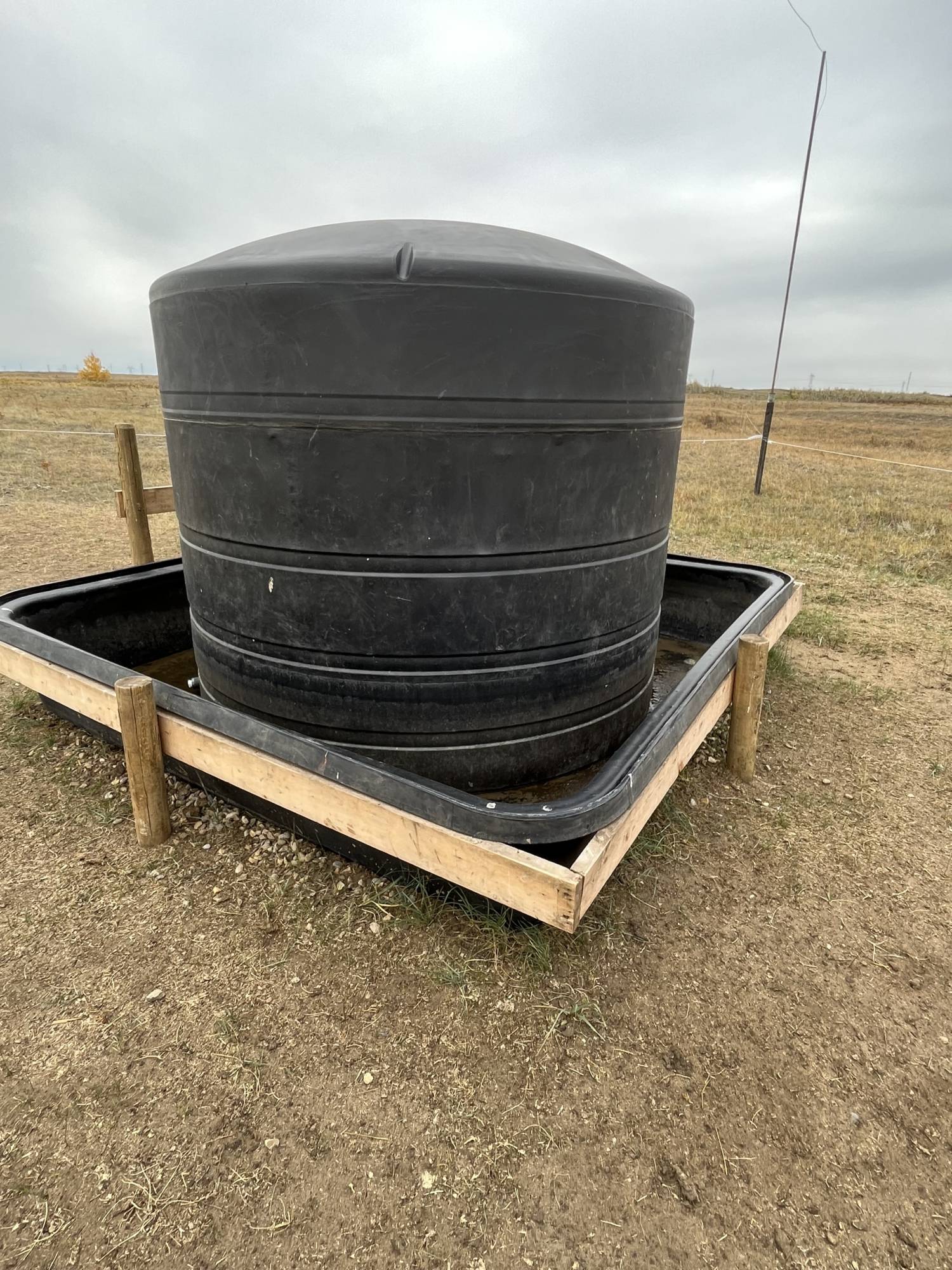
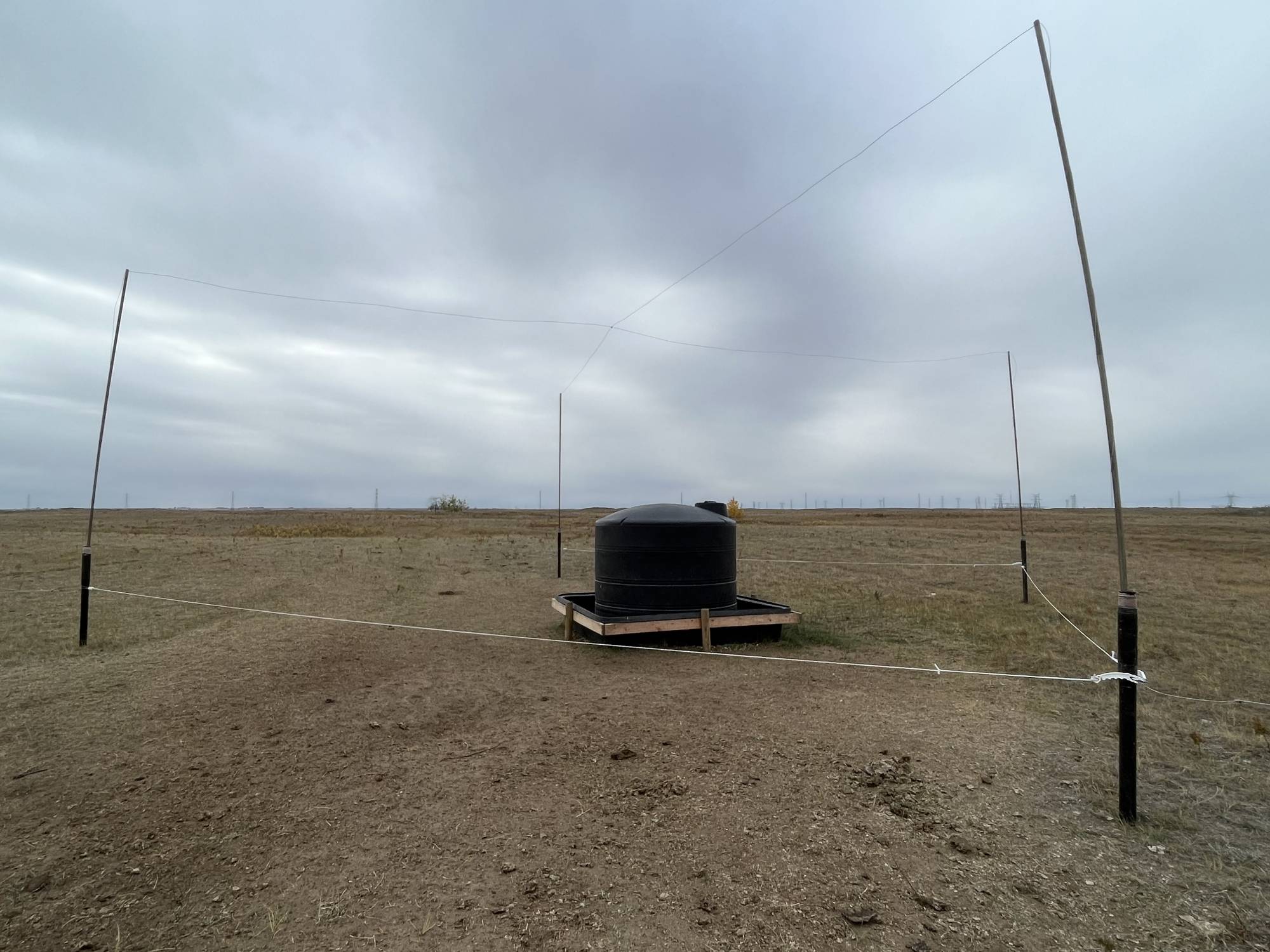
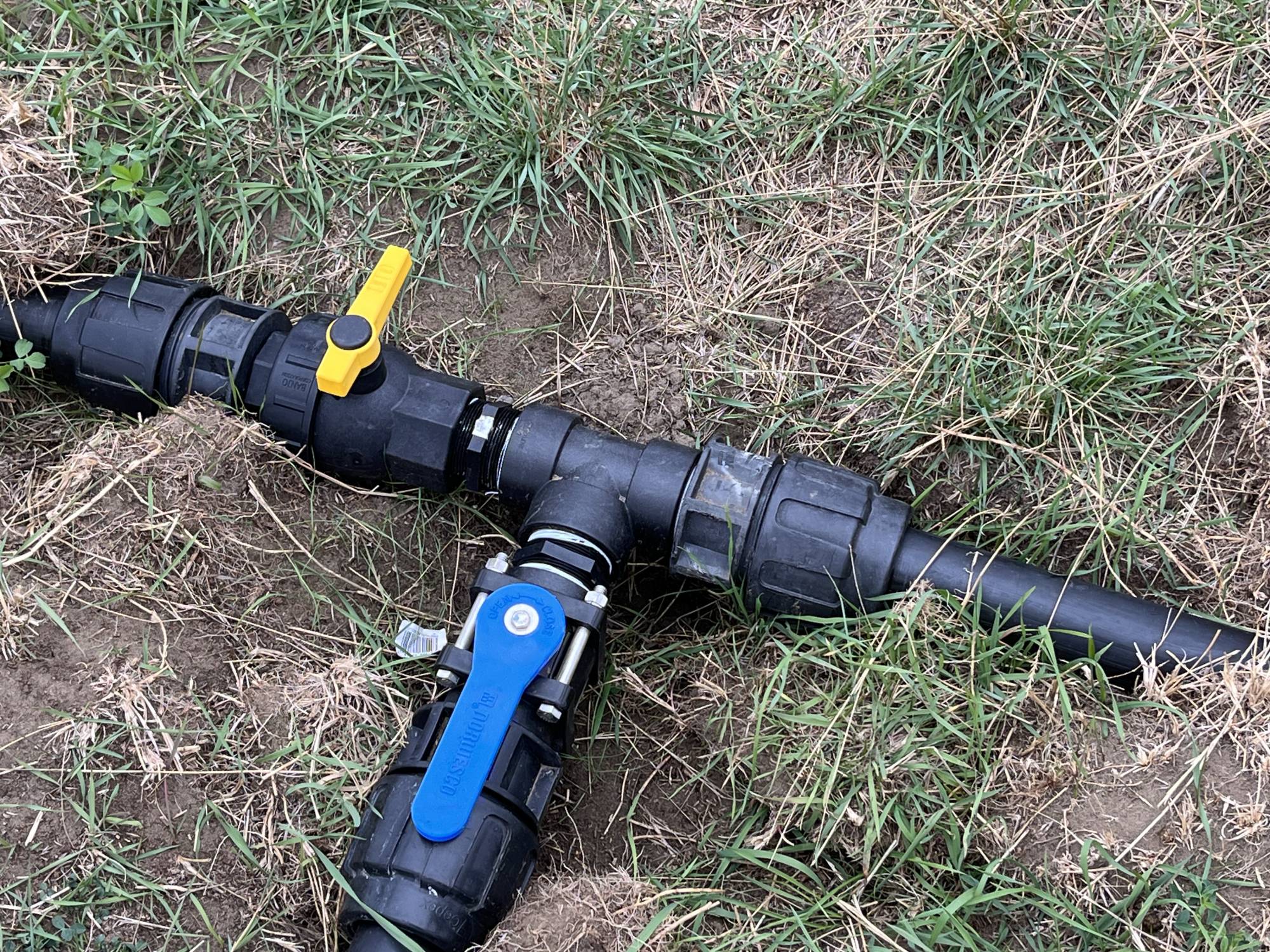
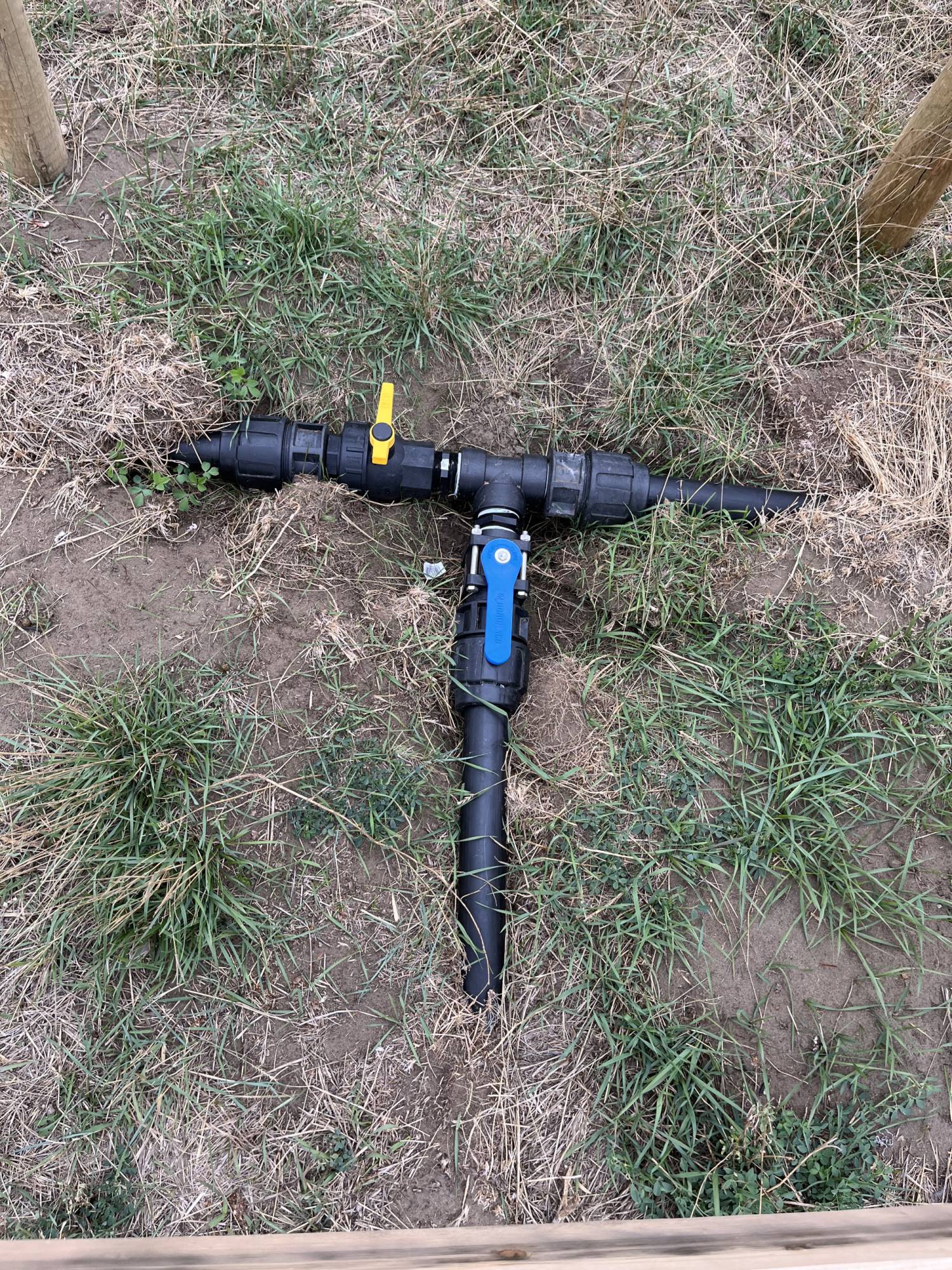
Installing the pasture pipeline requires a specialized plow and a 100-horsepower tractor with two hydraulic outlets. Because high- or medium-density pipe is not conducive to standard water line fittings, joints are connected with fusion technology. The installation of the two-inch poly line is non-intrusive and buried at a depth of 12 inches. The system is pressurized with a 3-horsepower pump to move water to a 1200-gallon water tank feeding four pastures. In preparation and in order to prevent issues with the plow when burying the line, the pasture was mowed along the pipeline location prior to installation.
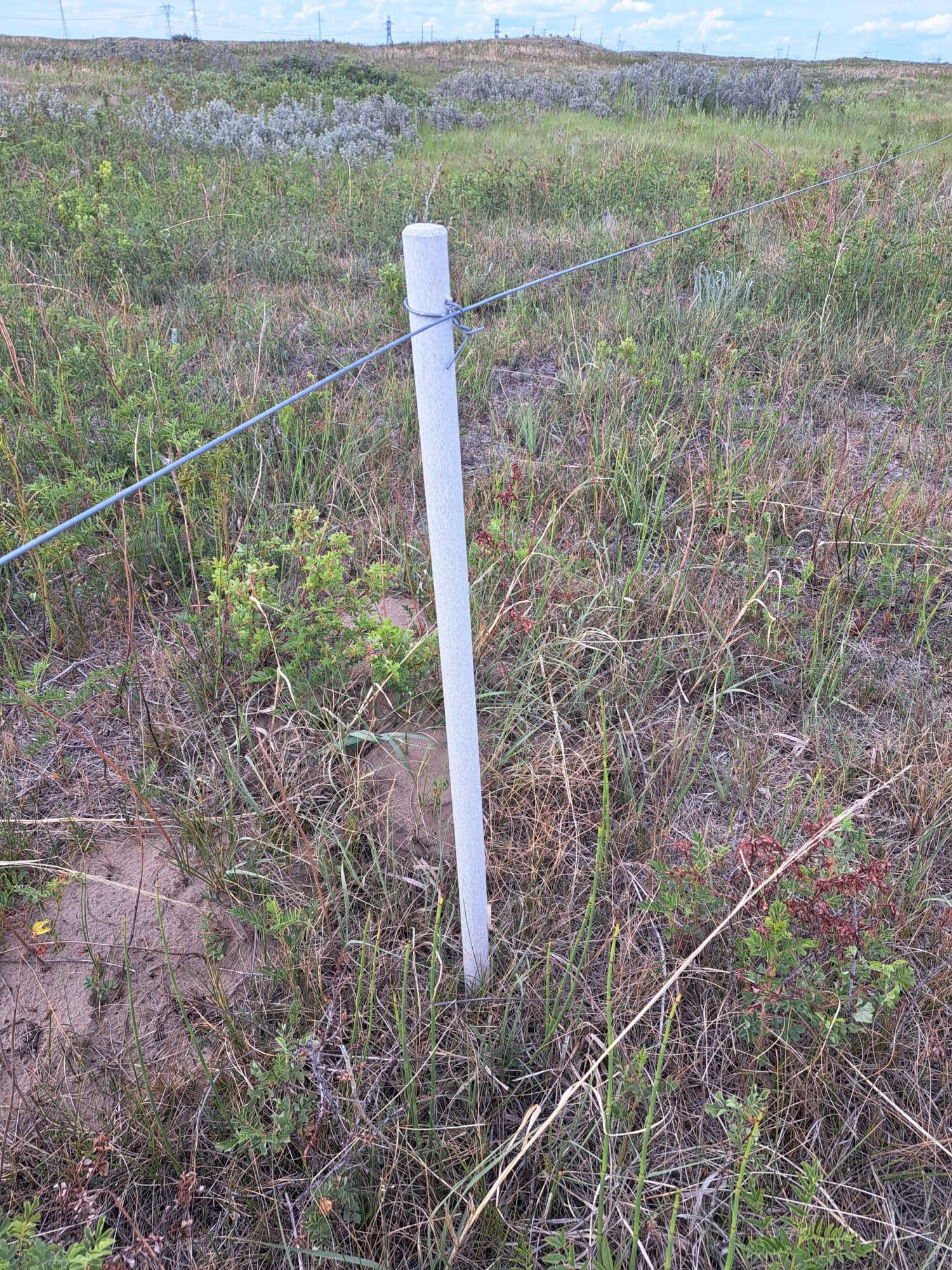
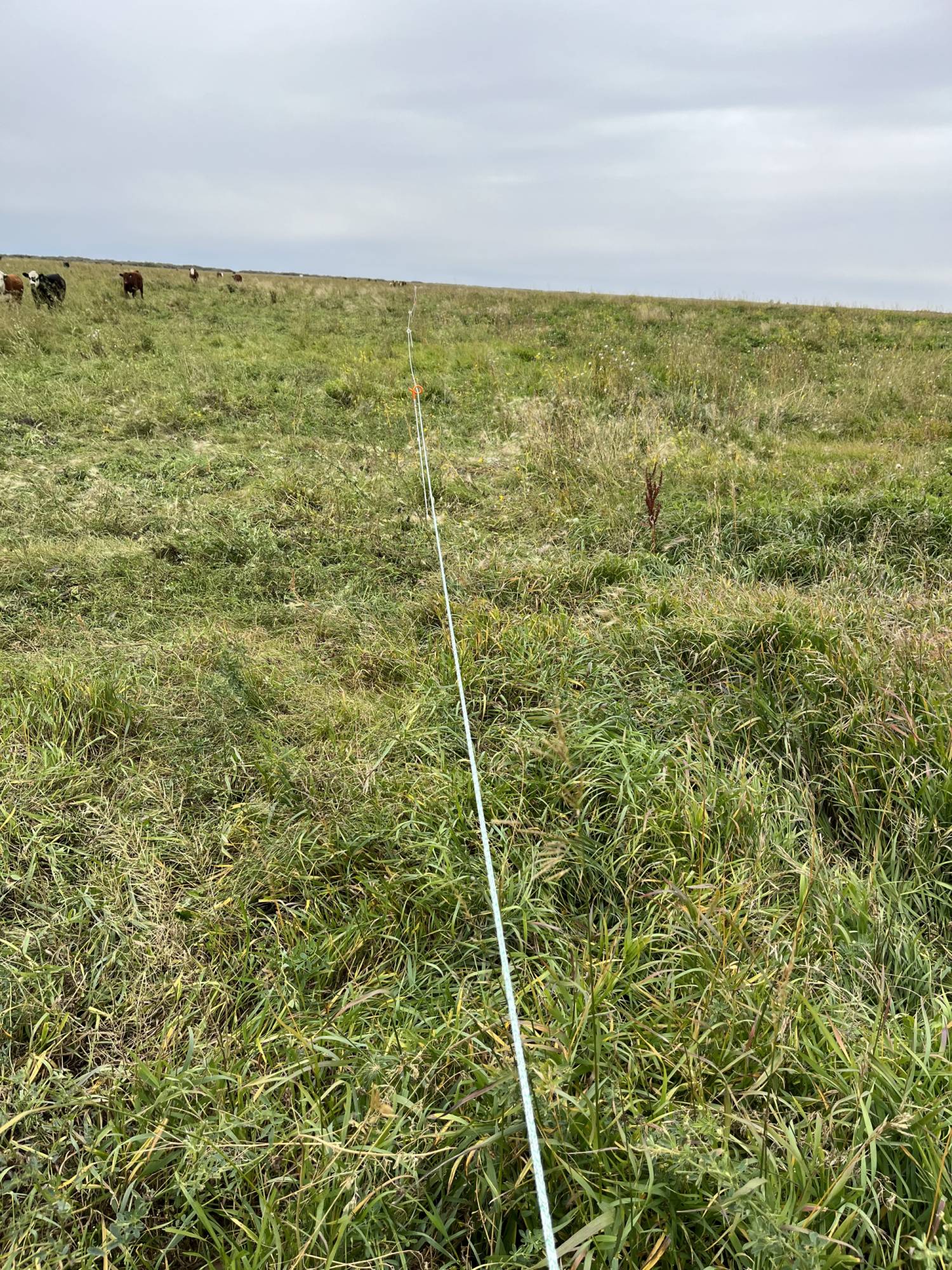
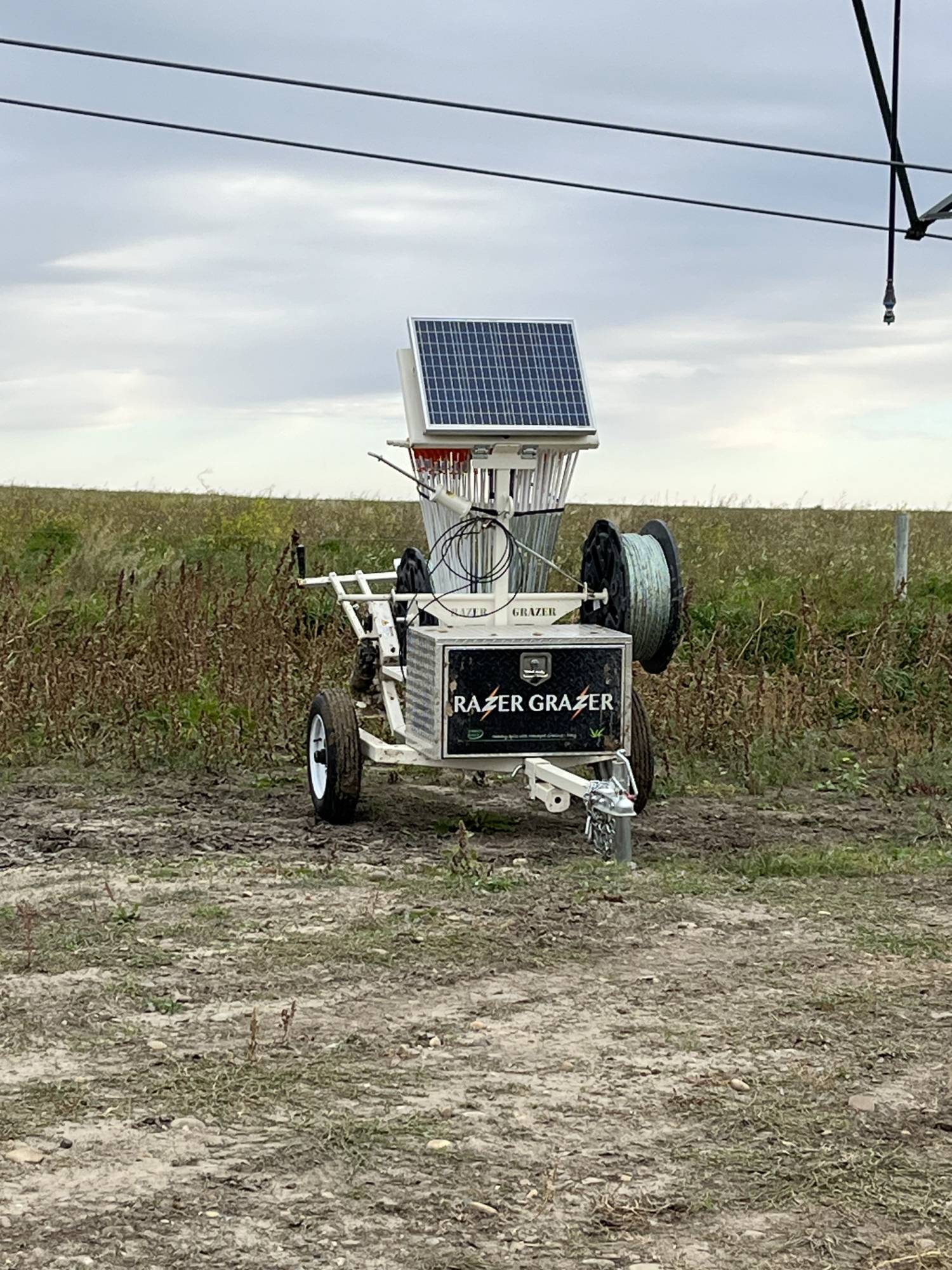
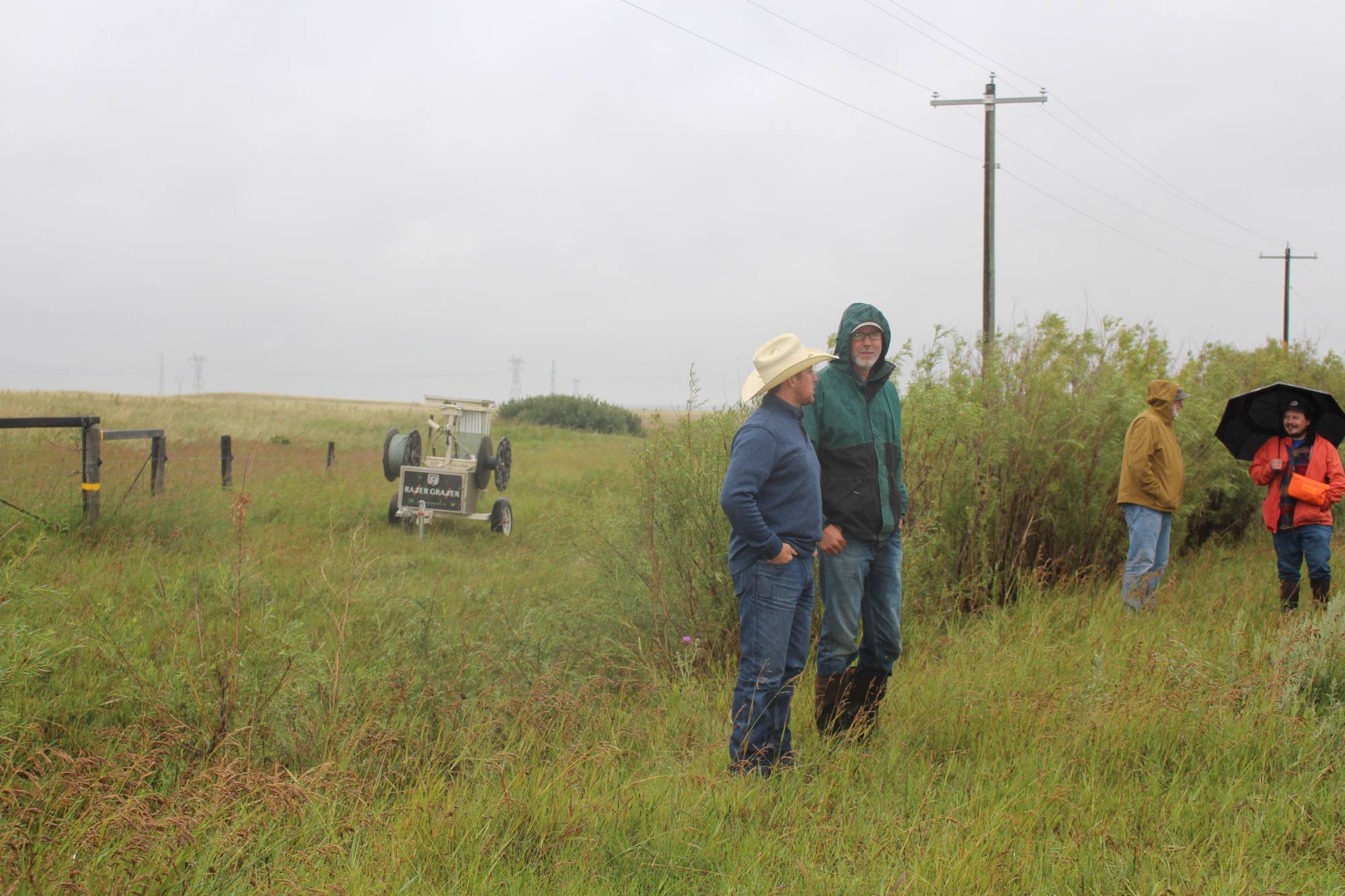
To increase the number of grazing days for the season, the irrigated poly crop pastures were divided into smaller paddocks using a Razer Grazer (portable fencing). The pie-shaped pastures under irrigation were able to sustain three grazing periods of five days each. Irrigation of these pastures helped mitigate the significant decrease in rainfall that southern Alberta has been experiencing.
What’s Happening
2025 Update
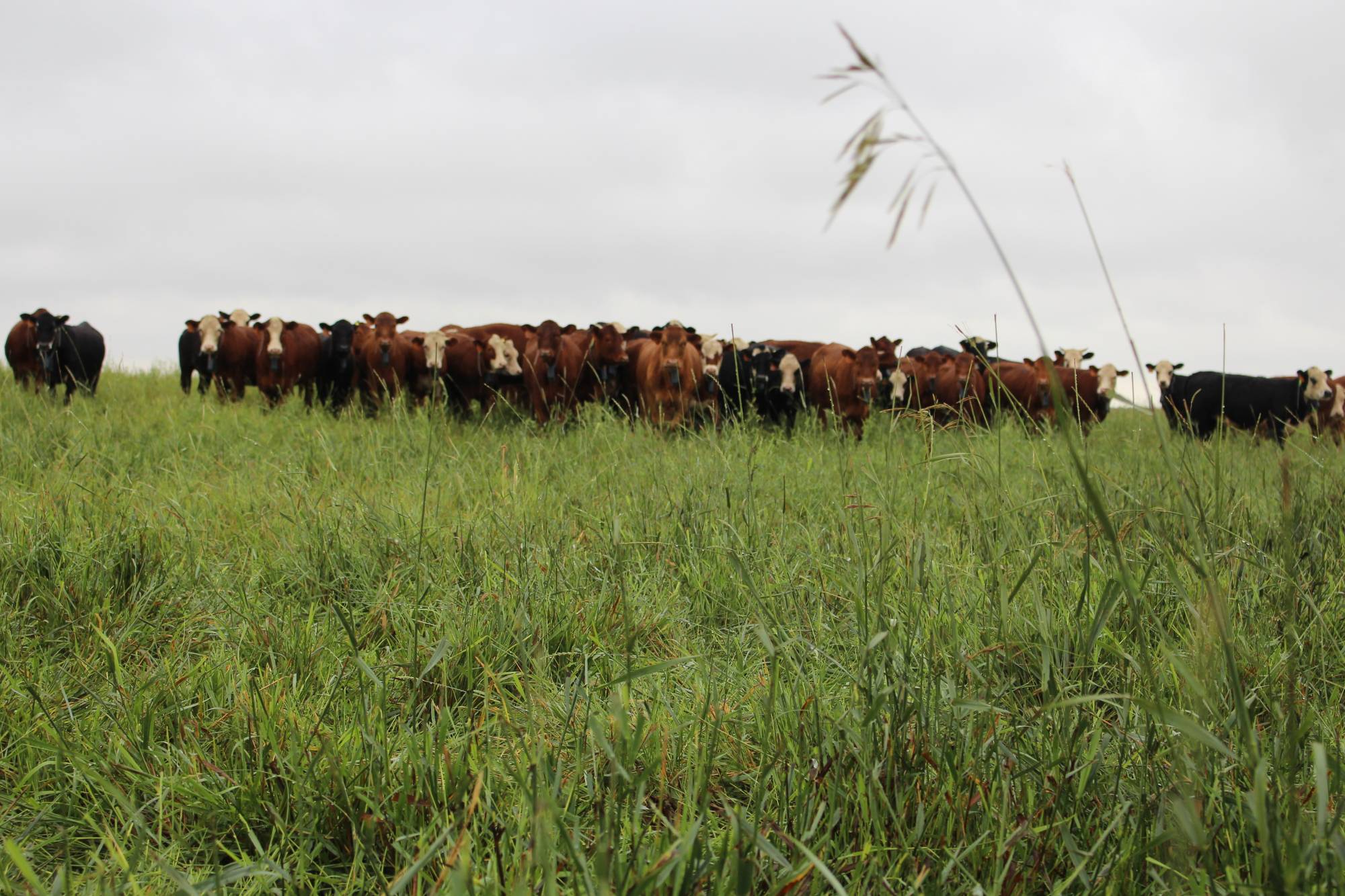
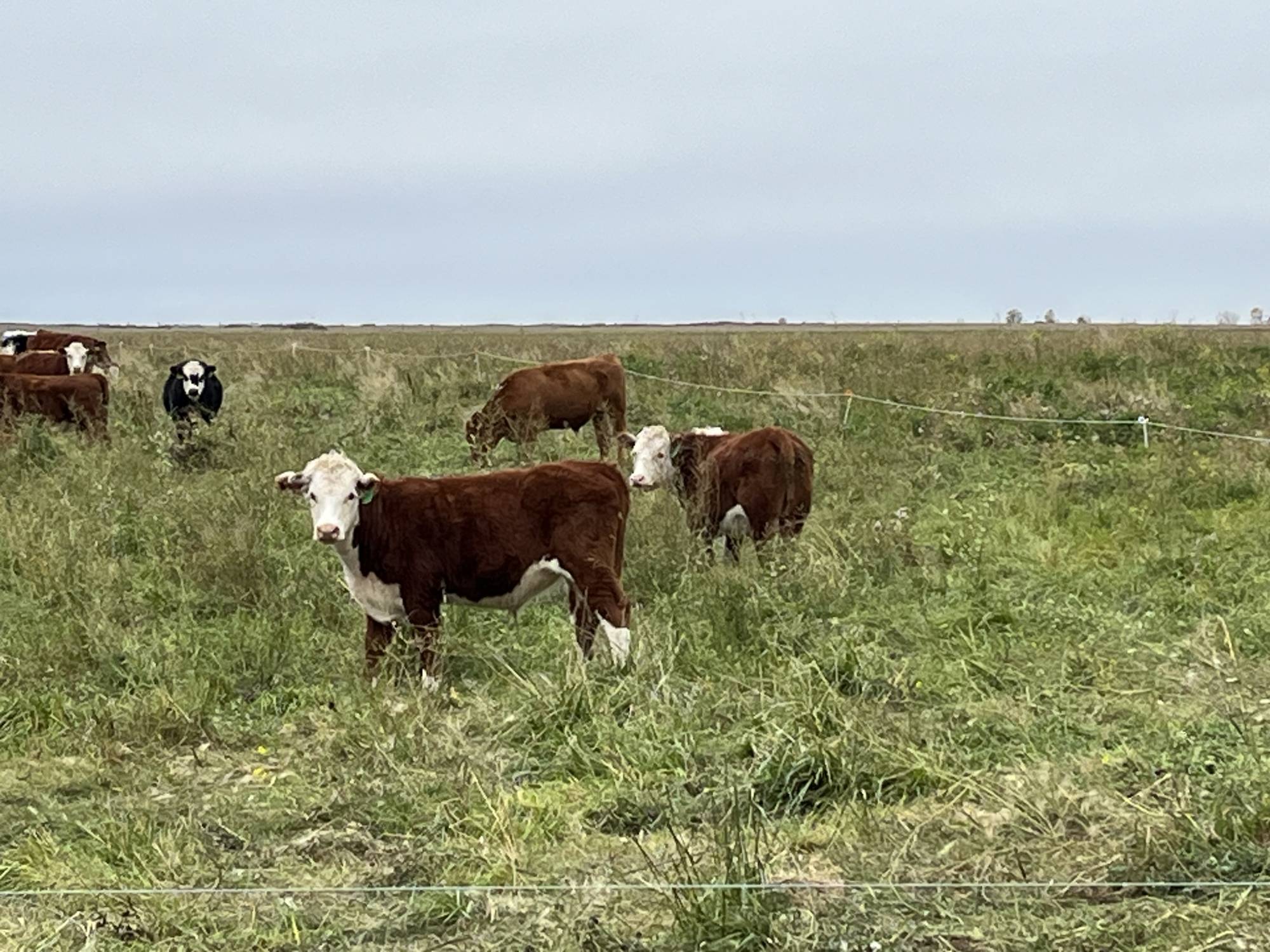
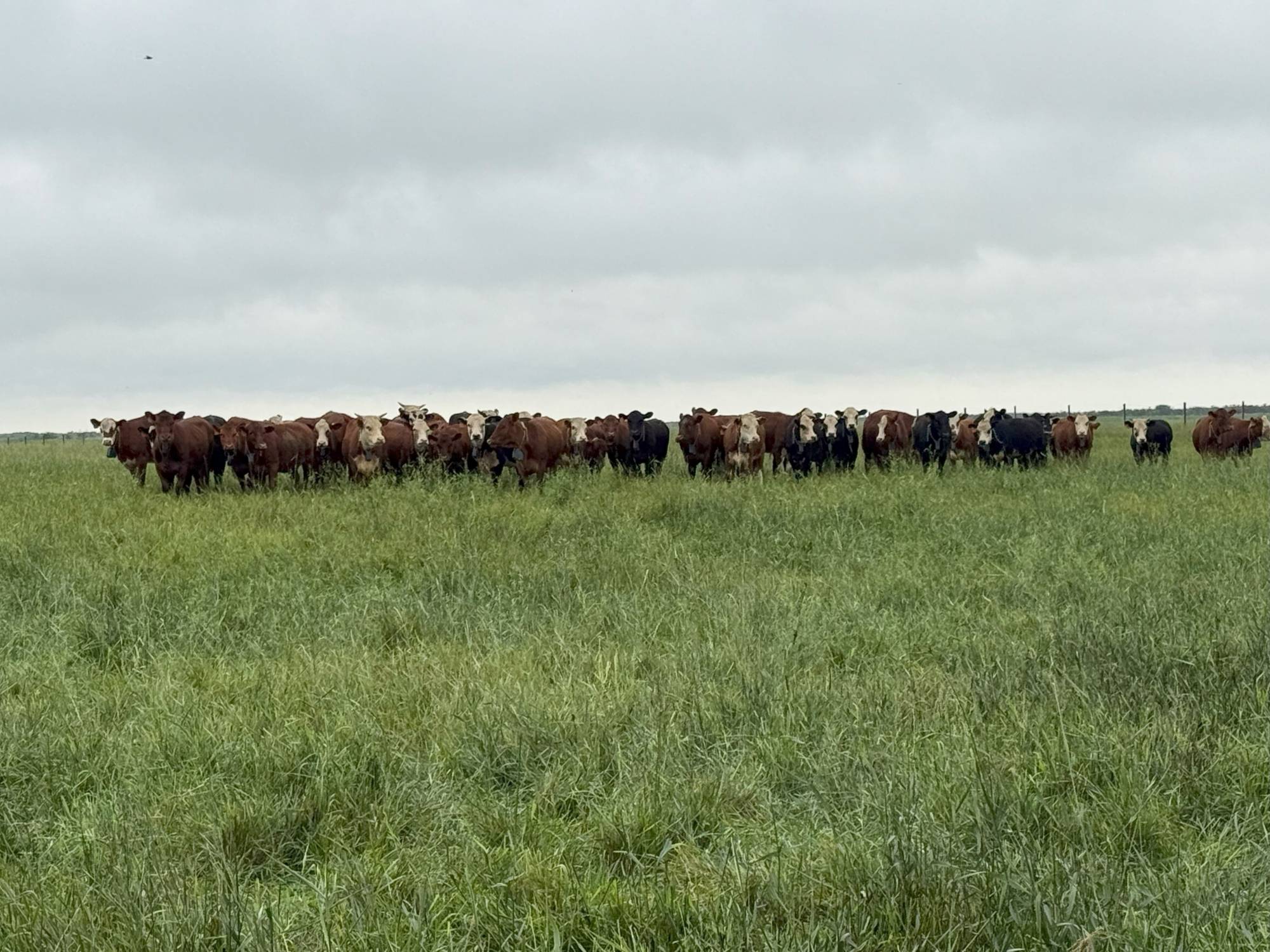
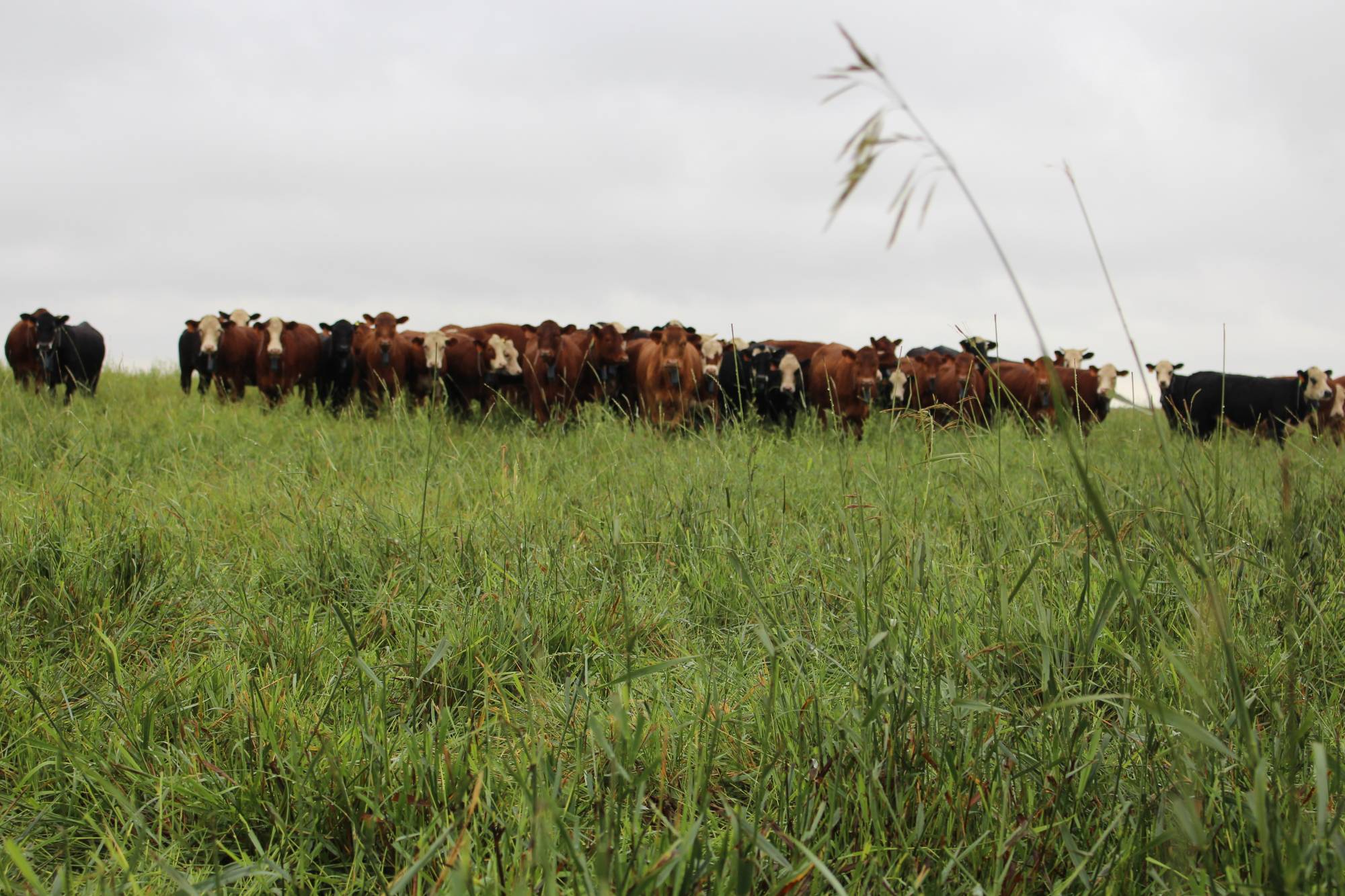
A total of 900 animals grazed the pasture during the 2025 grazing season. Cow/calf pairs grazed nearly 10,000 acres of native range. Water development made creation of additional paddocks possible and resulted in more even distribution of animals and visible improvement in forage utilization.
Because livestock did not have to travel as far to access water, grazing pressure around water sites was reduced and areas farther from the water source were utilized more evenly. Areas subjected to consistently high grazing pressure without adequate rest can become hotspots for invasive weeds and undesirable forage species. Marcel Busz, Mattheis Farm Manager, also noted benefits for the calves. With water troughs located closer to grazing areas, calves were better able to keep pace with the cows during paddock moves. As a result, young calves moved more easily with the herd and were less likely to be left behind, reducing stress and delays during moves.
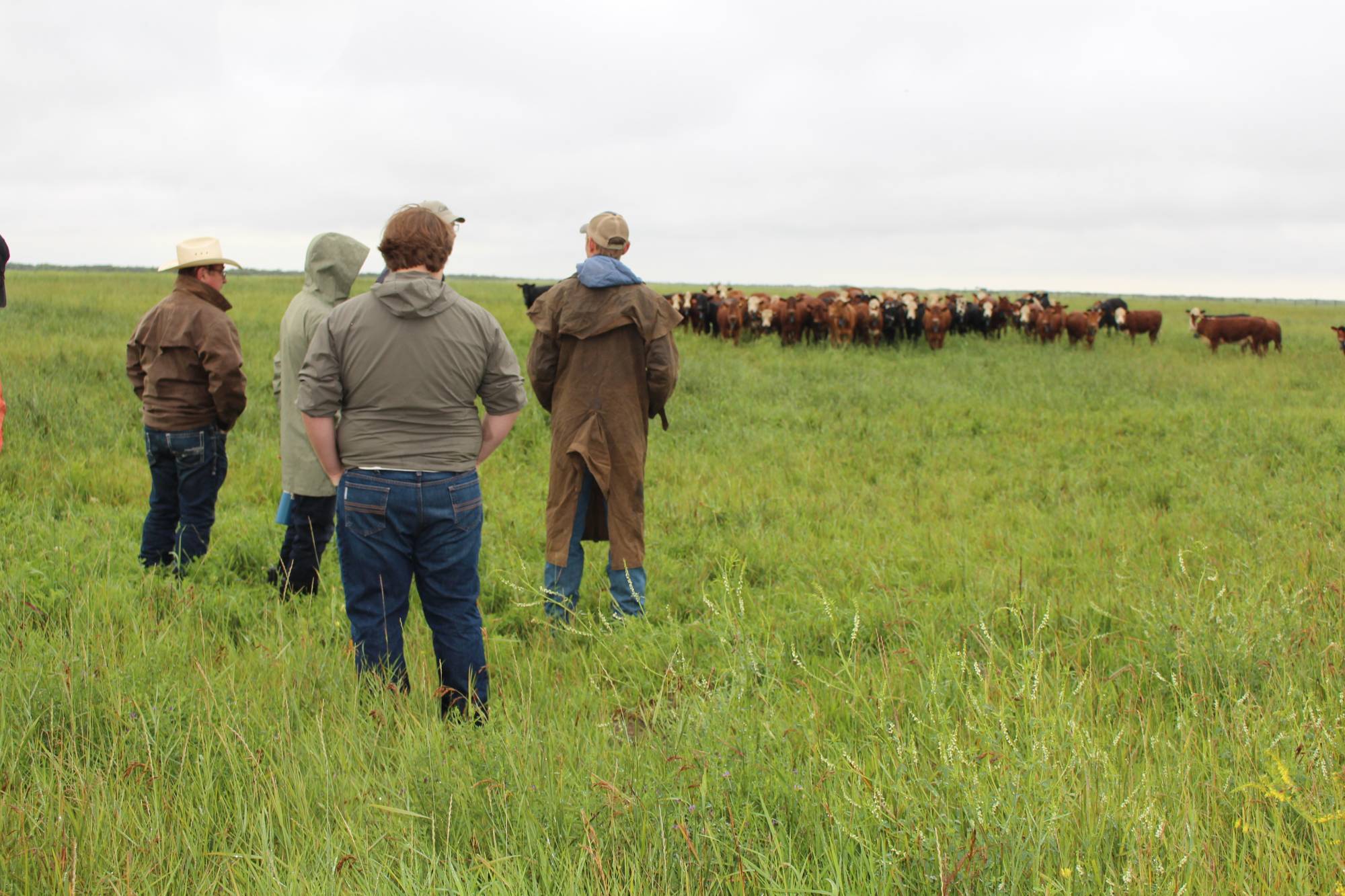
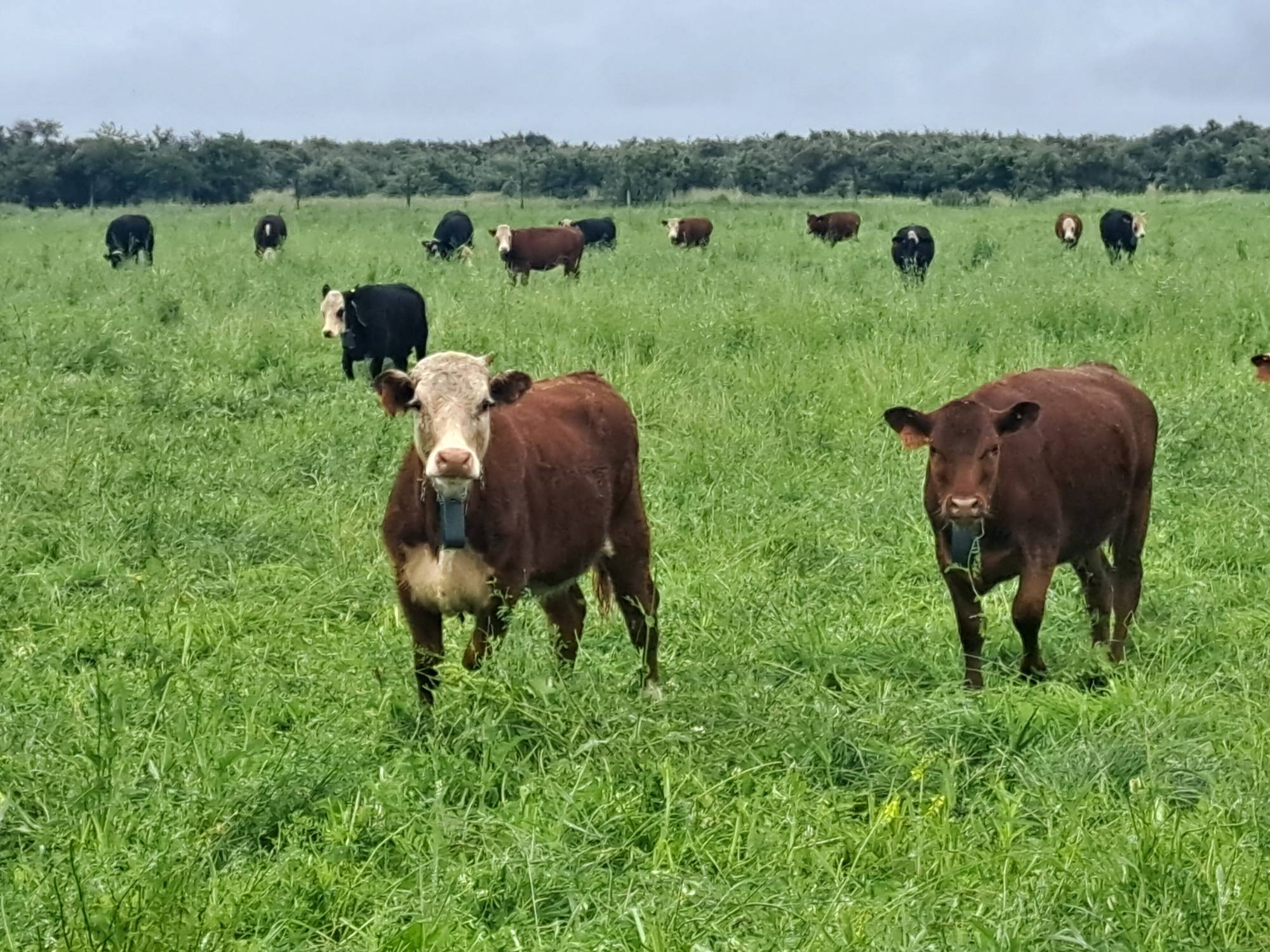
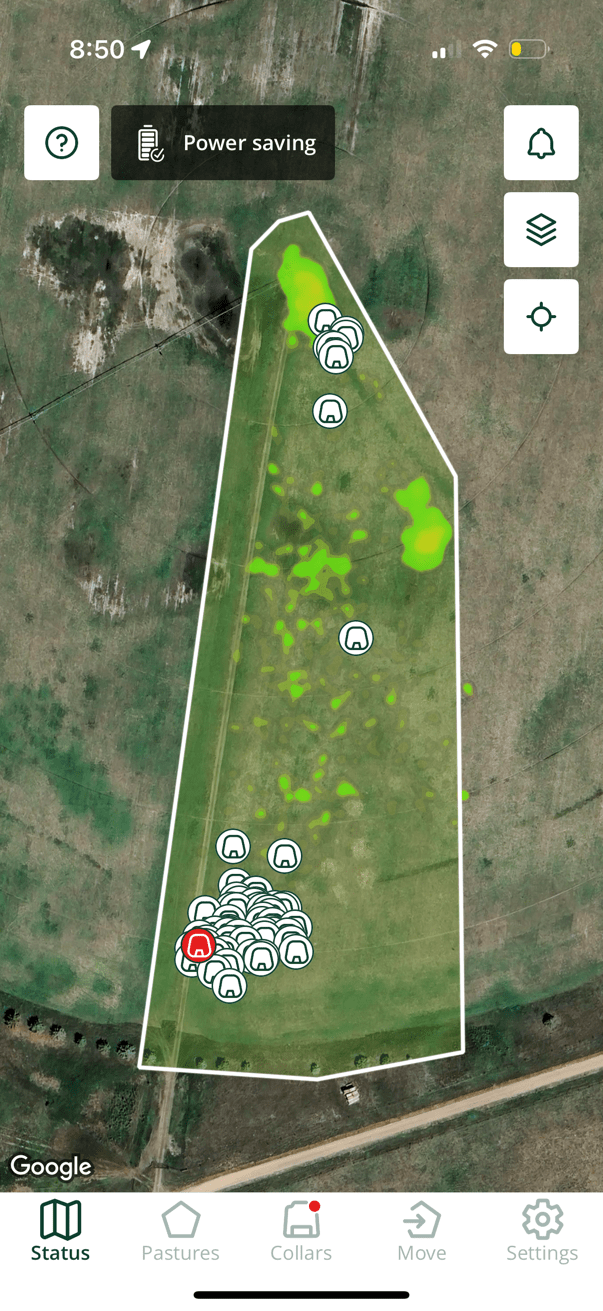
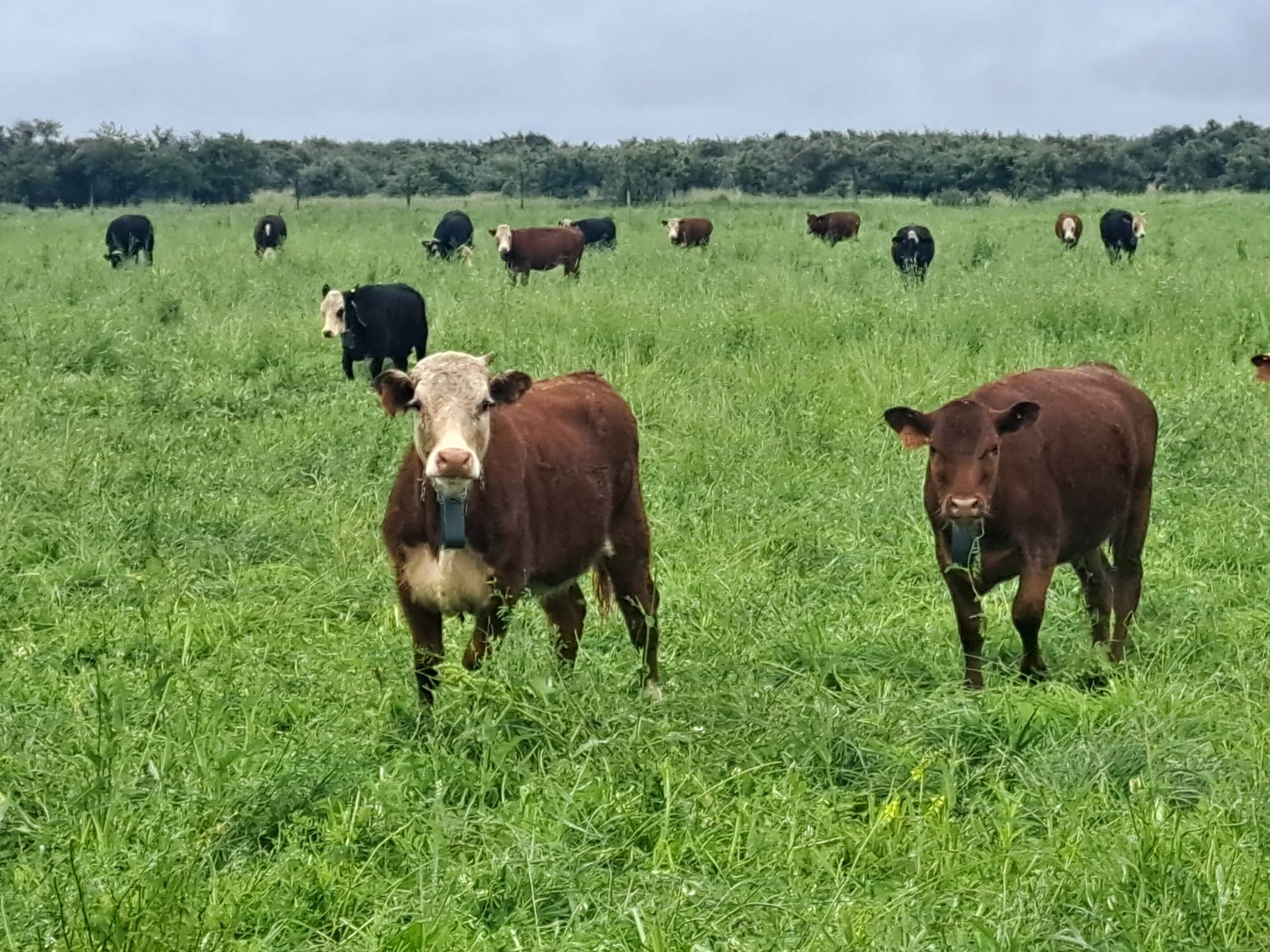
In June, 65 yearling heifers were equipped with collars using Nofence virtual fence, technology that allows livestock movement to be controlled without physical cross-fencing. Animals receive an audible cue when approaching a virtual boundary and learn to turn away before receiving an electric pulse. According to Busz, training the animals to virtual fence technology has been successful at Mattheis; yearlings learned to cautiously approach taller, ungrazed forage and respected the audible cues alerting them to a virtual fenceline.
Moving the herd through a gate to a new grazing area presented initial challenges, as animals became leery and hesitant to leave the known safe area. Once they felt comfortable and a lead animal went through, the remainder followed with no further issues. Animals were run through the chute again in August to adjust some of the collars and accommodate the yearlings’ growing frames, taking approximately two hours to fit all 65 collars.
This project is being carried out on paddocks seeded to perennial tame forage or irrigated pivots seeded to a polycrop mixture. This collar trial at Mattheis demonstrates how the technology can work in the landscapes of central Alberta. While overall grazing days remained the same, Busz gained the ability to create additional paddocks which translated to more rest and regrowth time for the forage.
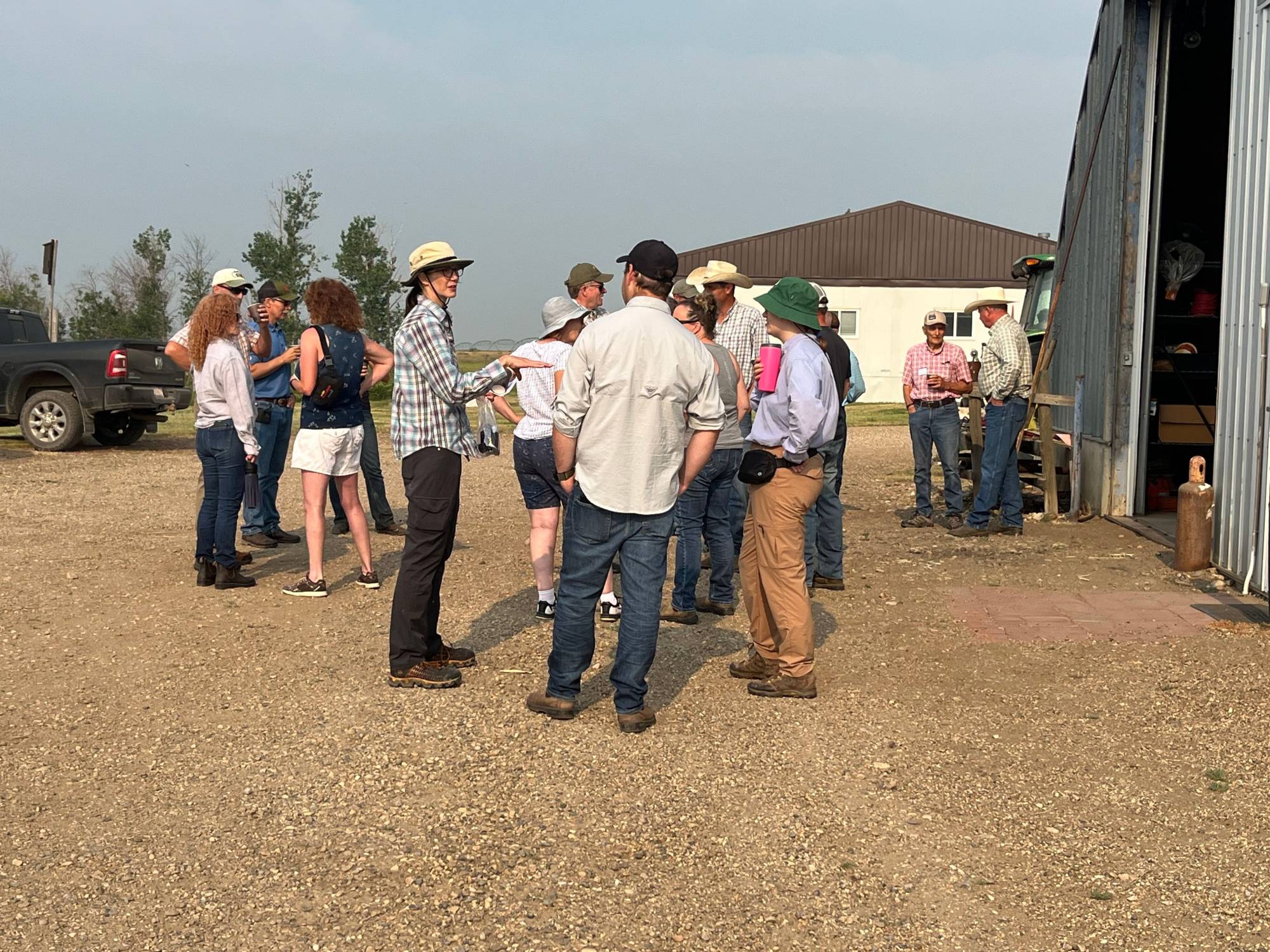
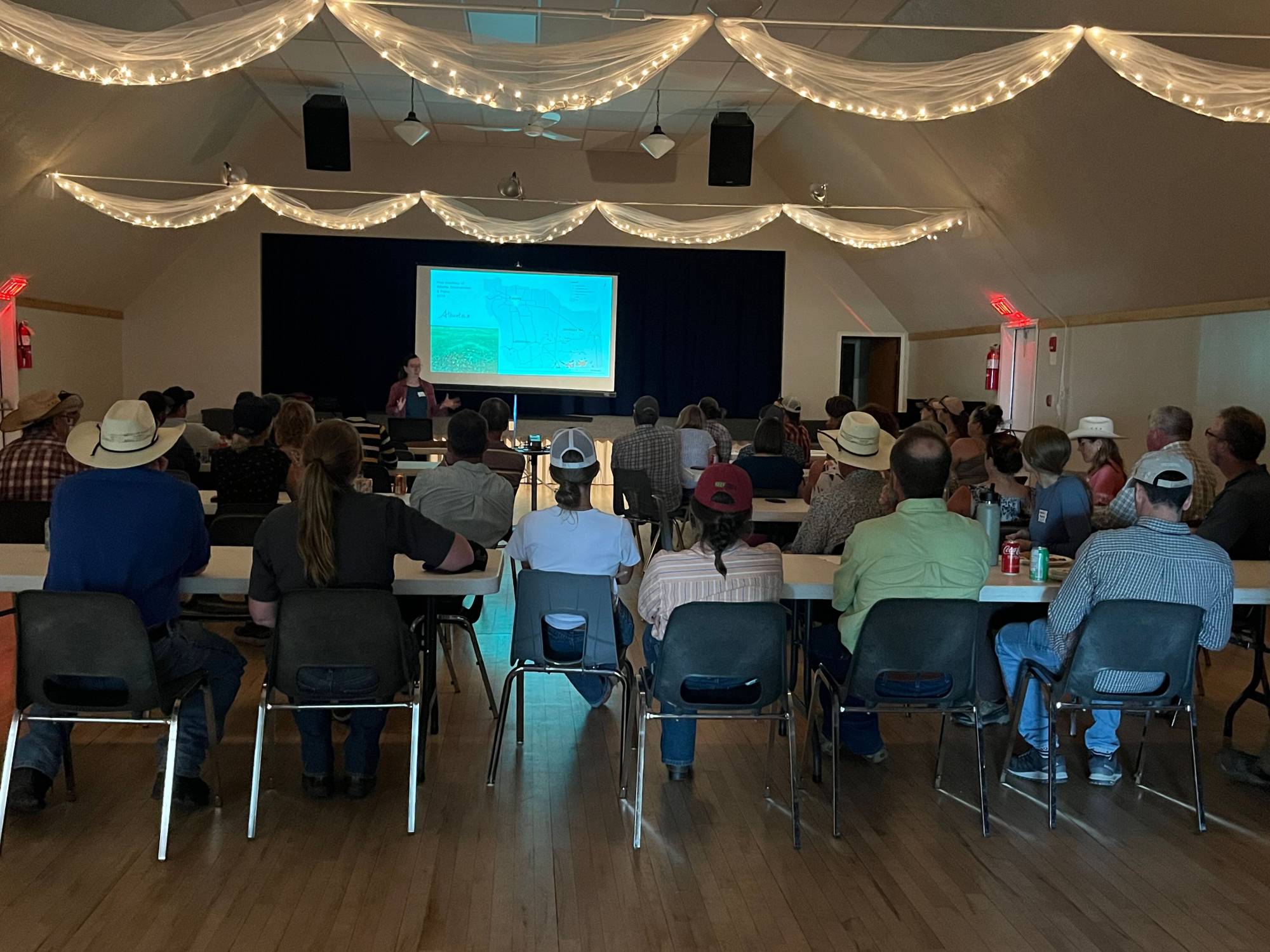
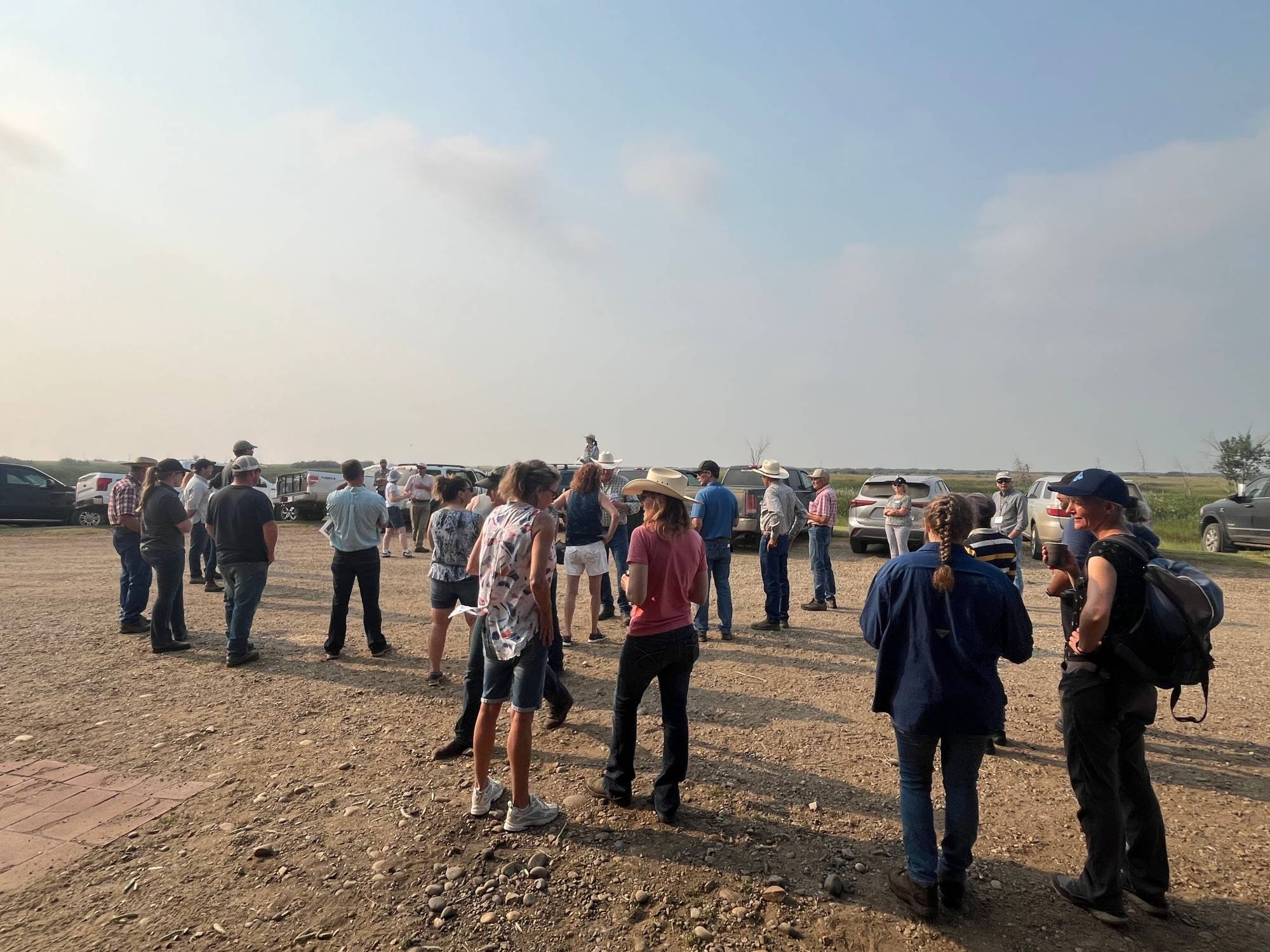
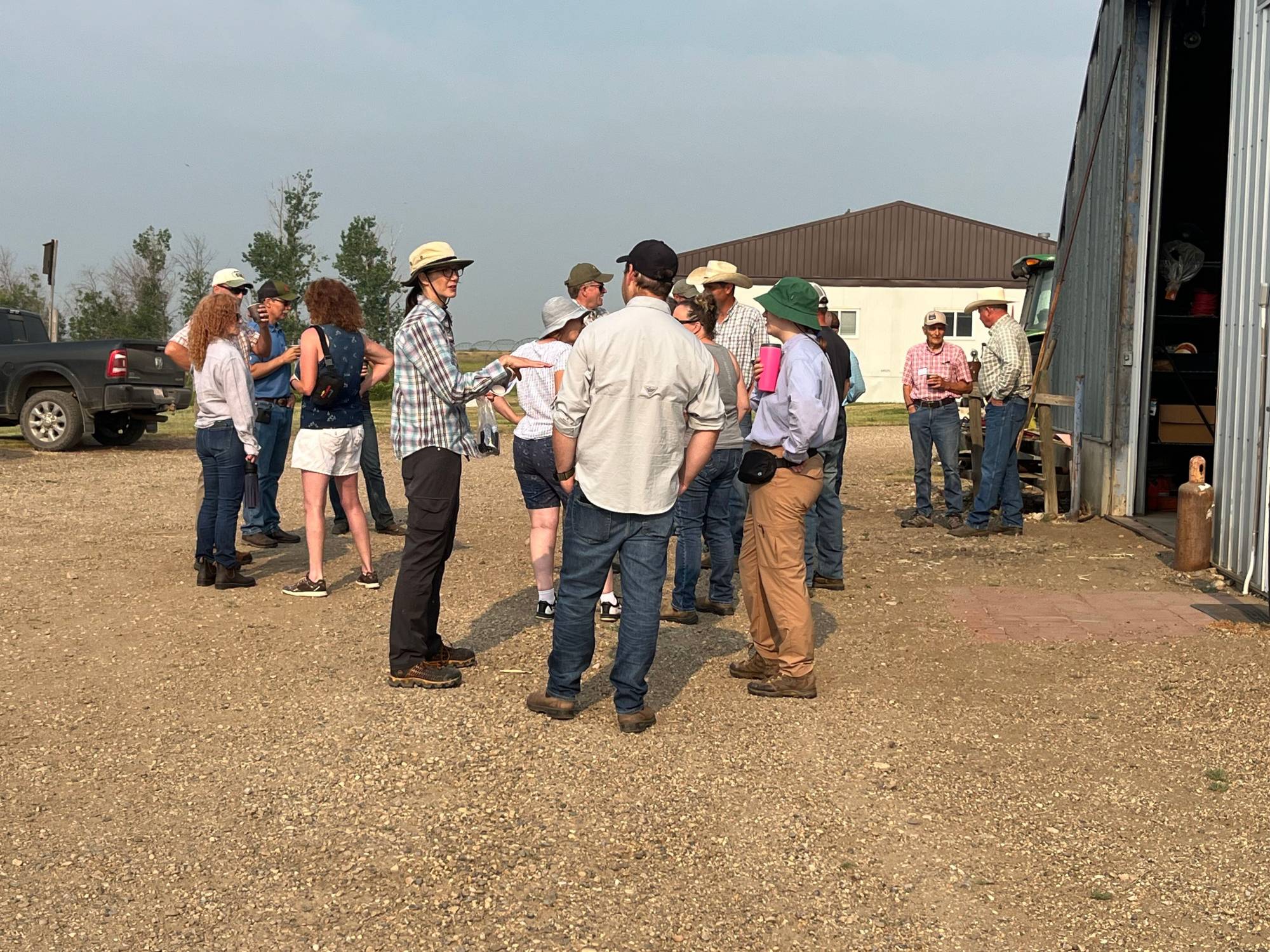
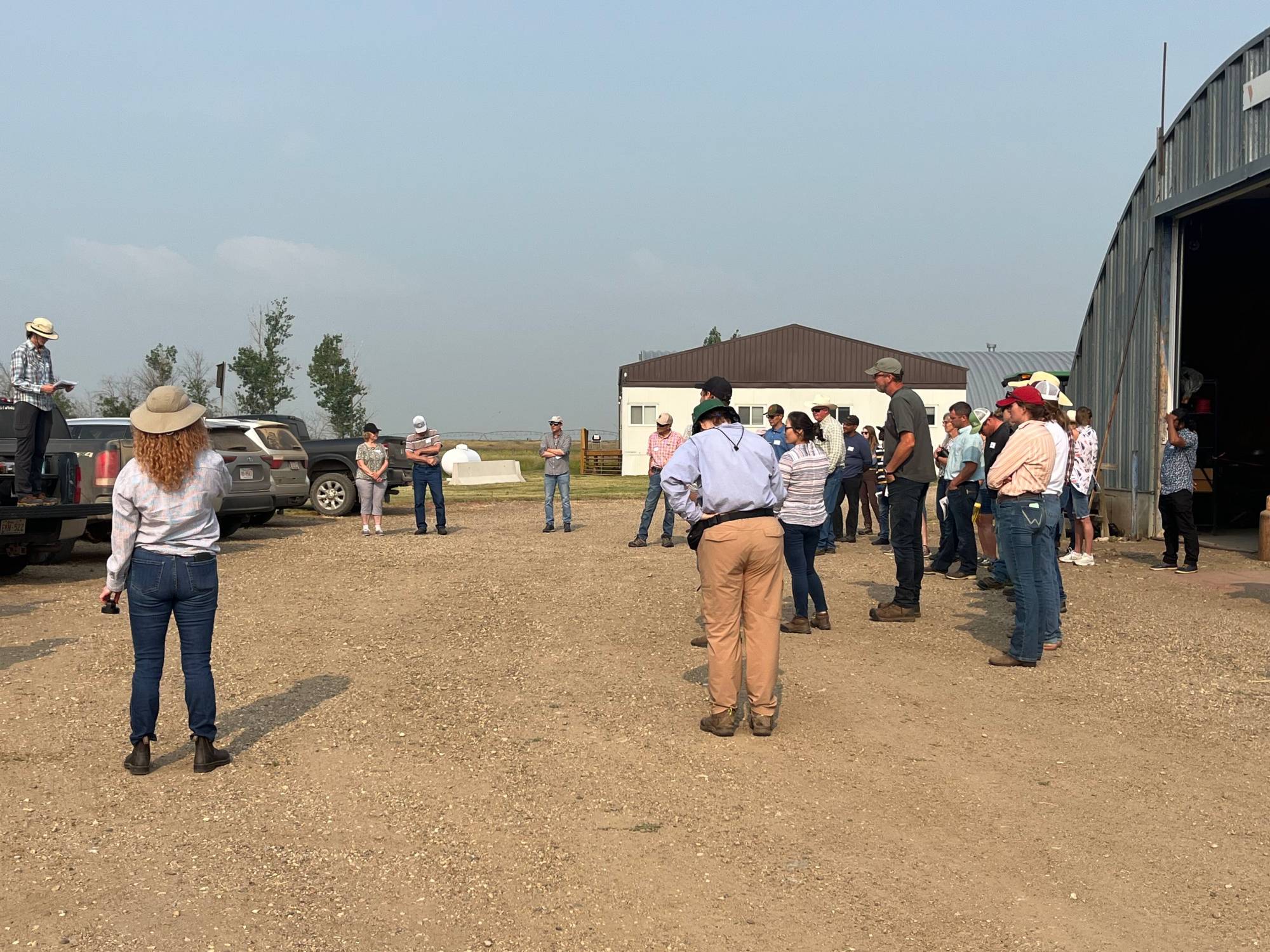
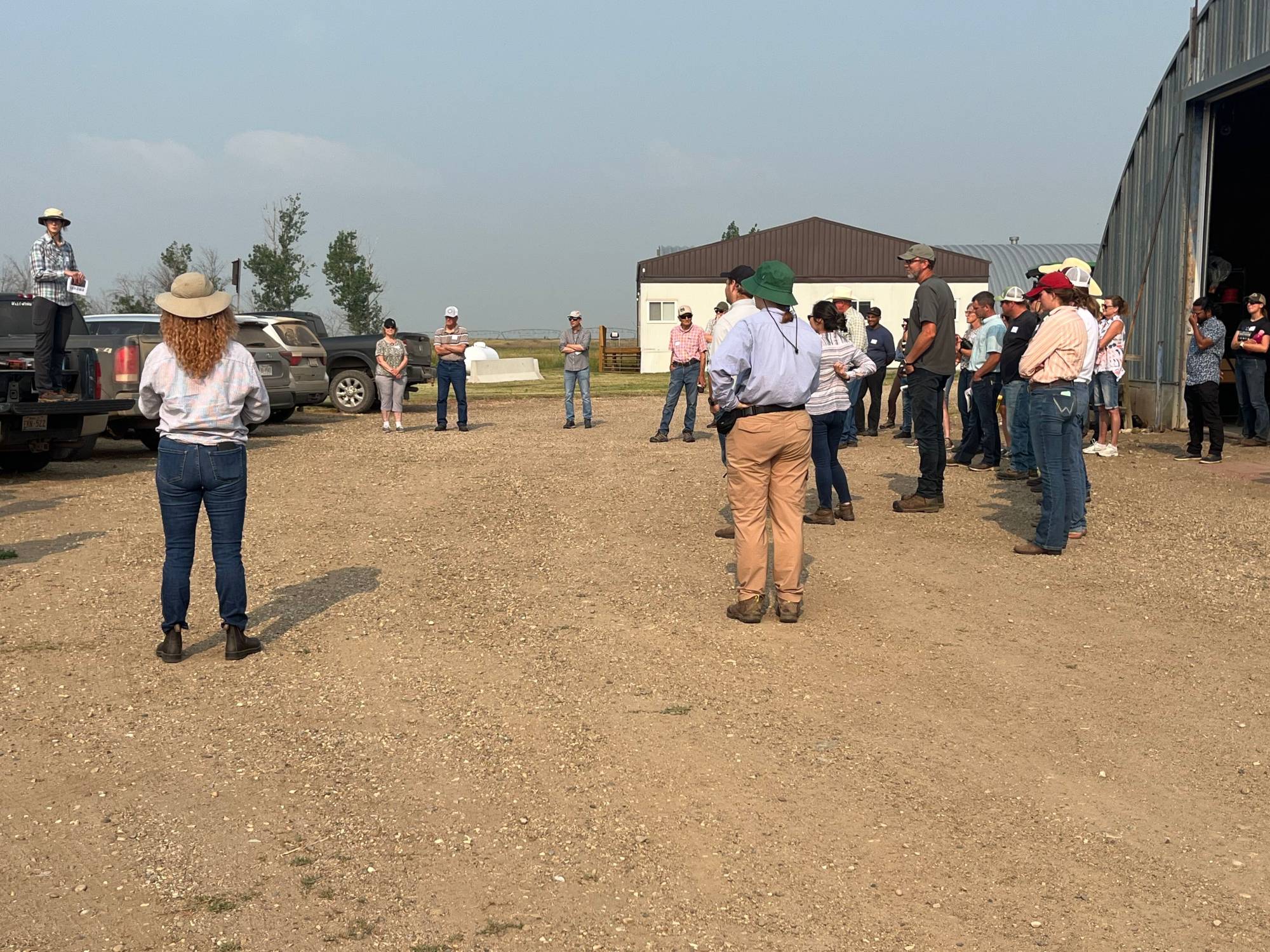
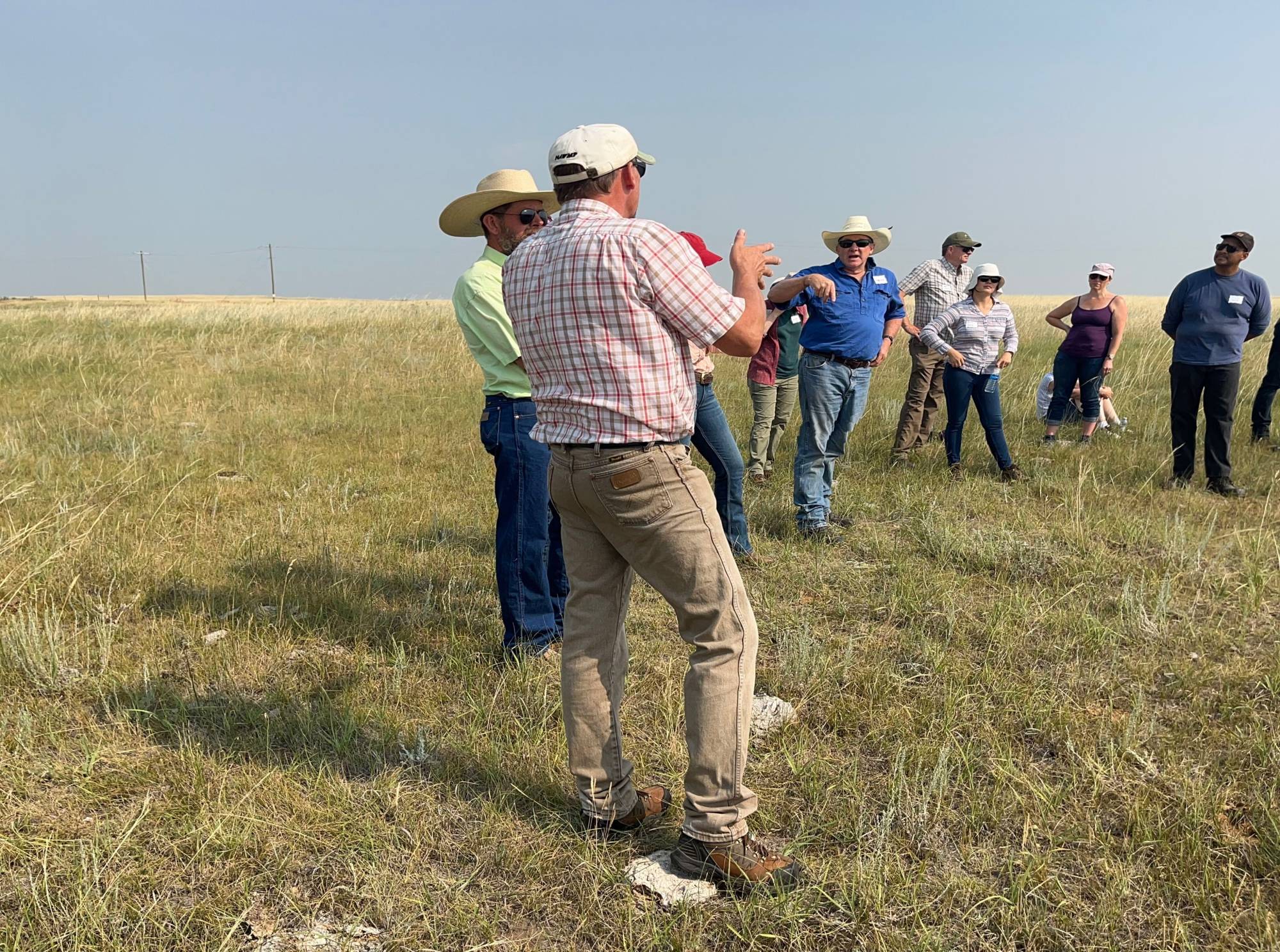
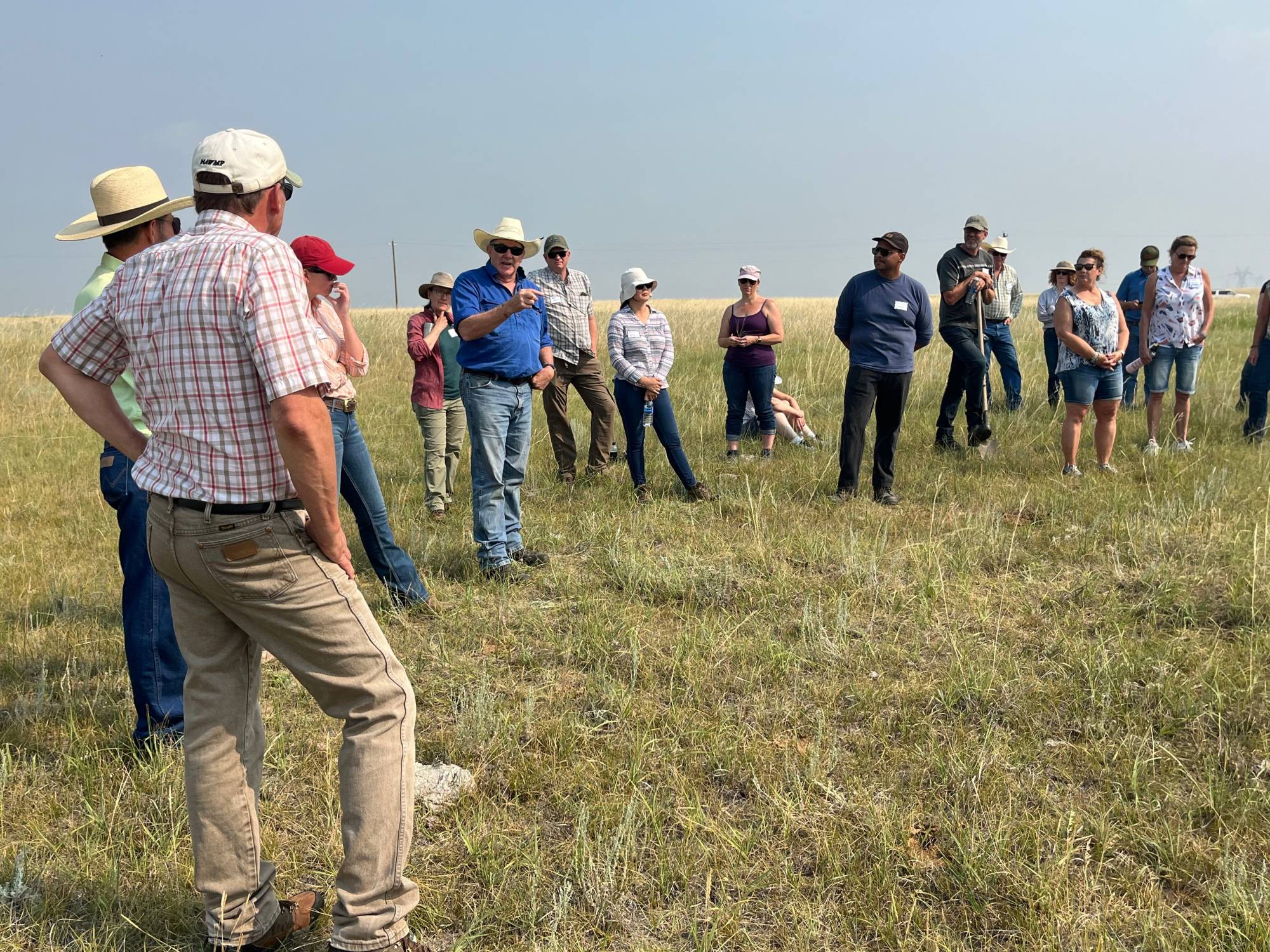
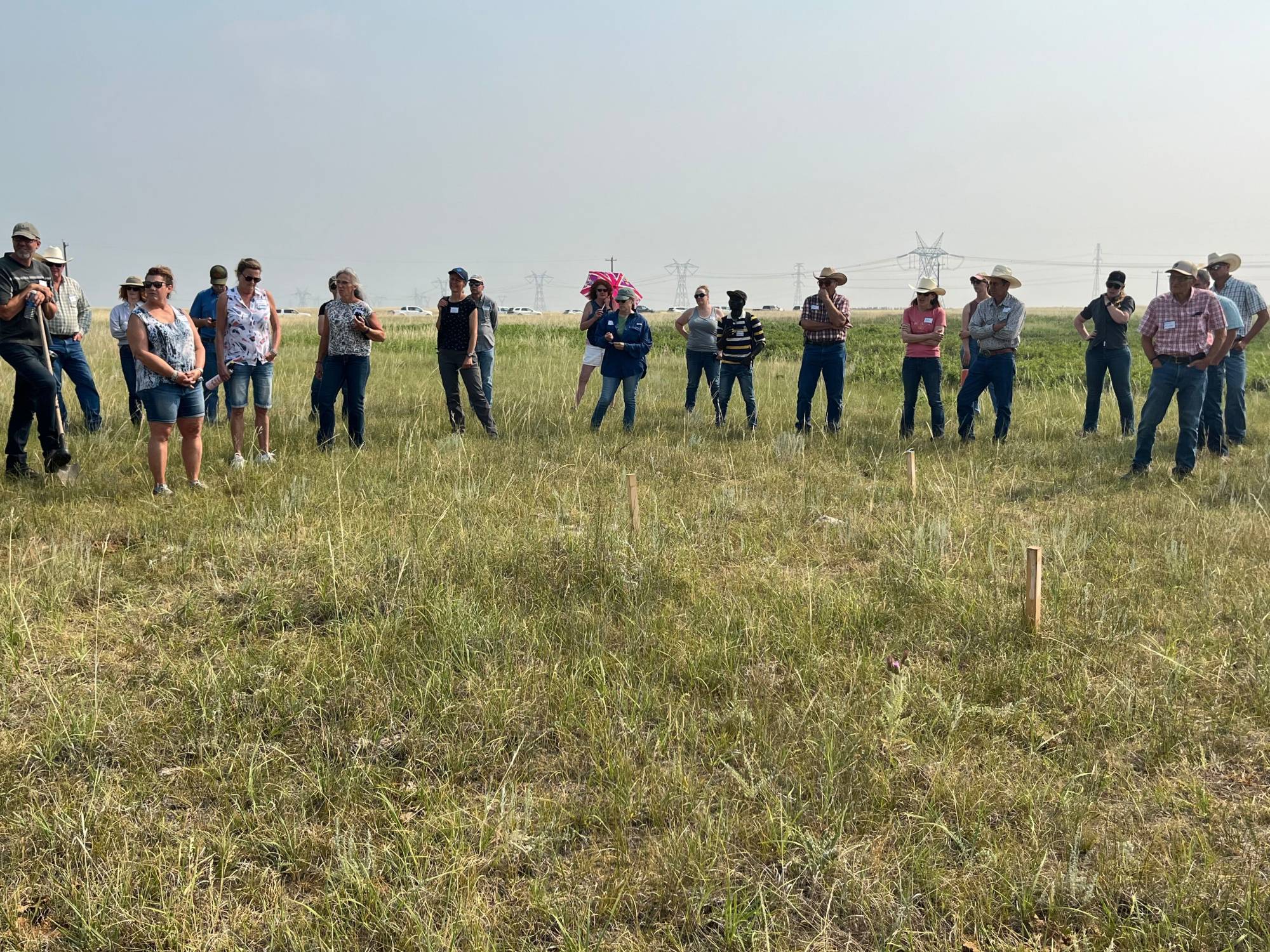
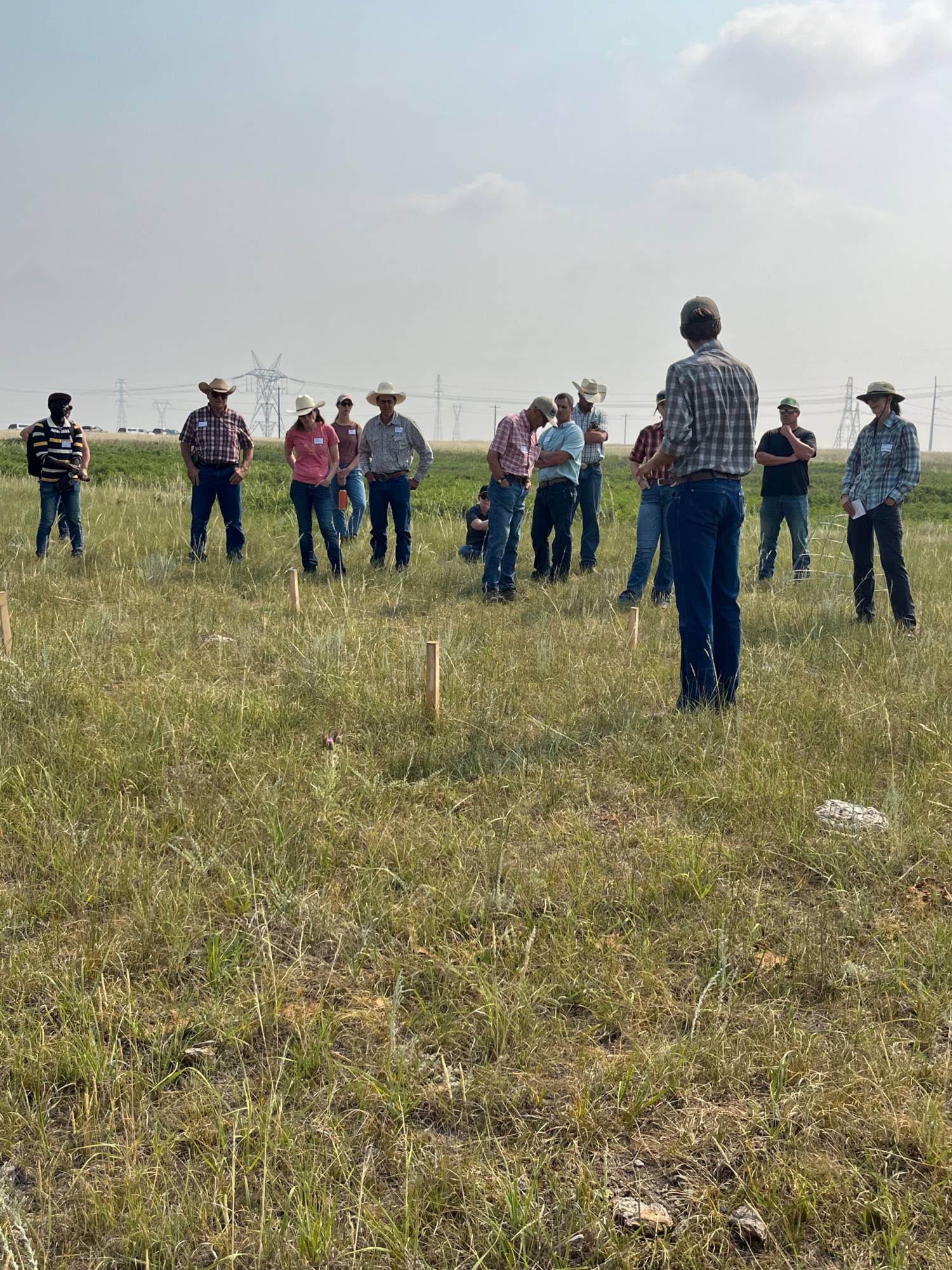
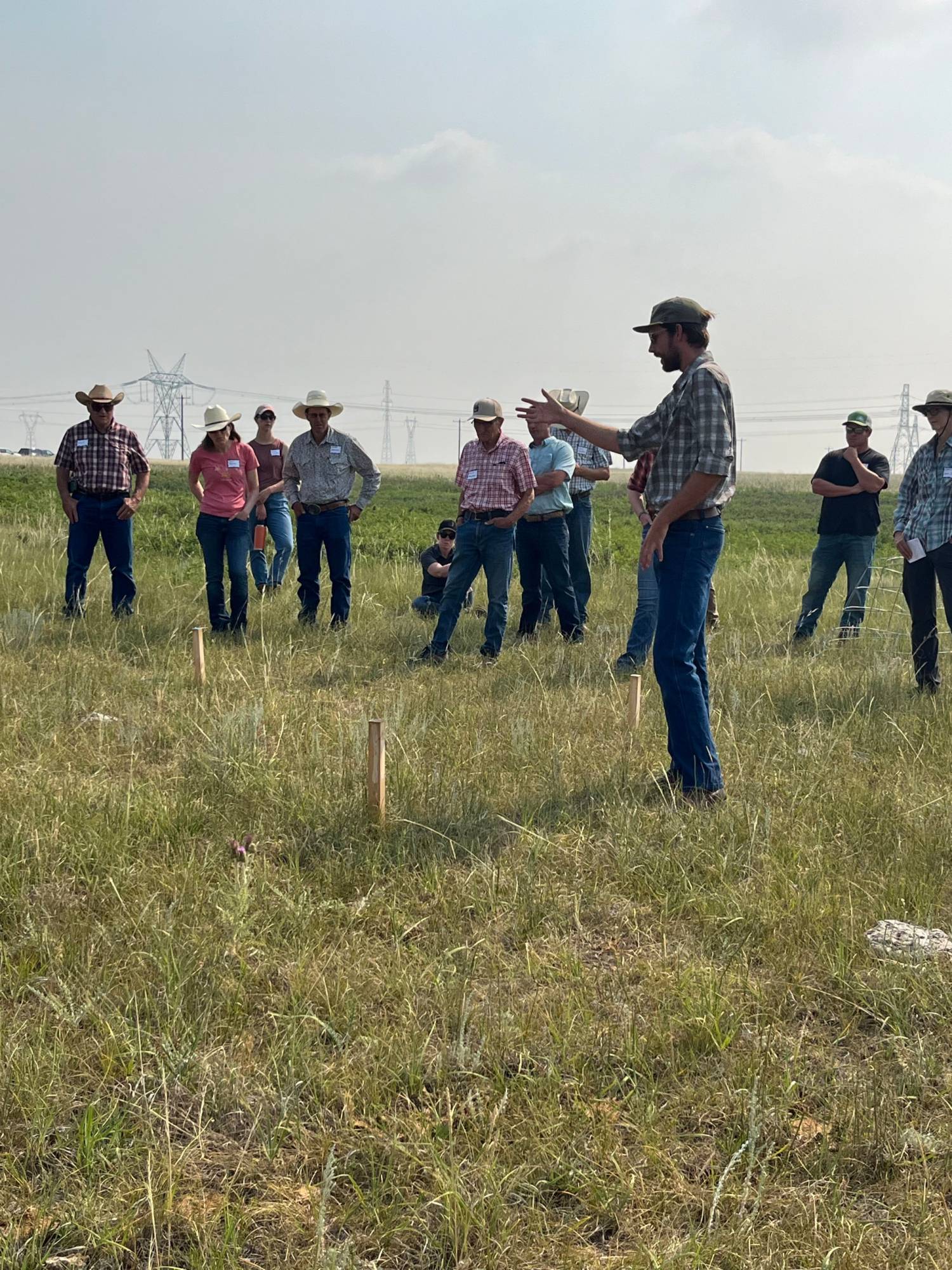
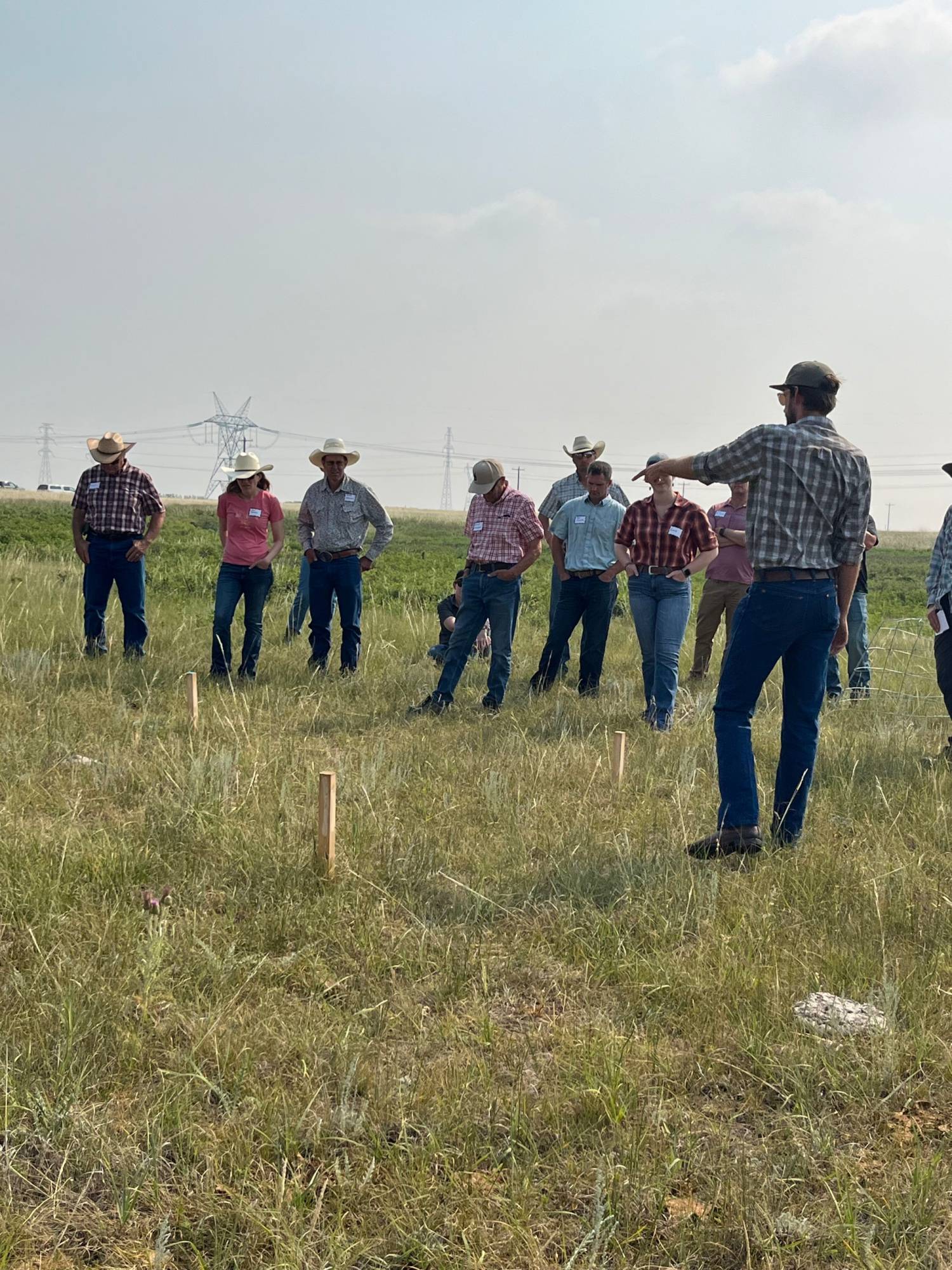
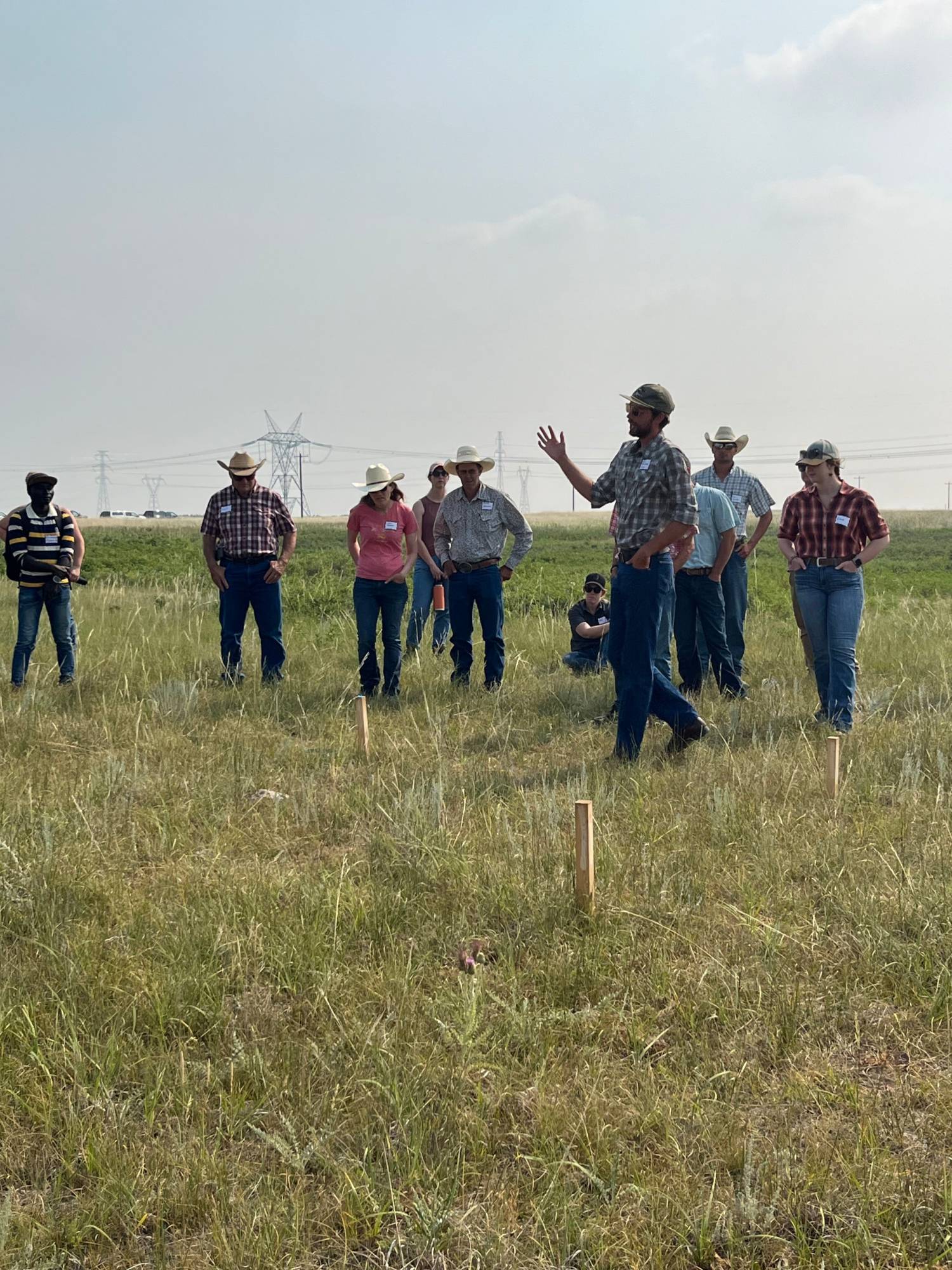
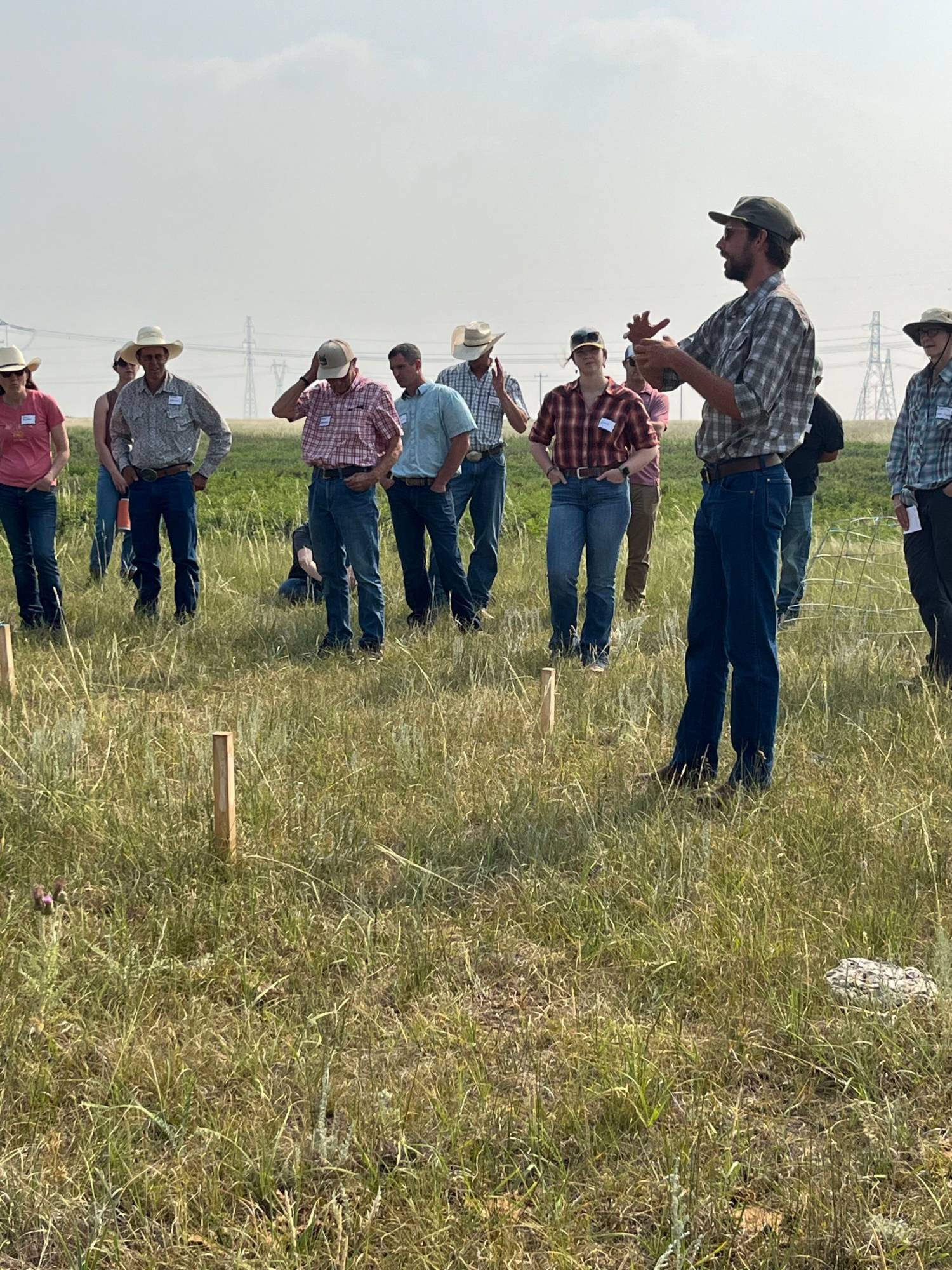
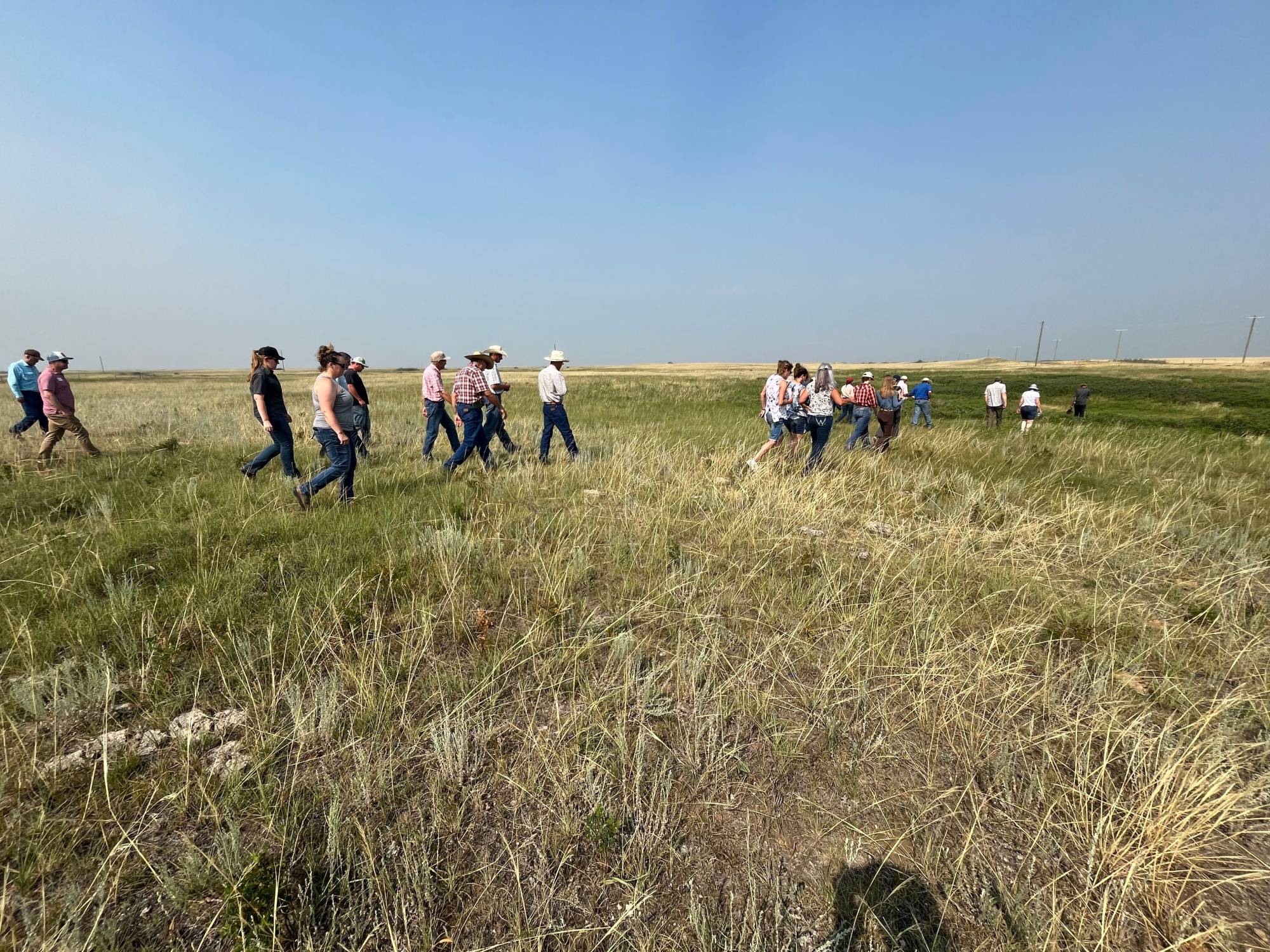
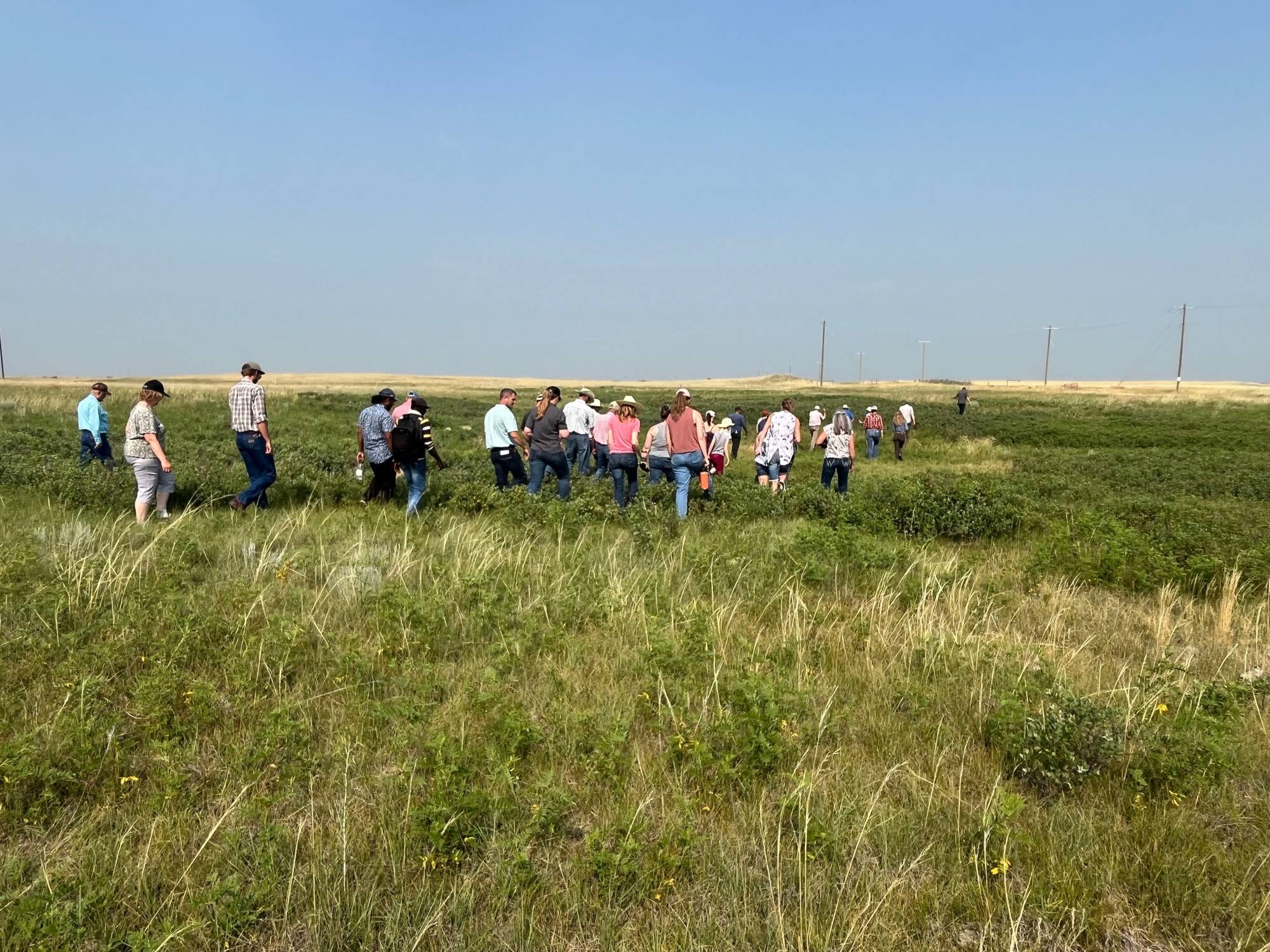
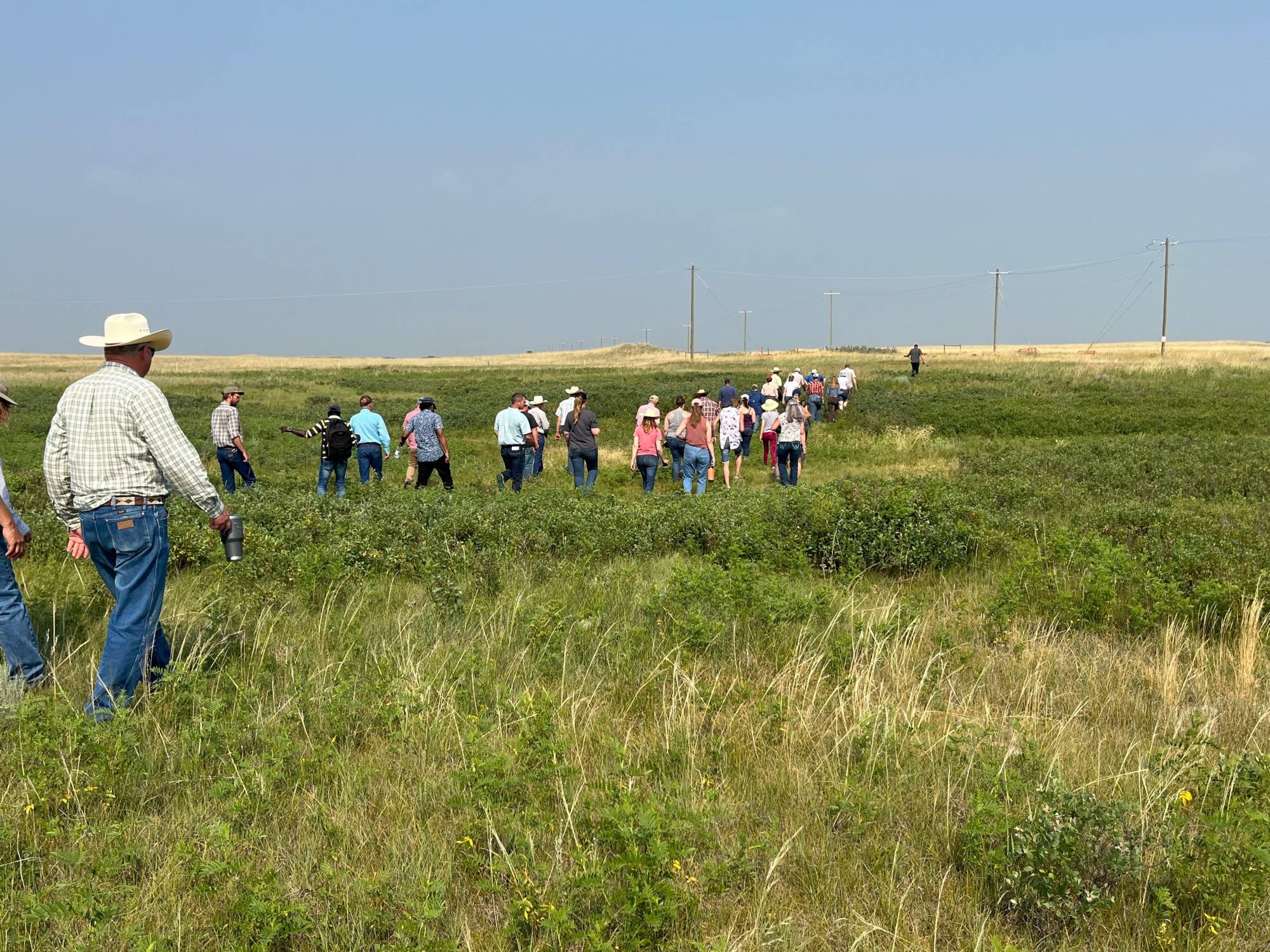
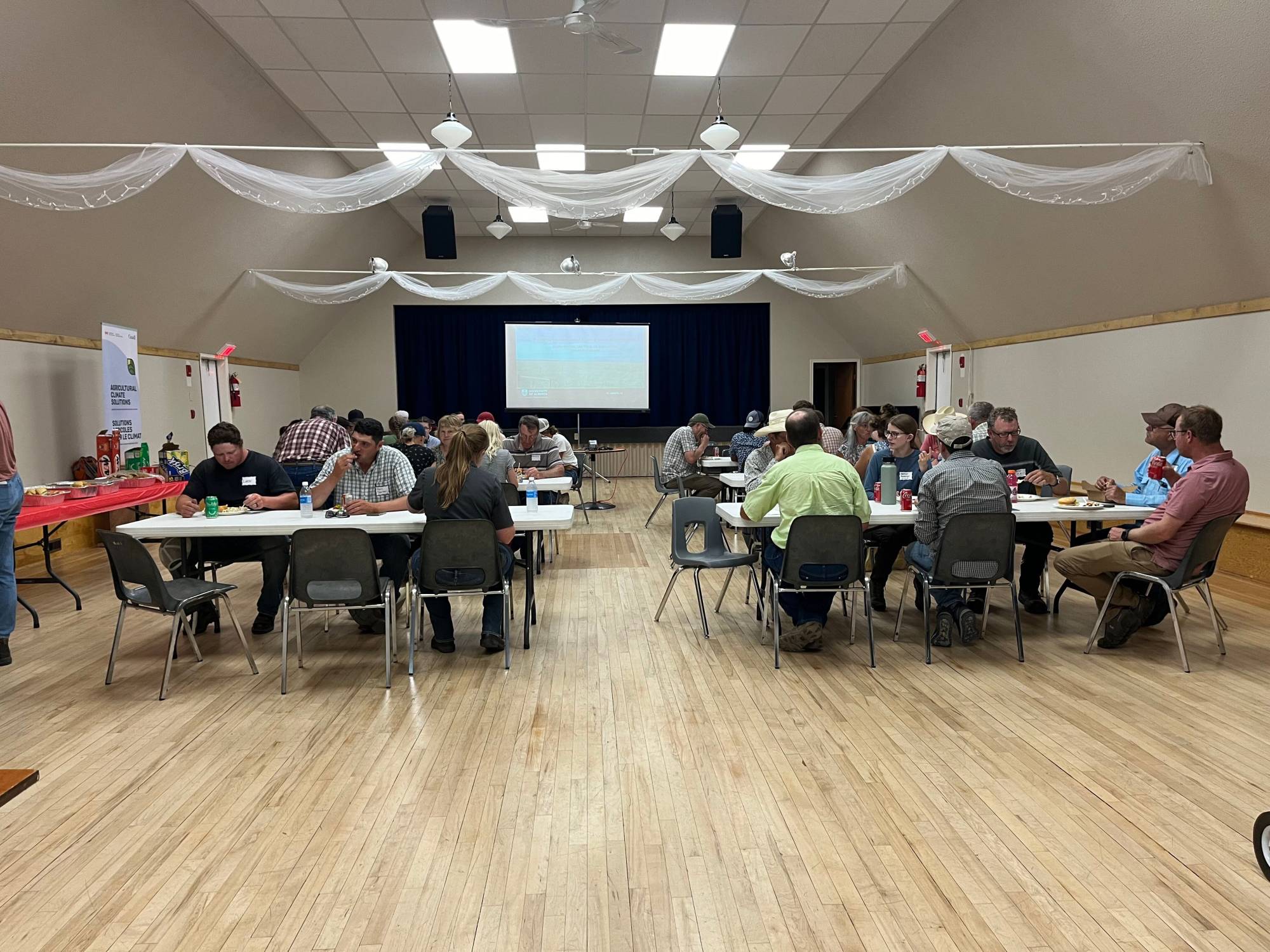
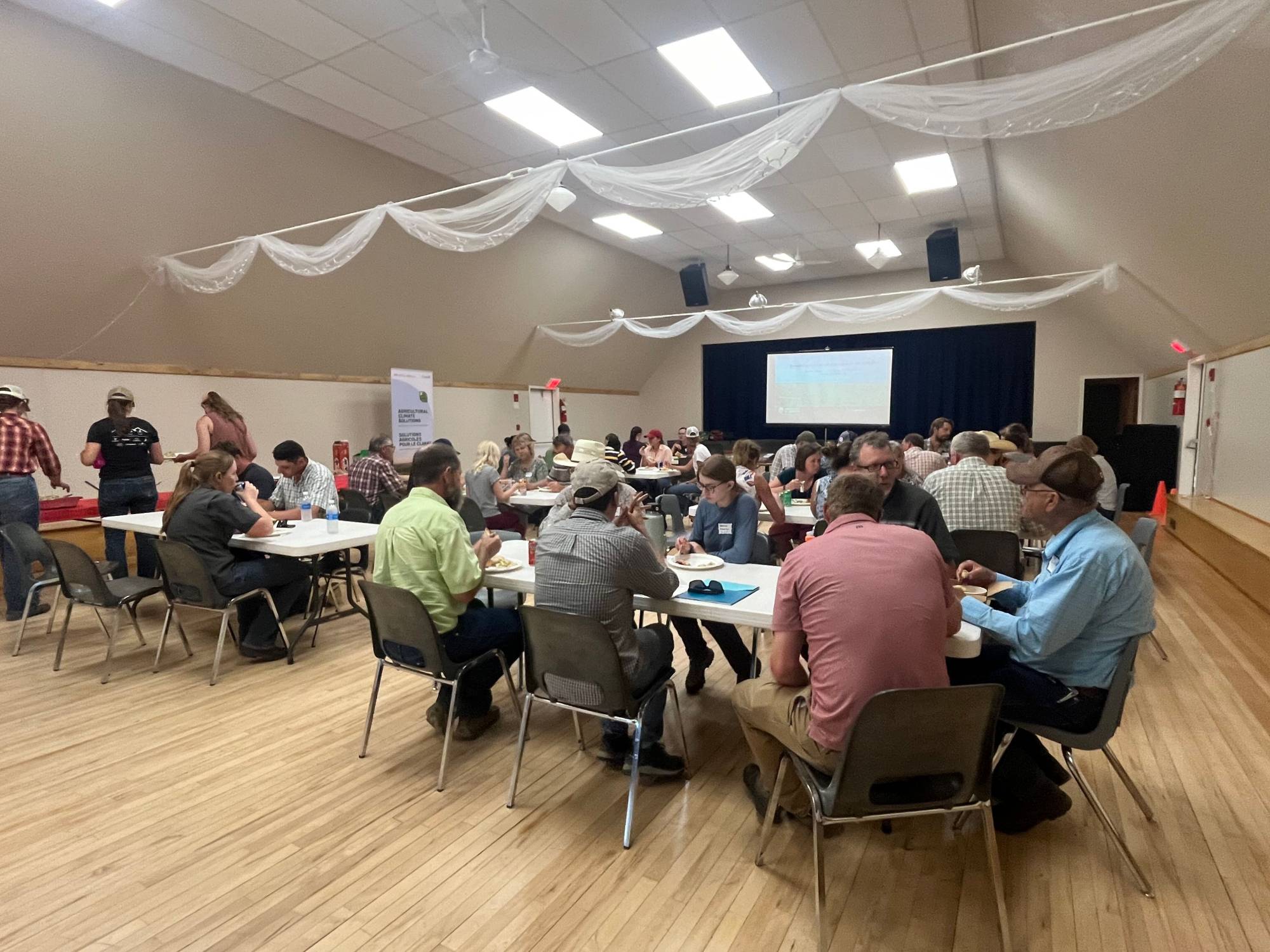
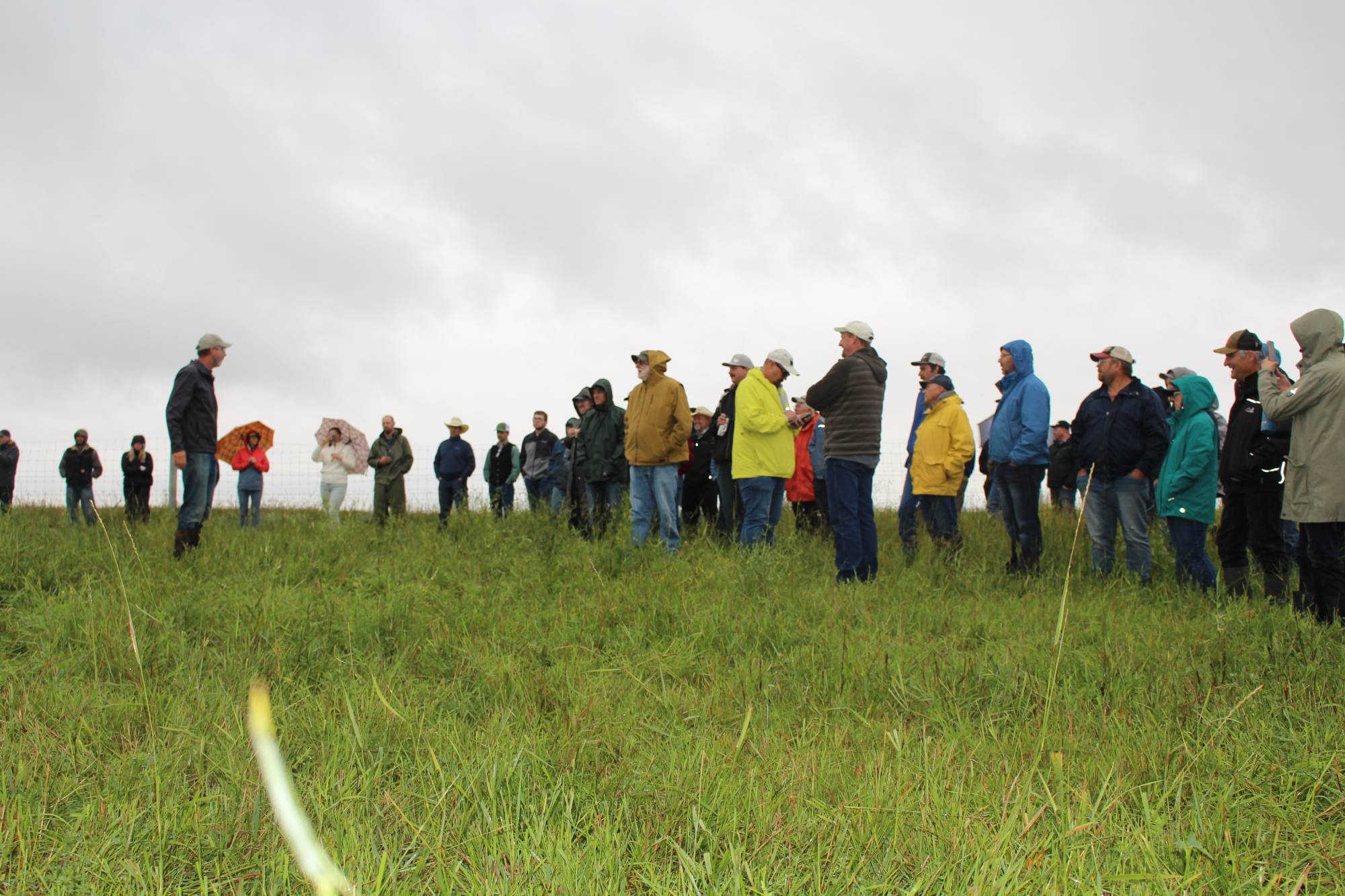
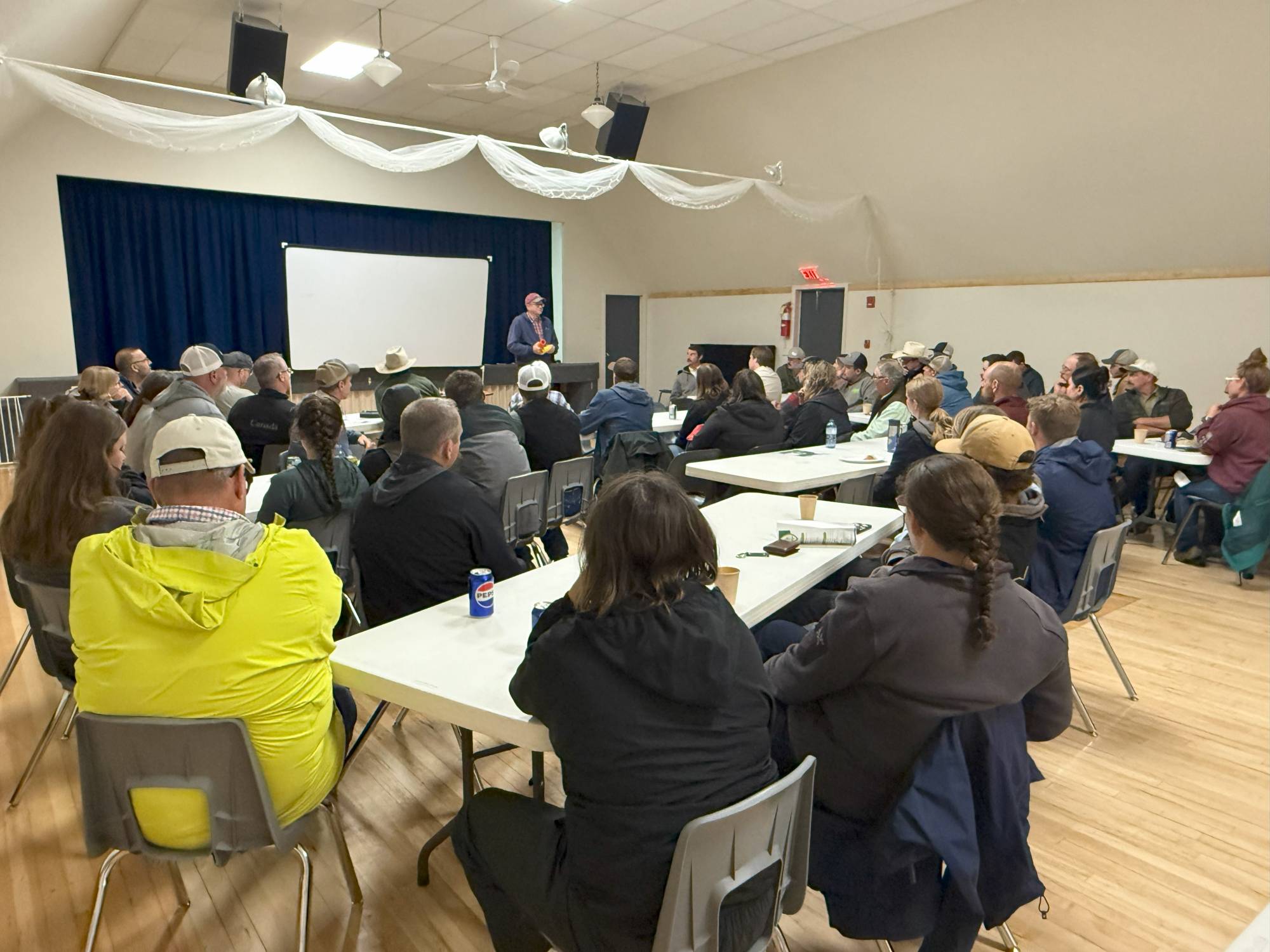
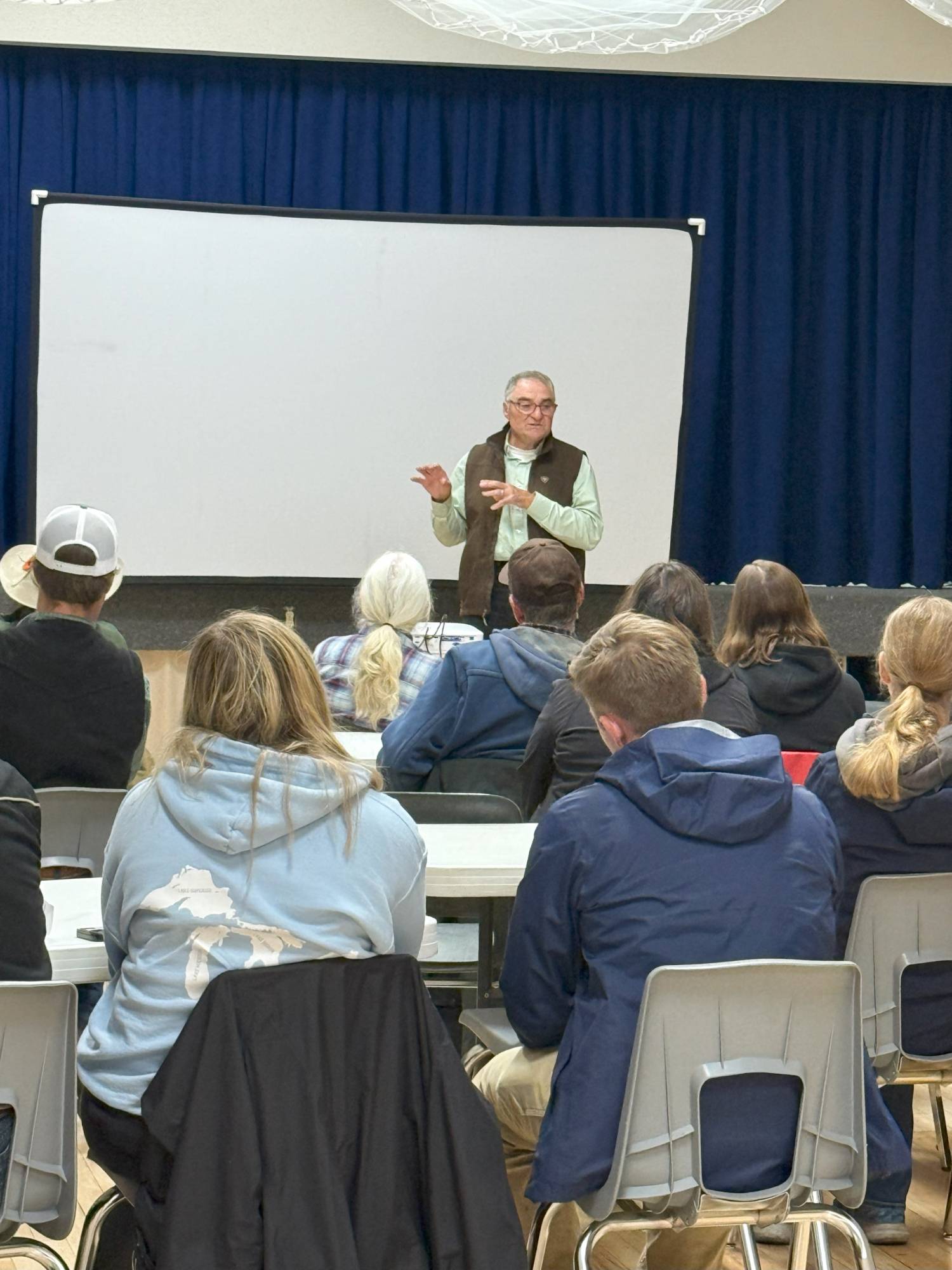
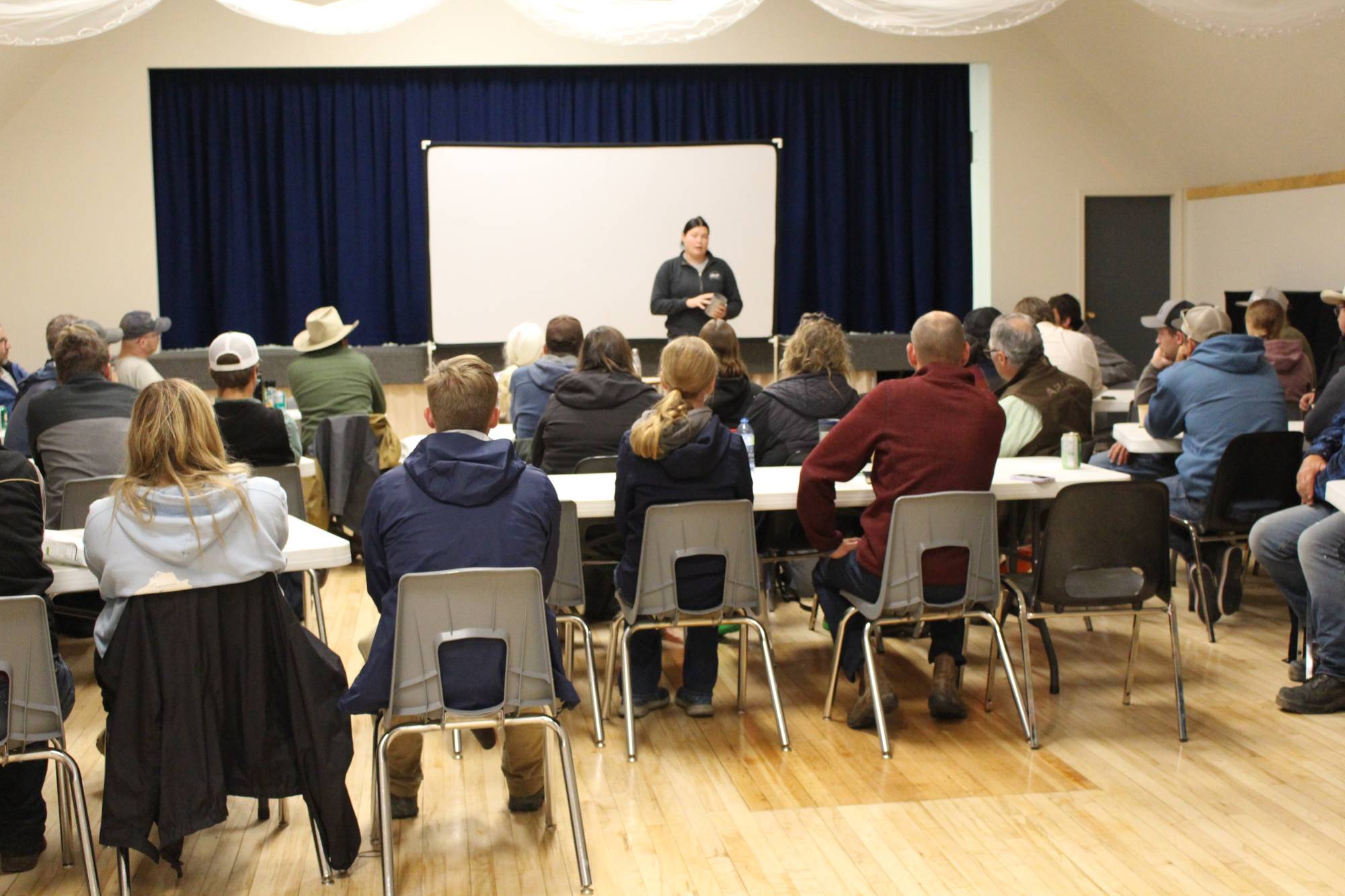
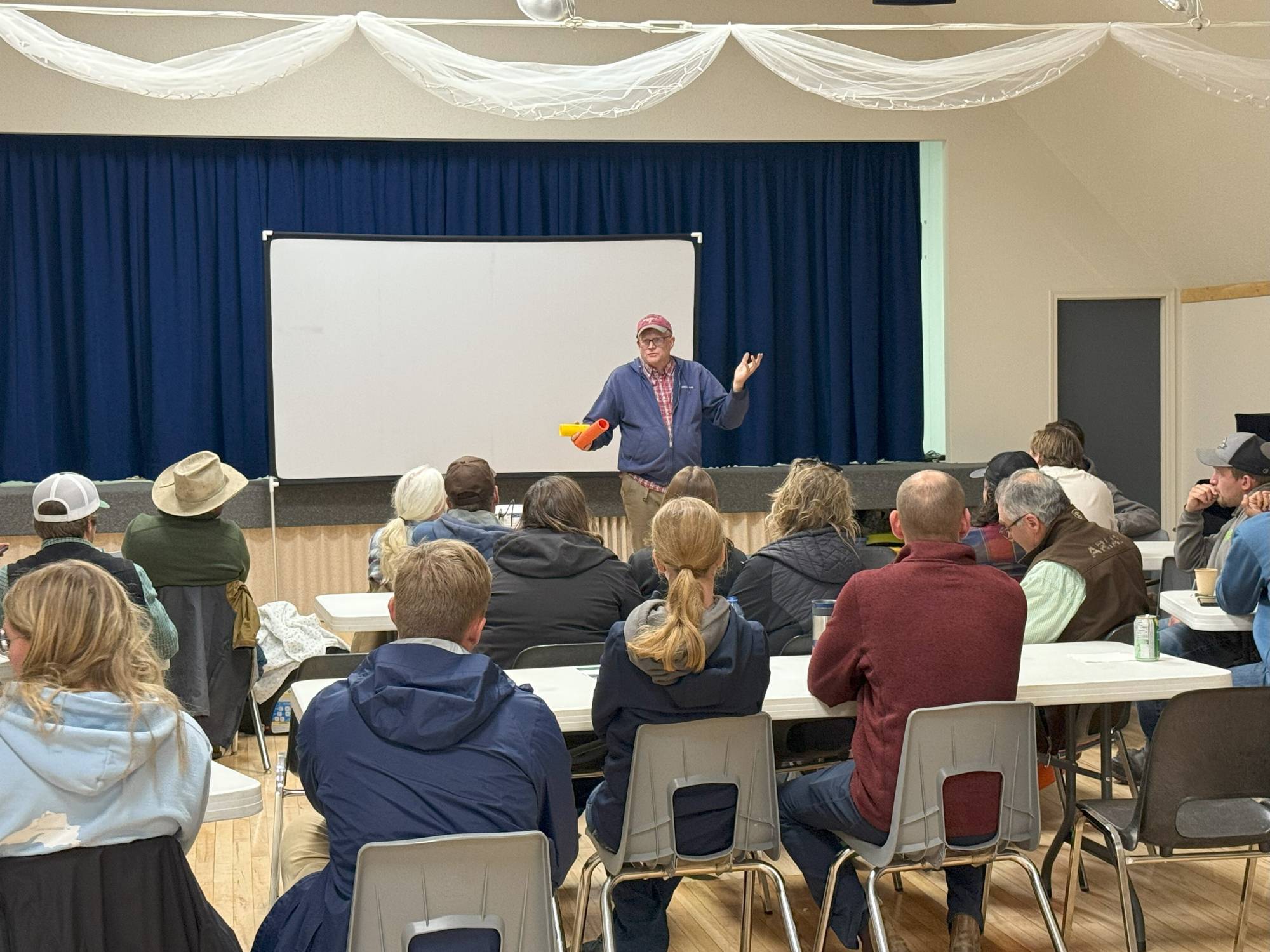
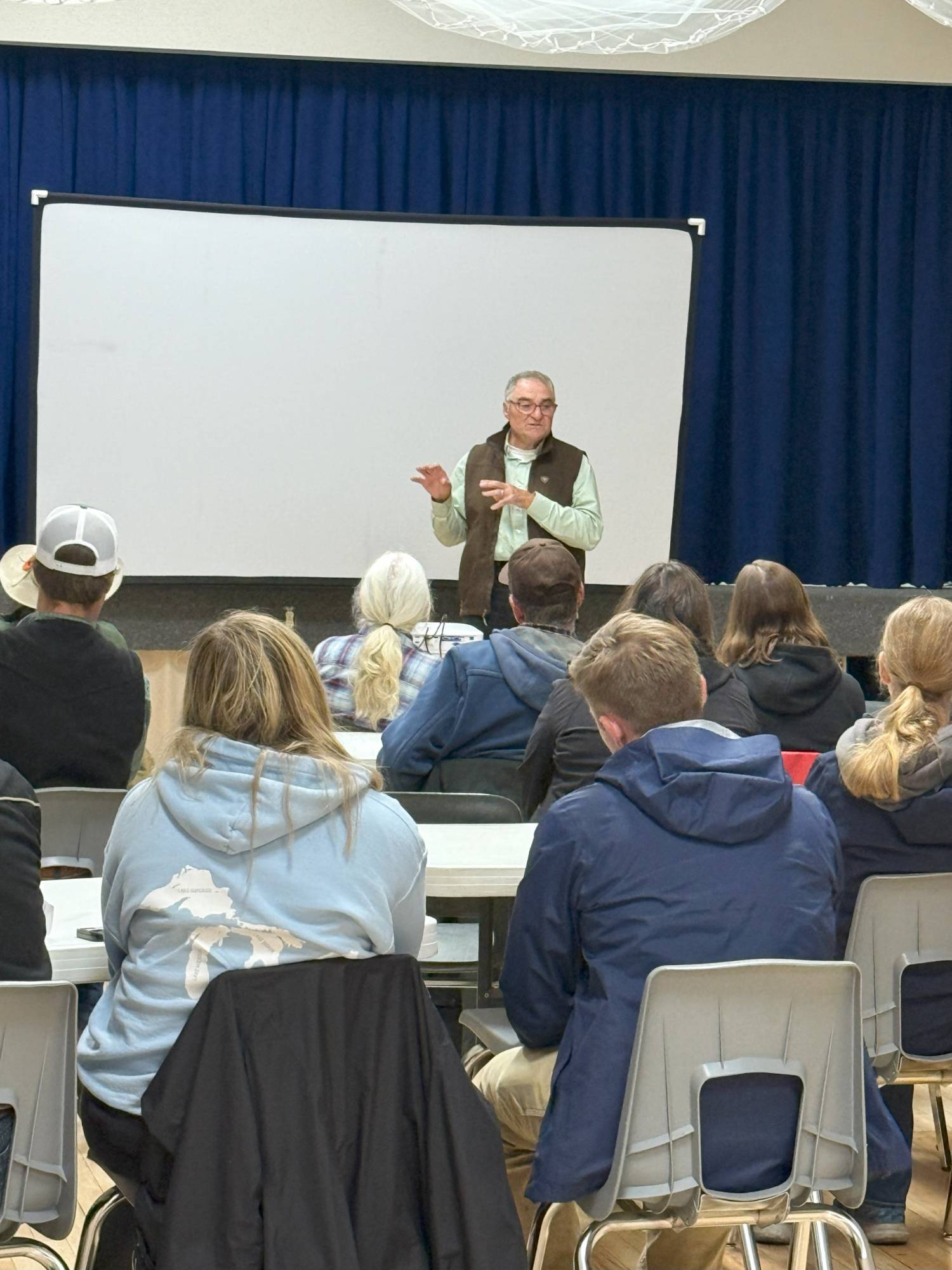
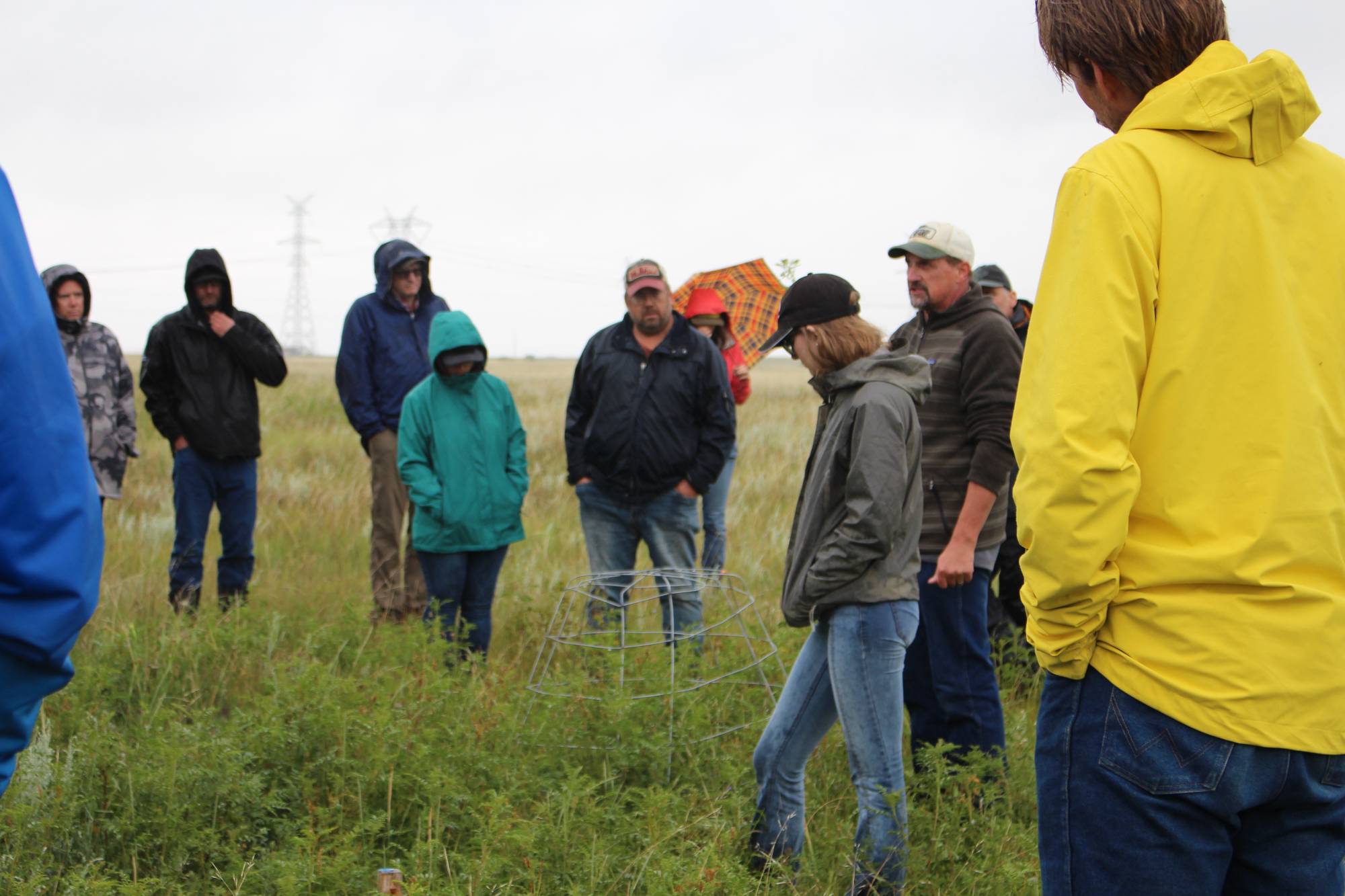
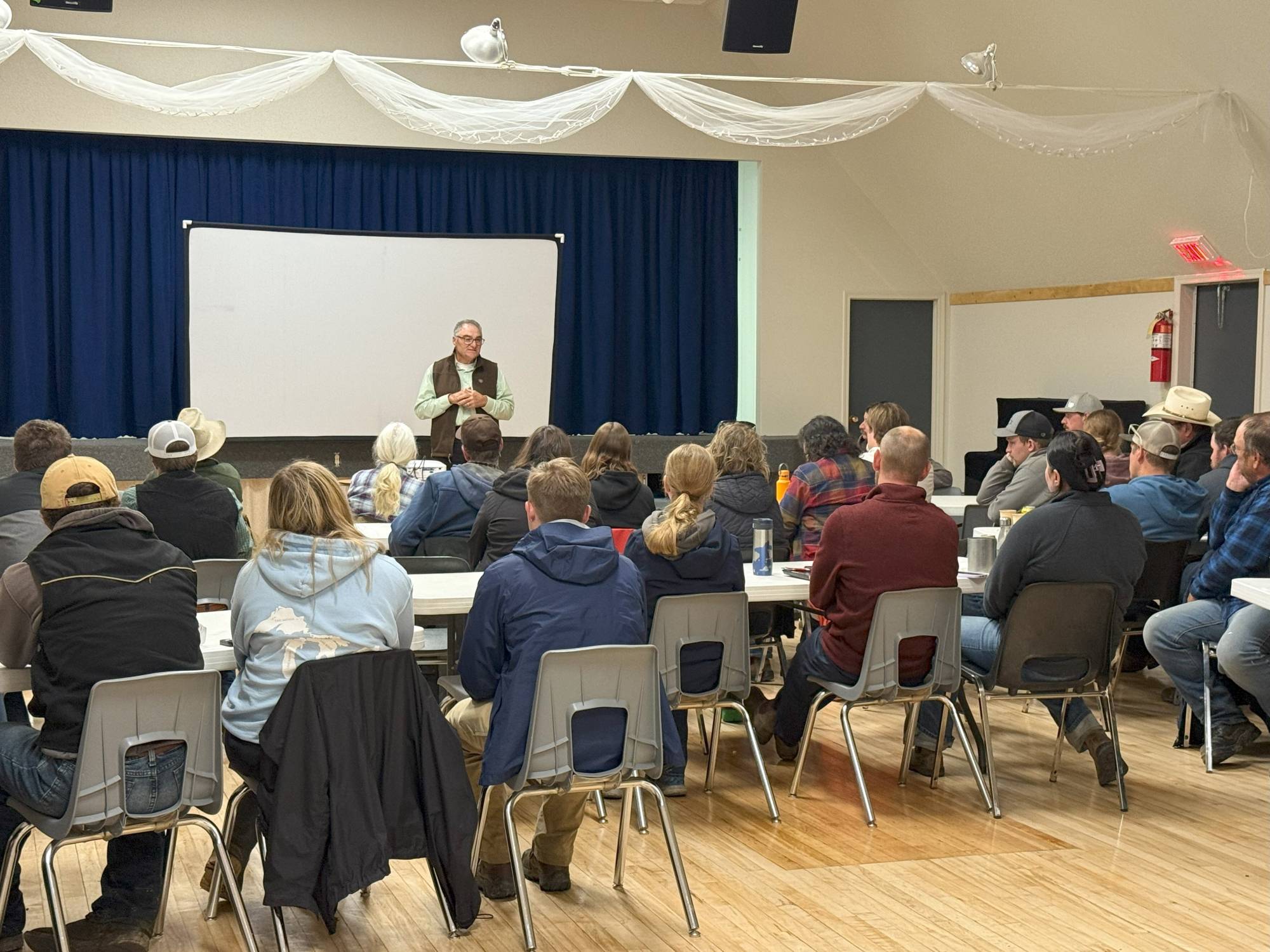
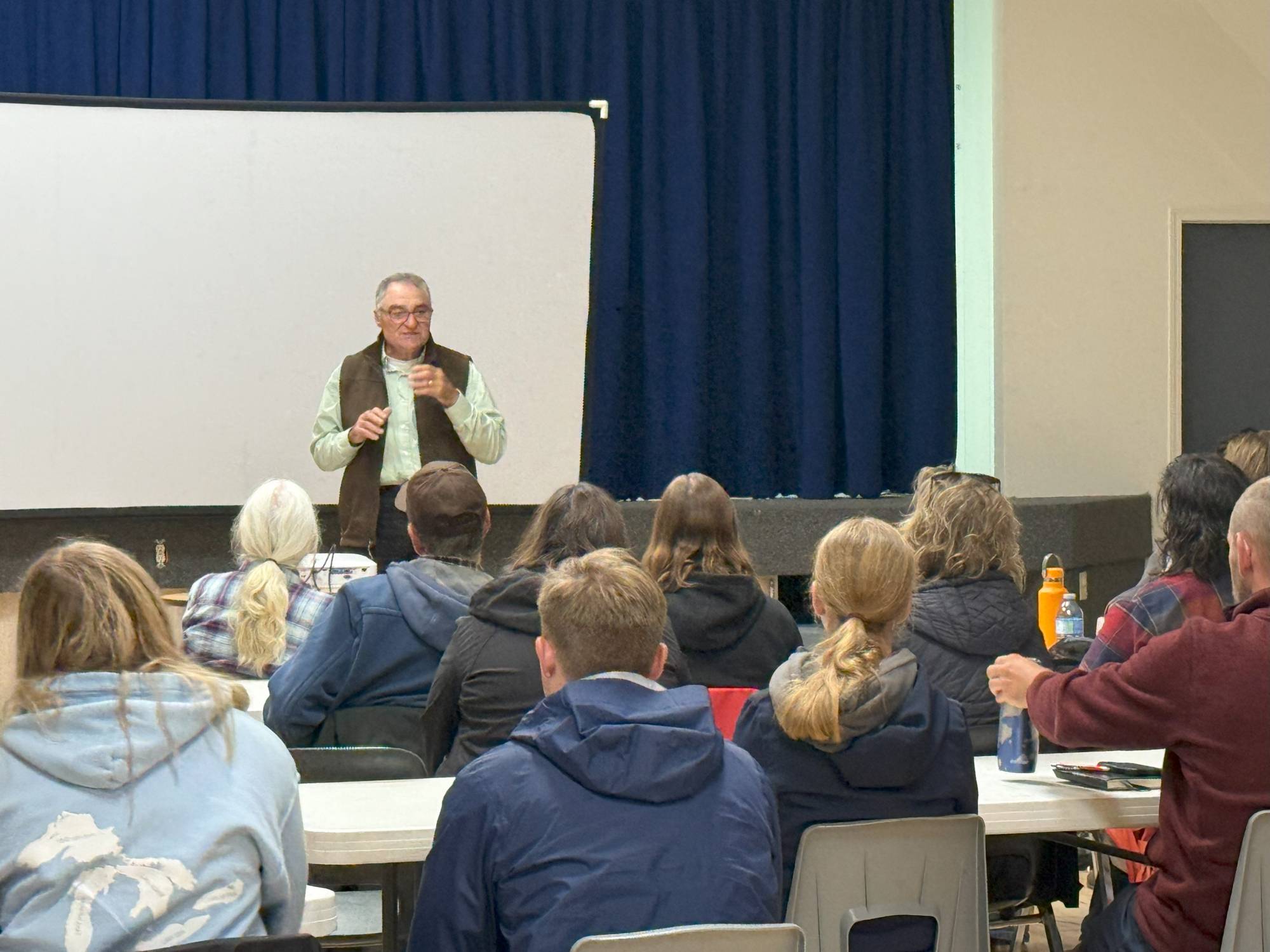
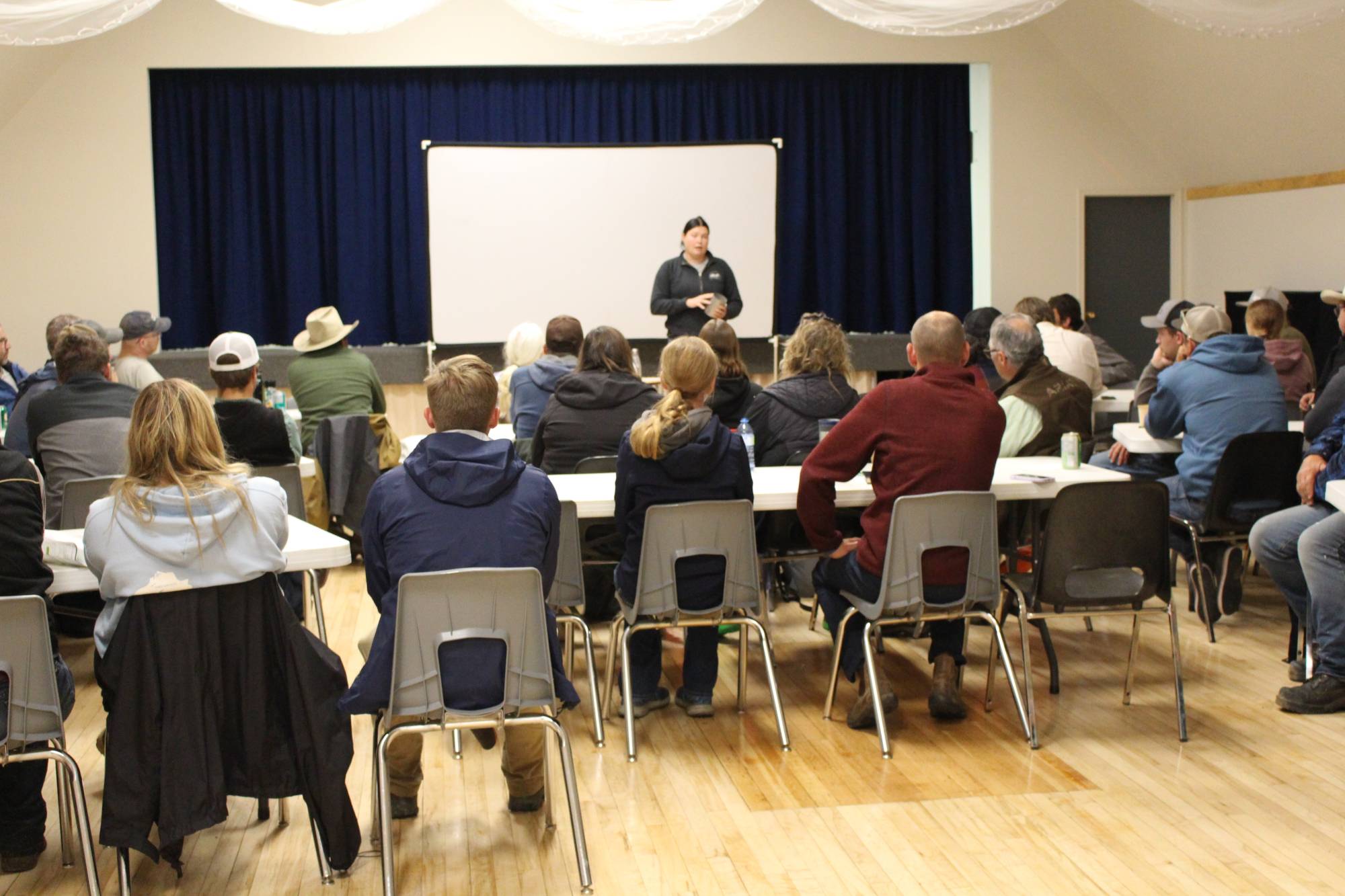
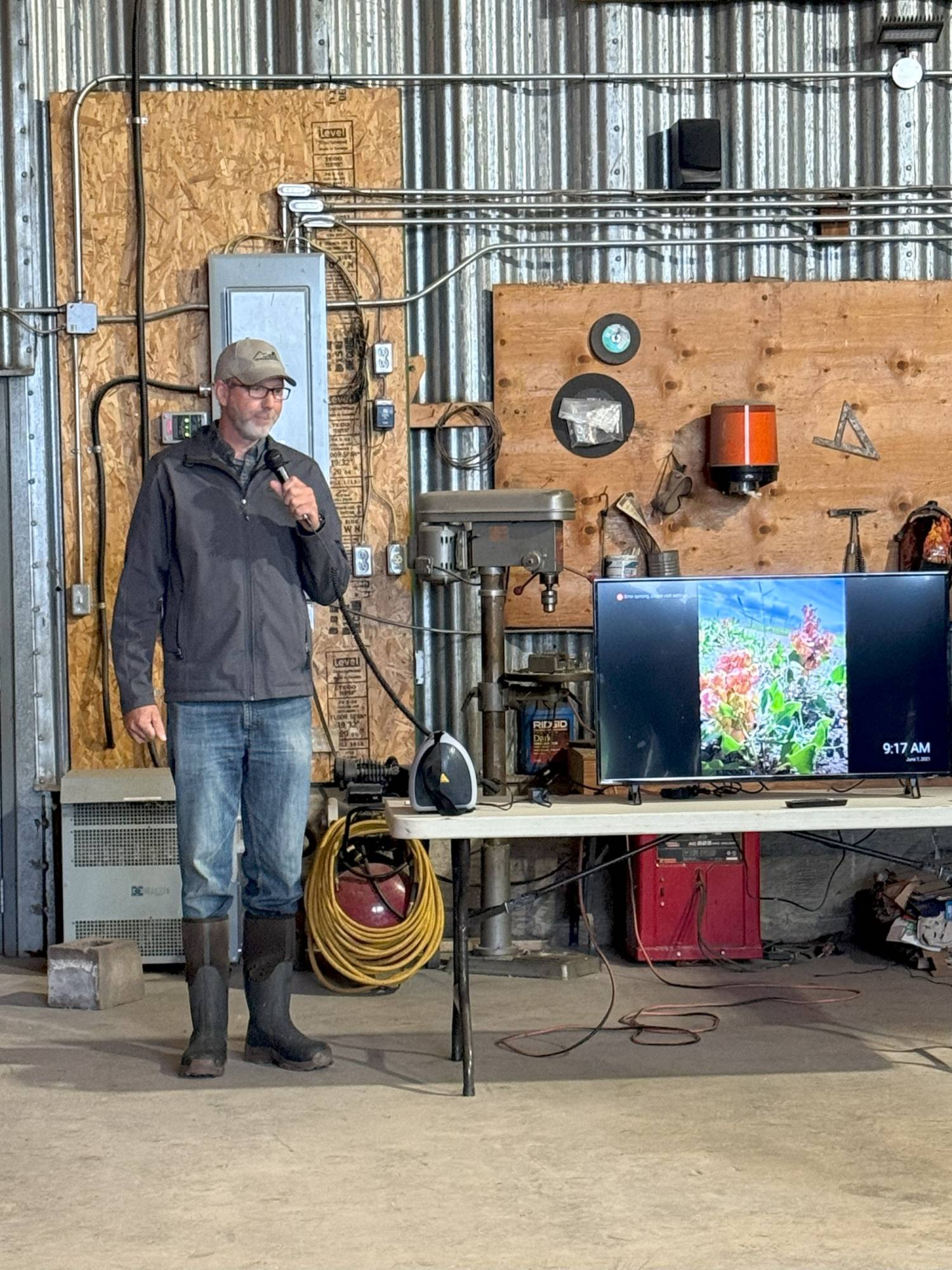
The Mattheis Research Ranch annual field day took place on July 22, 2025, beginning with Lisa Ratz, Research Access Coordinator from University of Alberta, welcoming nearly 60 people in attendance. Busz led virtual fencing discussions, demonstrating the operation and interface of the app. Attendees were able to observe the collared heifers during the tour.
Other tour stops included the 1200-gallon water troughs, series of pasture types and Razer Grazer. To widespread interest in the buried pipeline project, Barry Irving demonstrated several types of pipeline typically used and stressed the importance of proper fittings and connectors. Karin Roen, Program Agronomist with Chinook Applied Research Association (CARA). demonstrated Water Infiltration Kitsthat allow producers to measure differences of effective rainfall infiltration into soil under various crop types and management. Water infiltration speed is an important indicator of soil health when monitoring a change in grazing management. To complete the afternoon, Grant Listiwka talked about using annual polycrops in a crop and pasture rotation.
Additional Media


Funding for this project in part has been provided by Agriculture and Agri-Food Canada through the Agricultural Climate Solutions – On-Farm Climate Action Fund.