
The Canadian Forage and Grassland Association’s (CFGA) Young Ranchers Network recently welcomed Ian Cook, grassland conservation manager with Birds Canada, for a lively and eyeopening conversation about the birds that depend on our prairie landscapes. Joining from western Manitoba, Ian highlighted the essential role ranchers play in keeping those landscapes thriving. He brought both deep scientific knowledge and a genuine love of the prairies and his message was clear: Grassland birds are telling us a story about the health of our ecosystems and ranchers are central to that story.
Ian began by grounding the group in the long history of Birds Canada, which started 62 years ago as the Long Point Bird Observatory – the first of its kind in the Western Hemisphere. Today, Birds Canada is a national leader in bird monitoring, citizen science and conservation, with a strong focus on species that rely on agricultural landscapes.
Why birds matter to grassland health
Birds, Ian explained, are far more than familiar sights or pleasant sounds. Because they occupy such a wide range of ecological niches, from wetlands and shrublands to uplands and riparian areas, their presence or absence reveals a great deal about landscape health. Their mobility and responsiveness make them quick indicators of change and their songs and behaviours provide researchers with reliable data that is often difficult to obtain for other wildlife groups.
Perhaps most importantly, birds connect people. Whether you ranch in Saskatchewan, farm in Quebec or live in downtown Toronto, birds are a shared touchpoint. They are a reminder of place, season and the natural world around us.
What the data shows about grassland birds
Every four years, Birds Canada and Environment and Climate Change Canada (ECCC) release The State of Canada’s Birds, a report that paints a clear picture of how bird populations are changing. Some trends are encouraging: Waterfowl, raptors and wetland birds have increased thanks to decades of conservation work and the banning of DDT.
The news for grassland birds is far more sobering. As a group, they have declined by two thirds since 1970 and native-grassland specialists are declining faster than any other bird group in the country. These losses reflect the ongoing fragmentation and disappearance of native prairie, one of the most endangered ecosystems in North America.
Despite this Ian emphasized a hopeful truth: Ranchers are holding the line. Much of the remaining native grassland exists because ranching families have stewarded it for generations. Their grazing systems, water management and long-term care create the very conditions species like the chestnut-collared longspur, thick-billed longspur, bobolink and lark bunting need to survive.
To illustrate just how important the prairies are, Ian shared data from the Migration Explorer, a tool that compiles bird-tracking information from across the Western Hemisphere. The visualization makes one thing unmistakable: The Canadian Prairies are one of the most critical ecosystems for migratory birds in North America. Species like the bobolink travel more than 12,000 miles each year between Canada and South America, drawn north by something they cannot find anywhere else – the explosion of insects that fuels chick growth and survival. Even birds that typically eat seeds switch to insects during the breeding season, a reminder of how deeply interconnected grassland ecology truly is.
Ian also brought the conversation to a more familiar level by highlighting birds many ranchers have heard but may never have seen. The haunting “winnowing” of the Wilson’s snipe at dusk isn’t a call at all, but the sound of wind rushing through its tail feathers during display flights. The clay-coloured sparrow’s buzzy trill is often mistaken for a grasshopper. And the sora, a secretive wetland bird with a laughing call, is far more often heard than spotted as it slips through cattails on oversized feet. These species, and many others, rely on the mosaic of wetlands, shrublands and grasslands that ranchers manage every day.
Prairie birds, often unseen
The conversation also touched on several species at risk that depend heavily on working grasslands. Bobolinks, for example, prefer tall, lush hayfields. Simple adjustments, such as delaying haying until after July 15, slowing equipment or leaving small refuge patches can dramatically improve nesting success. Chestnut collared longspurs need short grass, low litter and some bare ground, conditions often created through well-managed grazing. Thick-billed longspurs favour extremely sparse vegetation, while lark buntings appear in large numbers during wetter years. These birds aren’t just wildlife; they are indicators of healthy, functioning prairie ecosystems – ecosystems that depend on ranchers.
Young Ranchers Network
The Young Ranchers Network exists to build community, share knowledge and strengthen the next generation of grassland stewards. Ian’s session was a powerful reminder that conservation isn’t separate from agriculture; it’s woven into the daily decisions ranchers make. Grassland birds are declining, but with ranchers, researchers and conservation partners working together, there is hope for recovery. And, as Ian reminded us, birds connect us – across provinces, across landscapes and across generations.
The full recording of this session will be available on the CFGA’s online resource library, where previous Young Ranchers Network monthly meeting recordings can also be found. During the April 29 meeting the speaker will discuss water systems available and building a grazing plan around the available water sources. Watch the CFGA online calendar for future meetings.

Canadian Agriculture Safety Week
March 6, 2023
This Canadian Agriculture Safety Week commit to #FarmSafetyEveryday
March 12 to 18 is Canadian Agriculture Safety Week and this year’s theme is Safety is Our Promise.
Read Article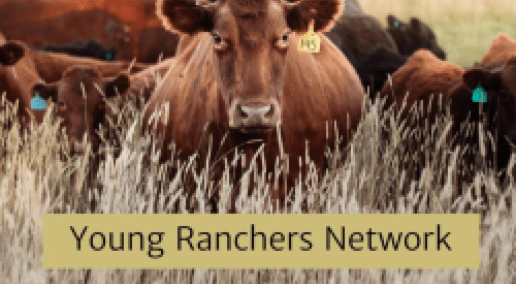

Leave a Comment